Shiba Inus are a bundle of joy, love, and care. It doesn’t matter what breed they belong to. It’s safe to say that we all know that.
However, every dog breed brings a set of unique characteristics to the table. The same goes for Shiba Inu as well. Here are some interesting facts about Shiba Inus that may surprise you!
A Shiba Inu offers all the things you like in a dog. And, that doesn’t stop there. Here are a few things that make this breed special.

The most surprising Shiba fact is that this fox-faced dog is one of Japan's oldest native breeds, one that nearly went extinct after World War II and was rebuilt from a handful of surviving bloodlines. Behind the internet-famous looks sits a genuinely ancient, primitive breed that behaves more like a cat than a Labrador. Shibas groom themselves fastidiously, "scream" instead of bark, and carry a prey drive and independence that trace straight back to their hunting origins. The fun facts are charming, but most of them are also warnings about what living with the breed actually asks of you.
The short version, in four parts:
- Shibas are an ancient Japanese breed, saved from near-extinction after the war and rebuilt from three main bloodlines.
- They are catlike: clean, self-grooming, aloof, and famously stubborn about being told what to do.
- The "Shiba scream" is real, and the breed vocalizes plenty without barking much.
- The fox resemblance is coincidence, not lineage; a Shiba is 100% domestic dog.
1. Shiba Inus Have Strong Personalities
You may not be aware of it, but dogs are very similar to humans. They share a lot of personality traits with us.
Shiba Inus possess strong yet obedient personalities. You may even go ahead one step and say they’re a bit reserved in nature.
However, they don’t back away from loving their human. Actually, when a Shiba bonds with you, their love knows no limits.
2. Shiba Inus Have a Unique Look
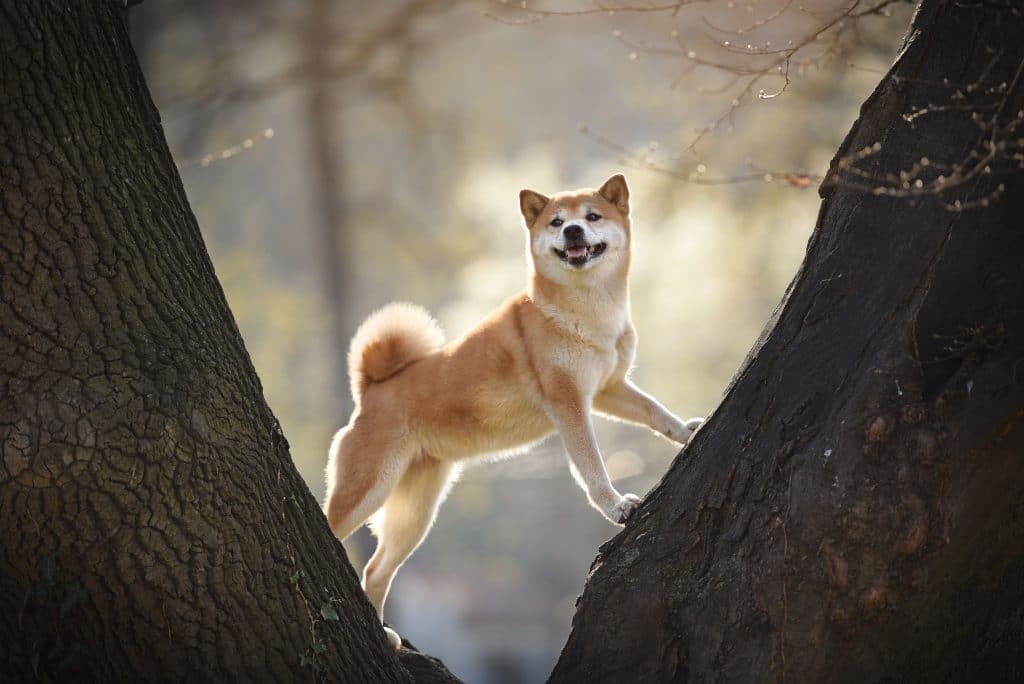
A fox, that is not actually a fox. Oh yeah, that’s how a Shiba Inu looks. The cute looks of a fox and the ever-charming personality of a dog, that’s what you get with this breed.
If you’re a sucker for exotic things, go and get yourself a Shiba. You can even trick your neighbor into thinking you’ve gotten a fox!
A Shiba Inu looks compact, and their hair color varies from black to yellow-gold to white.

3. They are Clean and Calm
Yes, we know that Shibas shed, but Shiba Inus also love cleaning themselves. They’re those dogs that don’t hate getting a bath.
With this dog, you don’t have to worry all the time, if they’re playing out in the yard. Because when they’re done with their playtime, they clean themselves.
Nope, they don’t spoil your couch with their dirty feet.
A Shiba Inu is persnickety when it comes to cleanliness. Not only does it clean itself like a cat, it also can go through puppy potty training relatively fast. In fact, the Shiba Inu does not like anything messy or unclean. It may even want to go potty in the park, away from its own residence!
If you own another pet, the Shiba may take to grooming its coat as well. That makes brushing or bathing your dog a cinch. Except for the times it sheds, you don’t have to spend a lot of time on grooming. Bathing too often can hurt the Shiba’s delicate skin.
Also, they’re very calm dogs. Unless they see a stranger, they usually remain calm. You don’t have to deal with all the barks and howls. How soothing it is?!

4. Shiba Inus are Loving and Playful
Like almost all other doggo breeds, Shiba Inus also love their humans to the moon and back.
It might take a bit of time for you both to bond. But, once that’s done and dusted, you get yourself a loyal friend.
Moreover, this dog loves to play. They live longer when they get regular playtime, which keeps physical ailments at bay.
Throw that ball, I say!
5. Shiba Inus Do Not Bark
While it is true the Shiba Inu does not bark, that does not mean it is not a good companion dog and watch dog. You can train the Shiba dog commands that make it an outstanding protector. The Shiba Inu does not bark, but it is far from quiet. It can vocalize quite readily. In fact, it will wail with a high-pitched voice when things don’t please it and let you know, by whining, when it wants attention. Therefore, the dog may not bark but it certainly can produce doggy sounds, if prompted.
6. The Shiba Inus is the National Treasure of Japan
In Japan, people consider the Shiba Inu the ideal companion dog. Therefore, it is often a resident in urban dwellings or inhabits of those who live alone. People love the fox-like dog for its courage, loyalty, and protective and independent nature.
7. The Shiba Inus Double Coat Regulates Its Body Temperature
The double coat of the Shiba Inu regulates its body temperature, so it is important that you never shave any part of the coat. Otherwise, the dog can become ill, as shaving throws its temperature regulation off balance. While the undercoat will shed during part of the year, it is a natural process. Therefore, it is best to leave the coat alone unless the dog is having surgery.
When the dog sheds, it really sheds. In fact, don’t be surprised, if you see tufts of the dog’s coat floating around the house. When shedding takes place, you will need to brush your Shiba to reduce the effects of shedding. Another name for shedding is called blowing coat. In fact, during the dog’s semi-annual shedding, it will lose so much undercoat, you will think your poor Shiba must be wasting away. However, don’t worry. It will regain its furry and huggable appearance eventually.
8. The Shiba Inus Has a Higher Incidence of Dental Disease
Compared to other dogs, the Shiba Inu is more likely to suffer from gum disease. Make sure you practice good dental care if you adopt a Shiba companion dog, as older Shibas have trouble with periodontitis.
9. The Shiba Inu Is a Challenge to Train
The Shiba Inu’s stubborn temperament and sensitive nature can make it hard to train. Therefore, you have to use extreme patience when training your companion dog. Make sure you give it treats and lavish it with praise when it does what you want. Use a gentle yet firm voice when issuing dog commands.
Otherwise, the poor Shiba Inu will think you are harshly criticizing it. The Shiba Inu is a shrewd puppy, and does not like being told what to do. Therefore, you have to tread lightly during dog obedience training when bonding with your pet. Use passive resistance to get your dog to mind. Let him think that a dog command was partly his idea.
For example, if you ask him to go outside with you and he ignores you, go outside without him. If he wants to go outside later, don’t make a move until you are ready to out the door yourself. Usually, he will obey the second time, as he was the one who initiated the idea.
10. Shiba Inus Can Really Cause a Commotion if They Don’t Like Something
While some dogs may remain quiet or submissive, even if something does not suit them, that is not the case for the Shiba Inu. If it does not like something or receives a minor injury, it will vocalize, in a high-pitched voice, its dissatisfaction. For instance, if it gets a small pebble in its paw, it will let you know, without hesitation, about the discomfort.
11. The Shiba Inu is a Basal Dog Breed
The Shiba Inu is a breed of dog that is used to produce other hybrid breeds. Therefore, it is known as a basal dog. As a result, the Shiba Inu has more wild dog traits than other dogs. Knowing this information will help you understand why the Shiba Inu is more independent than other companion dog breeds.
12. The Shiba Inu Almost Became Extinct
During the Second World War, bombing raids and distemper, a deadly canine infection, almost rendered the Shiba Inu extinct. However, special rescue and rehoming networks enabled the Shiba Inu to regain its distinction as a special Japanese dog breed.
13. Shiba Inus Love to Eat Grass
The Shiba Inu, for some reason, loves to eat grass. While dogs will eat grass to help with an upset stomach, a Shiba Inu just loves eating grass. However, it cannot be just any grass. The dog has its preferences. If your dog likes to graze, make sure the green area has not been treated.
The above facts give further proof that a Shiba Inu is one dog that makes a memorable pet and one companion dog you soon will not forget.
If you adopt a Shiba Inu, you will indeed have a one-of-a-kind canine. The following facts about the dog sheds some light on the animal’s unique personality and characteristics. While every dog has its own unique qualities, the Shiba Inu has some traits that are not ordinarily shared with other companion dog breeds. If you own a Shiba Inu, you already understand why your dog is one dog that stands out above the rest.
If you love cute-looking dogs, who love to cuddle, play, and protect the household, say no more and get this dog.
Along with all these goodies, you’re also getting a unique looking dog with a unique personality. So, why not?!
Shiba facts that actually change how you live with one
Trivia is fun, but the facts worth knowing are the ones that shape daily life with the breed. Here are the six that matter most once the dog is actually in your house.
- The scream is real. Shibas do not bark much, but they produce a piercing, almost human shriek when displeased, restrained, or startled. New owners are often alarmed the first time they hear it during a nail trim or a vet visit. It is normal, it is not pain, and it is one of the breed's signatures.
- They blow coat twice a year. The double coat that regulates the dog's temperature also sheds in dramatic seasonal waves. During a coat blow you will vacuum daily and find tufts drifting across the floor. Never shave the coat to manage it, because that disrupts the insulation the dog depends on.
- Prey drive is baked in. The Shiba was bred to flush small game through brush, and that instinct did not retire. Squirrels, cats, and small dogs can trigger a chase, which is why reliable offleash recall is rare and a secure yard matters.
- They are catlike about cleanliness. Shibas groom themselves, dislike mess, and often housetrain quickly. It is one of the genuinely low-maintenance things about the breed, coat blows aside.
- Independence is a feature, not a defect. As a basal breed close to the ancestral dog, the Shiba thinks for itself and negotiates every request. Training works, but it rewards patience and smart incentives, not repetition and force.
- The breed nearly vanished. Wartime bombing and a distemper epidemic almost wiped out the Shiba, and today's dogs descend from a small number of survivors. That bottleneck is part of why the breed is so consistent in type and temperament.
A composite of how this lands: a new owner charmed by fox photos adopts a Shiba, gets the scream during the first bath and a full coat blow a month later, and only then understands that the "fun facts" were the manual. None of it is a dealbreaker, but all of it is easier when you saw it coming. For the deeper story behind the breed, our history of the Shiba Inu fills in the bloodlines, and our honest guide on whether a Shiba Inu is right for you turns the trivia into expectations.
How this plays out
Across 250+ Shibas placed since 2019, the fun facts are the exact things that surprise new owners into calling us. The scream, the coat blow, the selective hearing on recall: these are the breed's greeting card, and people who read about them as cute quirks meet them as daily reality. The owners who do best are the ones who treated the trivia as a spec sheet.
What has worked: leaning into the catlike nature instead of fighting it. Give a Shiba a clean routine, respect its space, and make cooperation its idea, and you get a dignified, funny, deeply loyal dog. What has not worked: expecting a golden retriever in a fox costume. A Shiba that is pushed, crowded, or nagged shuts down or screams, and neither helps anyone.
The independence is the fact that fools people most. It reads as stubbornness, but it is really a hunting brain that was never built to take orders on faith. If a Shiba's aloofness or reactivity is tipping into something harder to live with, a certified trainer is worth the call, and our boarding service exists partly so owners have a breed-savvy option when they travel instead of a kennel that does not get Shibas.
Common followup questions
Do Shiba Inus really not bark?
They bark far less than most breeds, but "silent" is a myth. A Shiba is a vocal dog that simply channels it differently: whines, grumbles, huffs, and the famous scream instead of steady barking. You will always know how your Shiba feels. It just tends to editorialize rather than announce.
Why does my Shiba scream?
The Shiba scream is a dramatic vocal protest, not a sign of pain. It shows up during restraint, grooming, vet handling, or plain frustration, and it can sound alarmingly human. It is normal breed behavior. Keep handling calm and matter-of-fact, reward cooperation, and most Shibas scream less as they learn the routine is not a threat.
Are Shiba Inus related to foxes?
No. The resemblance is pure coincidence of coat color, ear shape, and face. A Shiba is 100% domestic dog and a member of an ancient Japanese spitz-type lineage, not a fox hybrid. Foxes and dogs cannot even interbreed. The fox look is one of the breed's charms, but it is skin deep.
What to read next
For the full backstory, read our history of the Shiba Inu and the truth behind the myth that Shibas are red foxes. If the facts have you weighing the breed seriously, our honest take on whether a Shiba Inu is right for you is the next stop. And when travel comes up, our boarding service gives your Shiba a breed-savvy place to stay.
Looking to adopt or rehome a Shiba?
Rescue-first rehoming with vetted families, 1-year health guarantee, lifetime support.