One of the best ways you can show your dog love and affection is by properly and regularly grooming them. Aside from keeping them clean and attractive, you are also making sure they are healthy by avoiding health conditions brought by bacteria and dirt. Grooming your Shiba Inu is not difficult, but it does require time and patience.
Grooming a Shiba Inu comes down to a short weekly rhythm across six areas: coat brushing, bathing, ears, nails, teeth, and light trimming around the face and paws. The coat does most of the work itself, so the real job is staying ahead of loose undercoat, keeping ears and nails on schedule, and not overbathing a self-cleaning breed. Done regularly it takes minutes, not hours.
Shibas are famously fastidious. They keep themselves cleaner than most breeds, which means your grooming is maintenance and health checking rather than damage control. The two things owners get wrong are bathing too often, which dries the skin, and letting brushing slide until the undercoat mats. Get those two right and the rest is routine.
The short version, in four parts:
- Brush weekly, more during the spring and fall coat blows, to clear loose undercoat.
- Bathe sparingly, anywhere from every few weeks to every couple of months, and dry gently.
- Keep ears clean and dry, nails trimmed, and teeth brushed on a steady schedule.
- Trim only the stray hair around the face and paws, and leave the coat itself alone.
Bathing a Shiba Inu
When getting a new dog, it is important that you should know its hair and skin type to make an informed decision on how often they need bathing. This is because being bathed too often can dry their skin. This is true with some types of coats such as wire-coated or double-coated breeds.
In the case of a Shiba Inu, they are double-coated breeds. This means they can be bathed as frequently as once a week to up to every six weeks.
After bathing, use proper drying techniques. A lot of pet owners make the common mistake of recklessly drying their dog’s fur.
Allow the coat to air dry slowly. Breeds like the Shiba Inu need an ample amount of time for their fur and skin to cool off, or else, there’s a possibility of them developing yeast infections from heat exposure and hot spots irritated by dampness.
Brushing a Shiba Inu
Some owners would skip brushing, but it is an important grooming step.
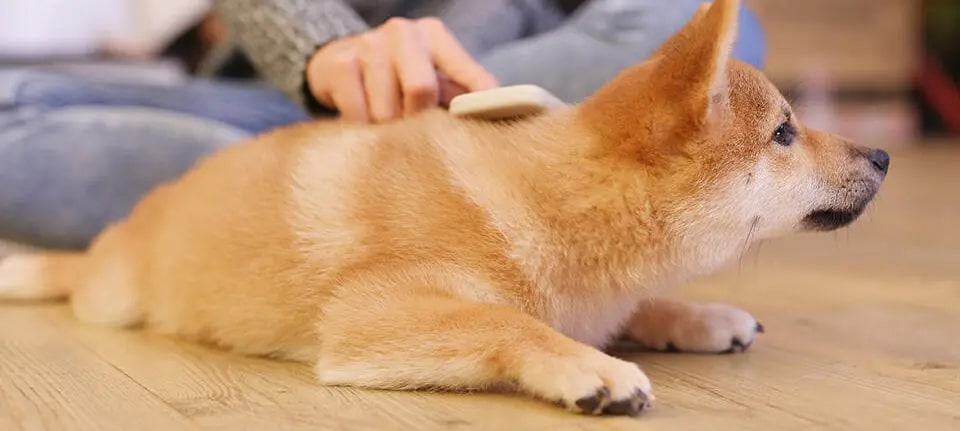
Shiba Inus need their double-coats to be brushed regularly – at least once a week. Brushing them regularly helps remove loose hair and distribute natural oil throughout their fur. Aside from that, it also prevents matting and tangles. The perfect brush for removing mats is a brush with rubber on one side.
Brushing needs to be a part of, not only within Shiba Inus, but all dog breeds with wire-coats or double-coats.
Ear cleaning for Shiba Inu
Just like humans, a dog’s ear should be kept clean and dry. If you see a dark discharge coming out from the ear, you need to consult your veterinarian. There’s a possibility of infection or medical condition if this is the case.
Invest in good dog ear cleaning products and maintain the cleanliness of your dog’s ears, especially if they are prone to excess moisture, wax build-up, yeast overgrowth, and other ear problems.
Nail and hair trimming a Shiba Inu
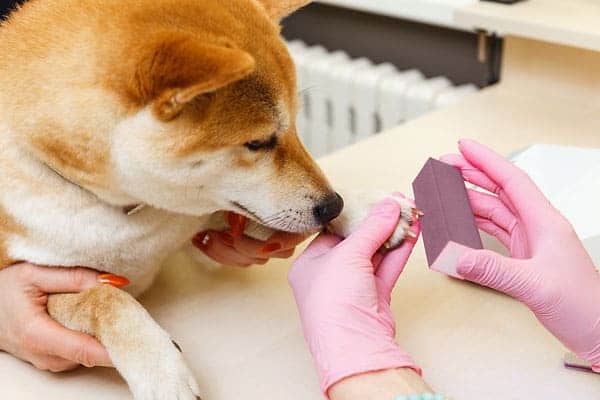
The Shiba Inu’s nails need regular trimming. You can ask your groomer how often it needs to be trimmed or you can consult a veterinarian.
Another important part of grooming is trimming the hair around a Shiba Inu’s face and paws. By trimming hair in these areas, you are stopping mats from forming. If not, you are setting up your dog for skin irritation and infection.
The tool you can use for this step is a pair of small scissors that you can purchase at a local pet store or a groomer’s shop.
However, if you are unsure of how to go on trimming and cleaning the paw areas, we recommend that you bring your dog to the groomers and have it professionally done.
Trimming is especially needed if your Shiba Inu has long hair that can get in the way of paw use, such as around the face and paws. Clippers and brushing using a comb are also needed to remove matting in these areas.
Dental hygiene for Shiba Inu
To keep your dog’s mouth fresh and healthy, it’s important to practice regular teeth brushing. You can give your Shiba Inu dental chews or dental treats, as these will help clean away plaque that has formed around the teeth. These usually contain natural enzymes that break bacteria.
If you notice your Shiba Inu sporting a brownish film over their tongue, it could be suffering from periodontal disease, an inflammation of the gums and bone that supports their teeth. It is a serious condition and should be treated immediately by a vet.
A Shiba grooming routine, area by area
A full grooming routine is not one big task, it is six small ones on different clocks. Here is how each area works and how often it needs attention.
- Coat and brushing (weekly, daily during a blow). The double coat is the centerpiece. A weekly brush lifts loose hair, spreads the skin's natural oils, and stops the undercoat from packing down into mats. During the spring and fall coat blows, brush far more often with a deshedding tool and undercoat rake.
- Bathing (every few weeks to a couple of months). Shibas are self-cleaning and do not need frequent baths. Overbathing strips oils and dries the skin. When you do bathe, rinse thoroughly and let the coat dry slowly rather than trapping heat and dampness, which invites yeast and hot spots.
- Ears (check weekly, clean as needed). Keep ears clean and dry with a proper canine ear solution. Dark discharge, odor, or head shaking is a veterinarian conversation, not a home fix, because it usually signals infection.
- Nails (every few weeks). Overgrown nails change how a dog stands and moves and can crack painfully. If you can hear clicking on hard floors, they are due. If you are not confident cutting to the quick, a groomer or vet can do it fast.
- Teeth (several times a week). Brush the teeth or use vet-approved dental chews to hold back plaque. A brown film along the gumline can mean periodontal disease, which is a vet visit, not a cosmetic issue.
- Face and paw trimming (occasional). A little scissor work keeps stray hair out of the eyes and clears the fur between paw pads. This is trimming, not clipping the body coat, which a Shiba should never have.
An owner once brought us a Shiba that was bathed almost weekly because it "always smelled." The frequent baths had dried the skin, which made the coat greasy as it overcompensated, which made the dog smell, which prompted more baths. Stretching the bath schedule and brushing more often broke the cycle in a few weeks. Grooming costs and cadence factor into the real price of owning the breed, which we lay out in our guide to the cost of a Shiba Inu in California. For the deeper read on tools and technique, see our fuller walkthrough on grooming your Shiba Inu.
How this plays out in practice
After grooming 250-plus Shibas since 2019, the pattern is clear: the owners who stay on top of grooming treat it as a five-minute weekly habit, not an event. The ones who struggle let it lapse until the coat mats or the nails overgrow, then face a long, unpleasant catchup session that teaches the dog to hate the whole business. Shibas hold grudges about grooming, so the goal is to keep every session short, boring, and predictable.
What worked across the dogs in our care: brushing on the same day each week, keeping baths rare, and pairing nail trims with treats so the dog does not brace for them. What did not work: marathon grooming after weeks of neglect, and bathing to fix a smell that was actually a skin or ear problem underneath. When a coat, skin, or ear issue does not resolve with normal care, that is the point to bring in a groomer or veterinarian rather than doubling down at home.
Owners who travel do not have to let the routine slip. Dogs in our in-home boarding stay on their brushing and checking schedule, so they come home in the same coat condition they left in, not with a felted undercoat to untangle.
Common followup questions
How often should you bathe a Shiba Inu?
Rarely. Shibas are a naturally clean, self-cleaning breed, so anywhere from every few weeks to every couple of months is plenty, and many go longer. Bathing too often strips the coat's oils and dries the skin, which can actually make a dog smell worse. When you do bathe, rinse well and let the coat dry slowly.
Should I take my Shiba to a professional groomer?
You can handle most Shiba grooming at home, but a groomer is worth it for nail trims if you are nervous about the quick, for a thorough deshedding during a heavy coat blow, or for tidying the face and paws. There is no need for haircuts, since a Shiba's coat should never be clipped down.
How do I stop my Shiba's coat from matting?
Brush regularly and reach the undercoat, not just the surface. Mats form when dead undercoat packs against the skin, most often in the rear pants, ruff, and behind the ears. A weekly slicker-and-comb session, stepped up during coat blows with an undercoat rake, keeps the underlayer clear before it can felt.
What to read next
For the fuller technique-and-tools version of this guide, read grooming your Shiba Inu, what you need to know, and pick your kit with our rundown of the best brushes for Shiba Inus. To understand the coat you are maintaining, see the Shiba Inu coat explainer, and weigh grooming into the wider budget with our Shiba Inu cost in California guide. If you need the coat kept up while you travel, our in-home boarding holds the routine.
Need in-home boarding for your Shiba?
Small groups, five walks a day, never a kennel. Daycare and vet transport included.