Dogs are cute and that’s a fact. They’re even more popular than celebrities. You can go on YouTube, Facebook, Instagram, and TikTok and you will find these adorable creatures raking in thousands of likes and millions in views.
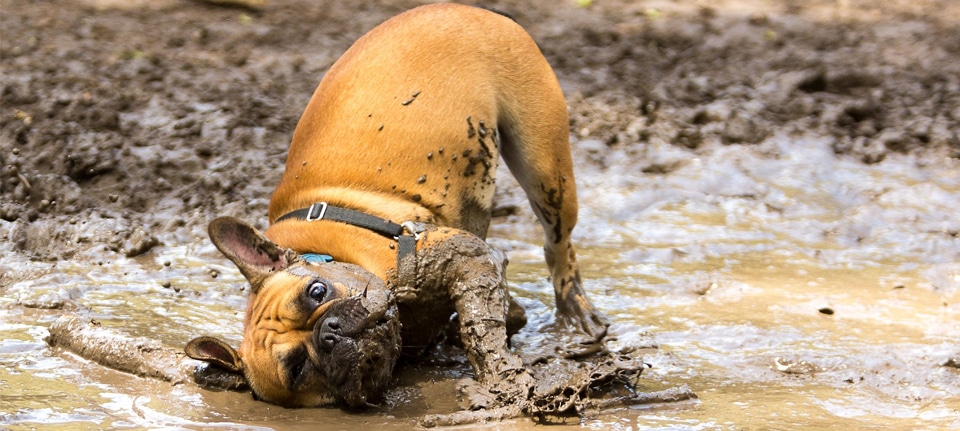
But the dogs we have fallen in love with are also creatures of chaos. They often get into trouble and they always enjoy playtime. Just look at this smile… and those dirty paws that you need to wash.
But of course, things aren’t always this messy. A fun day at the park or a normal walk around the neighborhood can get our dog’s paws dirty.
As a dog owner, cleaning their dirty footprints off the floor can be more than just a simple task. Especially when we’re exhausted from a day of work. This is why we need an easy way to thoroughly clean their paws with paw washers or paw cleaners.
The simplest way to clean a Shiba's paws is a quick dip in a paw-cleaner cup with soft bristles and a little water, followed by a towel dry, though a grooming wipe or a damp cloth works fine for a light mess. The goal is not just a clean floor. Paw pads insulate, cushion, and protect the tissue inside the foot, so keeping them free of grit, road salt, and irritants is real care. How often you clean depends on where your dog walks and the season, since summer pavement and winter de-icer are both hard on pads. For most Shibas a wipe-down after muddy or salted walks, plus a closer look during weekly grooming, covers it. If you ever notice cracked pads, limping, swelling, or a dog licking one foot raw, that is a vet question, not a cleaning one.
The short version, in four parts:
- A bristled paw-cleaner cup with water handles the everyday muddy mess fastest.
- Grooming wipes or a damp cloth cover light dirt and travel days.
- Clean more often in winter (road salt) and summer (hot pavement, allergens).
- Persistent licking, limping, or cracked pads mean a vet visit, not more scrubbing.
What are paw washers or paw cleaners?
Paw washers or paw cleaners are basically small devices designed to help thoroughly clean your dog’s feet. Most use a type of water reservoir with soft bristles to help remove any stubborn bits of dirt and mud.
The device works by swishing water around like a washing machine which then engages the bristles. You can add a bit of soap but clean water already does a good job.
But paw cleaners are not limited to these devices. There is another type of paw cleaners called waterless shampoo which ranges from paw wipes to bottles with brushes.
Is paw cleaning important?
Yes. That is, more than just for keeping your house free of dirty paw-prints. The Blue’s Clues paw print is nice, but not so much when it’s muddy and you have to clean it.
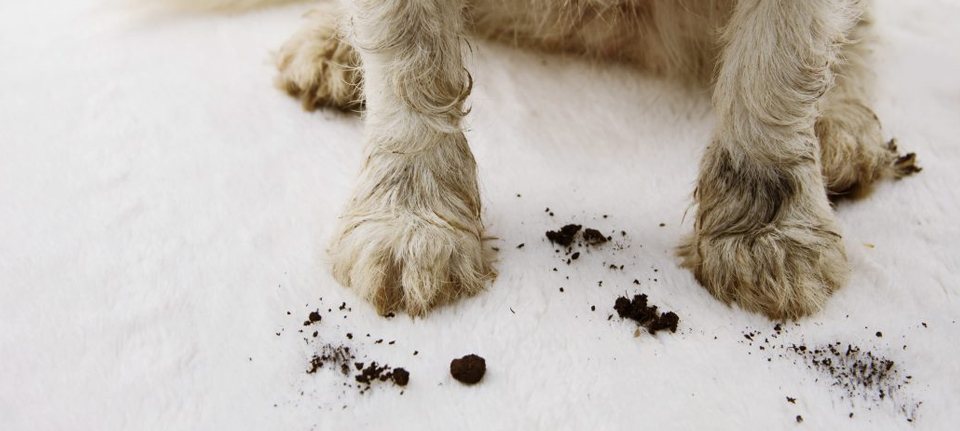
But the more important reason is that the pads on the bottom of a dog’s paw serve a key purpose. According to the ASPCA, the pads “provide extra cushioning to help protect bones and joints from shock, provide insulation against extreme weather, aid walking on rough ground and protect tissue deep within the paw.”
Paw cleaning should be a part of a dog’s general grooming routine. There’s no specific guideline when it comes to this but you can adjust the schedule depending on the level of exercise as well as the season. Harsh summers and winters can prove to be tough on the paws.
What should you look for in a good paw cleaner?
Here are some tips that can help you choose the best-fitting paw cleaner for your dog.
- Size: In order to use a paw cleaner, you have to actually dip the paw into the device. That is why size matters. If it’s too small, then the paw won’t fit into the opening. If it’s too large, the bristles inside may not be able to effectively reach and clean the paws. It’s also important to consider the exterior size of the paw cleaner especially when you intend it for outdoor activities.
- Bristles: These are brushes that help remove the dirt and mud on your dog’s feet. While you want something that can effectively do that, you need to remember that you want to irritate or injure your dog’s paw in the process. Generally, soft bristles are recommended as they are gentle. Look for silicone, rubber, or soft plastic materials as they do the job so well.
- Features: One of the most important features that a paw cleaner should have is a water-tight lid. This is mainly helpful when you bring paw cleaners outdoors. You would want to fill it up beforehand and it wouldn’t be real nice to see all the water spilled just because the lid isn’t tight enough. Another helpful feature is a handle which makes paw cleaning easier especially when you have a really chaotic pup.
- Disassembly: Paw cleaners that can be disassembled are generally easier to clean especially the individual components. Nevertheless, you can still clean it without taking it out apart but make sure that you read the guidelines first so that you don’t damage it.
The Top 3 Best Paw (Print) Cleaners
Here is a list of paw cleaners that we highly recommend. Let’s get on with the list.
1. Dexas Petware Mudbuster Portable Dog Paw Cleaner
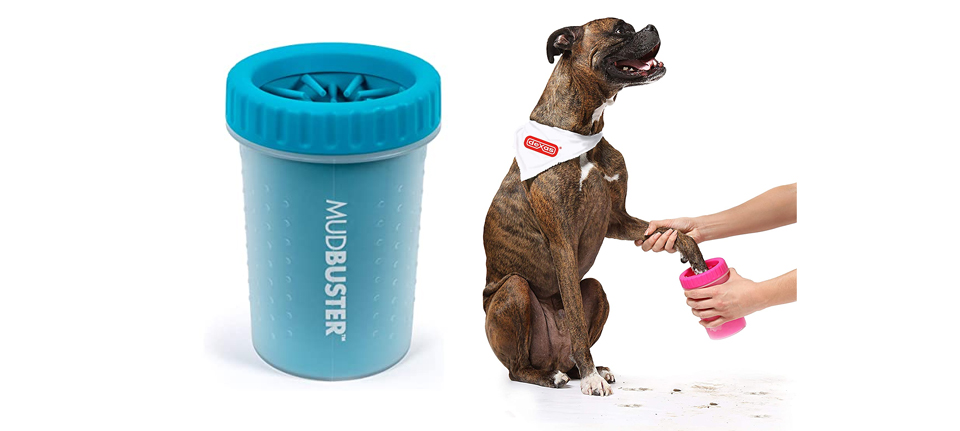
About: The Dexas Petware Mudbuster Paw Cleaner is a definite fan favorite. If you look through recommended paw cleaners, this always makes the list if not the top. It’s simple, compact, and easy to use. Simply fill the cup with water, dip your dog’s paw, spin the cleaner and let the silicone bristles do their job, and then remove the paw, and dry it! It’s very gentle and even sensitive pups would have no discomfort using it.
It only costs $22.74 (large) on Amazon, available in small, medium, large sizes and in six different colors! It can also be disassembled and is dishwasher-safe. Happy, easy cleaning!
2. Paw Plunger for Dogs
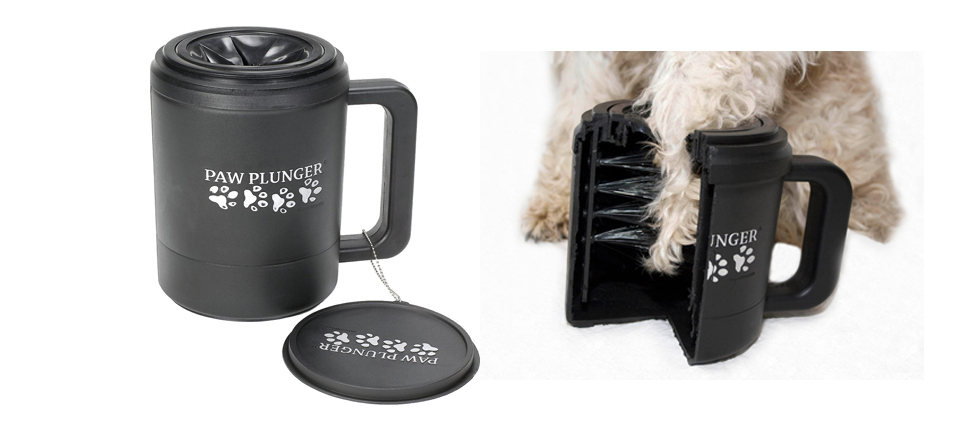
About: Paw Plunger is designed for better control during paw cleaning. And this is also one of the favorites of many fur parents. This has a wide and sturdy base which provides stability plus a built-in handle for control. Aside from that, it’s also equipped with a spill-minimizing opening and a handy lid attached to the cup. This
The main disadvantage of this cleaner is that it’s heavier than most popular paw cleaners and it’s also a little less portable. You can get it on Amazon in three different sizes and in three different colors: black, pink, and royal blue.
3. SKI Innovations Paw Boss
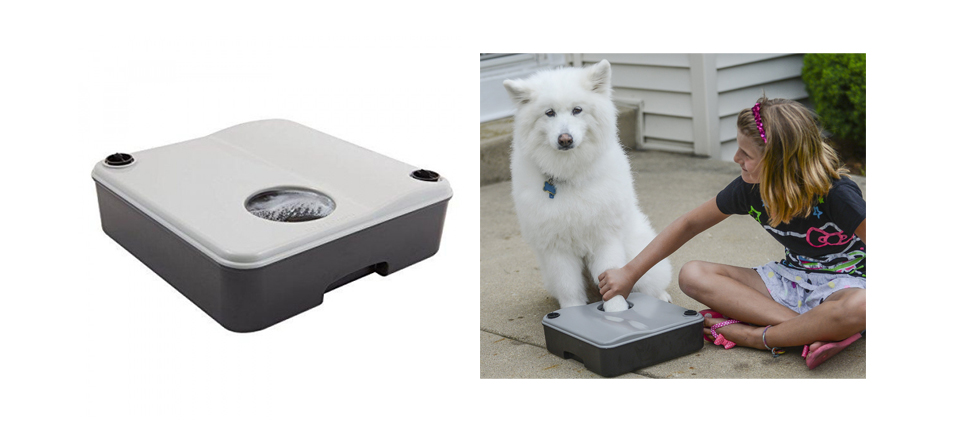
About: As you can see, this design of SKI Innovations Paw Boss is unlike the other two we recommended. This one uses a multi-reservoir unit which allows fresh, clean water after every paw use without the need to refill it. You have to simply tilt the device one way to to fill the paw cleaning compartment with clean water. To empty the dirty water, you just have to tilt it in the opposite direction.
It can be easily set up and stored at any spot where you are most likely to use it without occupying so much space. It can wash up 4 to 8 paws in one filling although the size fits large paws. It’s available on Amazon for $29.99.
Other Paw Cleaning Solutions
Of course, there are other paw cleaning options that you can use beside paw cleaner devices.
Dog Gone Smart Dirty Dog Doormat
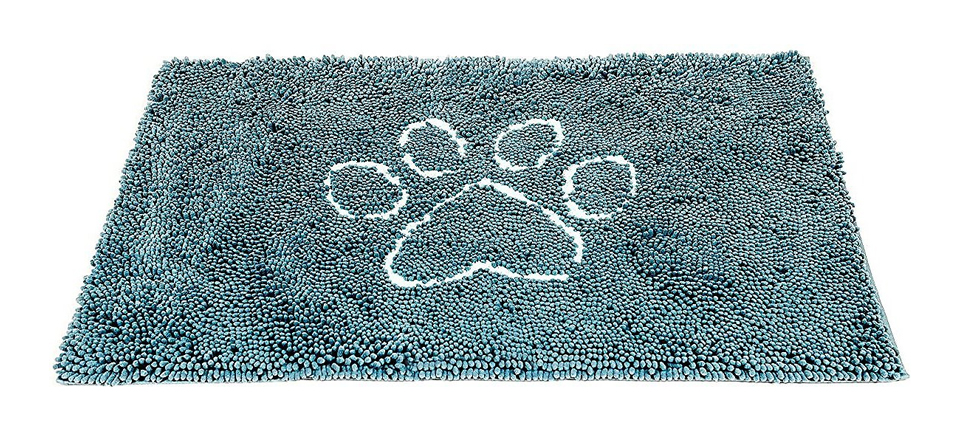
This is a microfiber doggy mat that can soak up water, dirt, and mud. It helps remove the surface dirt but debris trapped in between the paws would definitely need a paw cleaning device approach. Nevertheless, it’s a good investment and will ensure that you keep dirty paw prints to a minimum. It also has a non-slip backing which prevents it from sliding so rest assured that your energetic pups wouldn’t be able to move it (or not!), Get it for $24.99 on Amazon.
Pogi’s Grooming Wipes (100-pack)
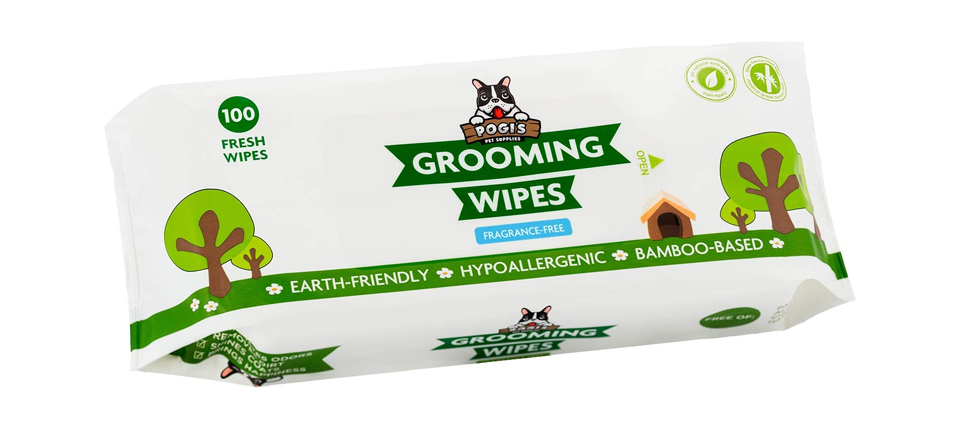
Looking for the fastest and easiest way to clean those dirty paws? These grooming wipes could be the answer. They’re very portable, gentle infused with aloe vera, vitamin E, and awapuhi, and hypoallergenic. Aside from that, they are also very wide which you can use to wipe not only the paws but also remove dog odor. You can get them unscented or in green tea aroma for only $11.99 on Amazon.
When Shiba paws need cleaning, situation by situation
Paw cleaning is not one job on a fixed schedule. It changes with the season and the surface your dog walked on. Reading the situation tells you whether a quick wipe is enough or whether you should be checking the pads themselves.
- After muddy walks and park days. This is the everyday case a paw-cleaner cup was built for. Grit packs between the pads and toes, and a swish in bristled water clears it before it tracks through the house or dries into an irritant. A towel dry afterward matters as much as the wash, because damp between the toes invites yeast.
- Winter road salt and de-icer. Sidewalk salt and chemical de-icers stick to pads and can burn or crack them, and dogs then lick the residue off, which is worse. In salted months, rinse or wipe every foot after every walk. This is one of the clearest cases where cleaning is health care, not housekeeping.
- Summer hot pavement. Heat does not leave dirt, but it stresses the pads, so summer is when you should be looking as much as cleaning. Wipe off pollen and check for redness or peeling. Walk on grass when the asphalt is hot enough to hurt your own hand.
- Allergy season. Shibas are prone to skin allergies, and pollen and grasses collect on the paws where a dog then licks and chews. A wipe-down after outdoor time removes the trigger. If a dog is licking a foot obsessively regardless, that points to an allergy or irritation a vet should look at, not just a dirty paw.
- After hikes and off-trail play. Foxtails, burrs, and thorns lodge between the toes and can migrate into the skin. On the trail your cleaning routine is really an inspection: spread the toes, check the webbing, and remove anything embedded. A foxtail that disappears into the skin becomes a vet visit fast.
We had a boarding guest who kept licking one back foot through his stay. It was not dirt. A close look found redness in the webbing, and the owner's vet later tied it to an environmental allergy. Cleaning the paw did nothing because the paw was not the problem. That is the line to hold: cleaning handles mess, but a dog fixated on one foot is telling you something a wipe cannot fix. If you are still weighing whether a coat-and-paw breed like this fits your routine, our honest take on whether a Shiba Inu is right for you covers the grooming load, and paw care sits inside the wider routine in grooming your Shiba Inu.
What we have learned about Shiba paws since 2019
Across 250-plus Shibas boarded and placed since 2019, the paw issues we see split cleanly. Most are just dirt and easily handled with a cup and a towel. A smaller group are irritations that no amount of cleaning touches, because the real cause is an allergy, a foxtail, or a cracked pad. Learning to tell those apart quickly is what keeps a minor thing from becoming a limp.
What worked: a fast rinse-and-dry after messy walks, checking between the toes during grooming, and treating a dog's fixation on one foot as a signal rather than a habit. What did not work: scrubbing harder at a paw the dog kept licking, which only irritated skin that needed a vet. We clean and inspect paws as part of every stay, but we do not diagnose. If a pad is cracked, a foot is swollen, or a dog will not leave one paw alone, that is a veterinarian's call. Dogs who board with us get paws handled daily, and our in-home boarding can arrange vet transport if a paw problem needs a professional look.
Related questions
How often should I clean my Shiba's paws?
There is no fixed rule. A wipe after muddy, salted, or pollen-heavy walks plus a closer check during weekly grooming suits most Shibas. Increase it in winter, when road salt clings to pads, and in summer, when you should be inspecting for heat damage. Let the season and the surfaces your dog walks on set the pace rather than a calendar.
Why does my Shiba keep licking its paws?
Occasional licking is normal grooming. Constant licking of one or more feet is not, and it commonly points to allergies, irritation from salt or chemicals, a foxtail or thorn lodged in the webbing, or a cracked pad. Cleaning helps only if the cause is dirt. If a dog fixates on a foot after you have cleaned it, book a vet visit to find the real reason.
Is it safe to use soap in a paw cleaner?
Plain water in a bristled cup handles most dirt, and that is the safest default. If you add anything, use a dog-formulated wash rather than human soap, which can dry out and irritate pads, and rinse well. Always dry between the toes afterward. If your dog's skin is already sensitive or allergy-prone, ask your vet what is safe to use.
What to read next
For device picks and how they compare, see our guide to portable dog paw cleaners and washers. Paw care fits inside the bigger picture in grooming your Shiba Inu, and if licking turns out to be more than dirt, read up on Shiba Inu skin allergies. If you would rather have paws cleaned and checked while you travel, our in-home boarding handles it daily.
Looking to adopt or rehome a Shiba?
Rescue-first rehoming with vetted families, 1-year health guarantee, lifetime support.