
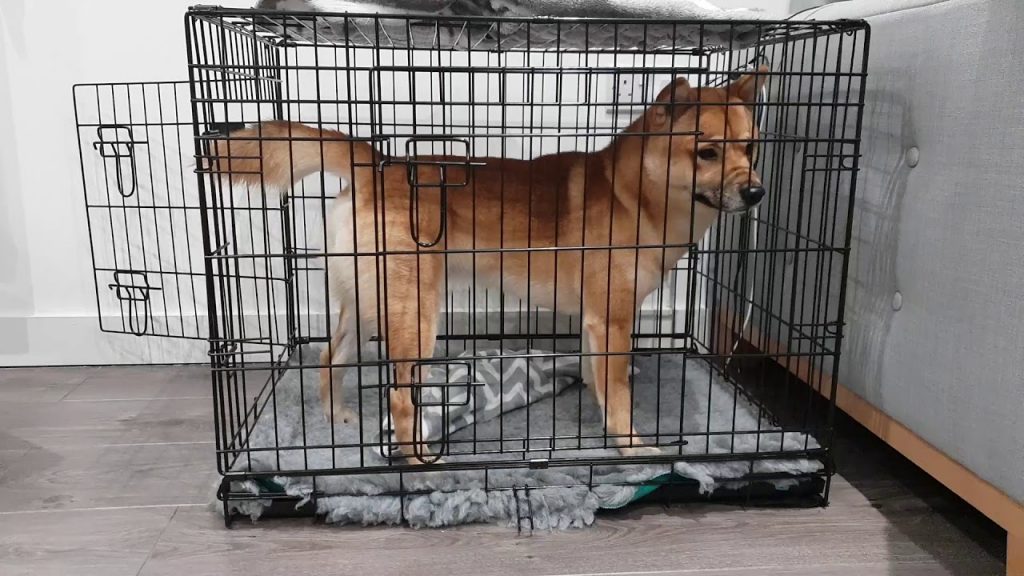
Contrary to popular (or maybe unpopular) opinion, crates are not punishment for dogs. It’s not like a time-out, face the wall things that parents do to their kids when they misbehave. In fact, crates create a “home within a home” for dogs, a safe space which they can enjoy. Crates can be cruel ONLY if used with the wrong intentions.
There are actual benefits that crates provide both for the dog and its paw-rents (or fur parents). First, it allows a secure space for the dog to be safe when it is left unsupervised for a period of time.
Second, it prevents accidental ingestion of foreign objects. This serious and dangerous phenomenon has become more increasingly common. In fact, in a report by nationwide pet insurances, it states that foreign body ingestion is one of its most common claims which shows the severity of this pet safety issue. In 2018, more than $11.5 million worth of claims have been filed by policyholders for foreign body ingestion for both dogs and cats.
Crates help prevent this situation and keep your dog healthy and safe.
Third, crates also helps owners housebreak dogs. If you’re not familiar with the term, housebreaking is essentially house-training. It’s the process of training a domesticated animal like dogs that lives inside the house or a residence to excrete outdoors, or in a designated area inside the house (potty training).
Fourth, crates serve as a travel “house” for your dogs.
If you are still trying to introduce the crate to your dog, you can read about it more here: How to Successfully Crate Train Your Dog in 6 Easy Steps
Specifically for Shiba Inus who are known to be a very energetic breed and have a constant need for movement, crates provide a safe and comfortable travelling experience for them.
So if you have a Shiba Inu and you’re looking for a simple and quick guide on how to choose the perfect crate for your best buddy, we have compiled a little list for you.
The right crate for a Shiba Inu is just big enough for the dog to stand up, turn around, and lie down flat, no larger, built solid, and hard to break out of. Shibas are compact, athletic, and genuinely clever about escape, so a flimsy crate or one sized for a bigger breed works against you on both housetraining and safety. For most adult Shibas that means a 30-inch crate, with a divider if you are sizing up from a puppy so the space grows with the dog. Get the size and the build right first, because the fanciest crate in the world fails if your dog can wriggle out of it or decides the extra room is a bathroom corner. Everything else, wire versus plastic, door style, tray material, is a detail you fit to your home once the fundamentals are set.
The short version, in four parts:
- Size to the body, not the future. Stand, turn, lie down, and no more. Use a divider for a growing puppy.
- Build for an escape artist. Solid latches and a frame a determined Shiba cannot pop, bend, or chew through.
- Match the type to your use. Wire for home and airflow, hard plastic for travel, heavy-duty for a true Houdini.
- Plan the placement. A quiet, ventilated spot near the family, out of direct sun and away from the door draft.
What should you look for in a crate?
Crate Size
The most important factor and the very first that you should consider when looking for the best crate is size. As I have mentioned before, Shiba Inus are very energetic and they should have enough room to move. This is why it is very essential that you get the size right.
Most dog owners, trainers, and experts recommend that owners pick a crate based on the final adult size of their dog. That is, you can adjust the size of the crate for Shiba puppies using dividers.
Shiba Inus grow in a range of sizes but they are generally considered as a small breed. In average, a shiba inu can grow in height from 13 to 17 inches and weigh around 17 to 23 pounds. If by chance you already have an adult shiba and you’re buying a crate for travel, it’s best to measure your buddy to get the measurements right.
A few other things to take note of in terms of crate size is that you need to account for when the dog stands up and sits, turns around, and lays down. Put a 2 to 4 inch allowance so that they’ll be able to comfortably move around. Also, don’t forget to check the height and width of the door for a smooth entry and exit.
For Shiba Inus, the preferred crate size is a 36” large-sized crate but a 30” medium-sized crate will also do. It’s dependent on which one you prefer.
Material
Material is an equally important aspect when it comes to picking the right crate. Material of the crate will dictate its level of comfortability and durability. In addition to that, it highly depends on the purpose of the crate. If the purpose is mainly for outdoor activities, make sure that the material has an anti-rust or anti-corrosion component since it will be exposed to many environmental factors that can easily deteriorate its quality.
For travel purposes especially air travel, lightweight, portable crates (soft with metal frame) are recommended. Additionally, it’s best to have wheels on the crate for ease of transport and a lockable front wheel feature for stability.
Here are some of the types of crates that can be found in the market.
- Wired Crate – This is the most common type of crate for training and housebreaking. It’s very popular among dog owners since it’s very easy to clean, durable, and since it’s wired, there is also a large airflow. Most dogs love that openness but in case your dog is not comfortable with that setup, you can just buy cover for the crate.
It’s also very portable because it’s foldable and it’s also very affordable. But the downside of wired crate is that it can be heavy and it’s not exactly fit for escape artists.
- Plastic/Resin Crate – This is the most preferred for travel and it’s an airline-approved crate. It’s very light so it’s easy to carry around. It also has a heavy duty version which is highly recommended for outdoor travel and for destructive dogs as well as escape artists.
- Soft-Sided Crate – This crate is made from fabric and mesh materials which is not as durable as wired or plastic ones. But it’s very lightweight and also portable which makes it a good travel partner as well.
- Wooden Crate – This is probably the least common of all crates and are only used indoors. It’s basically more of an aesthetic type of crate rather than a functional one.
Security
Shiba Inus are great guard dogs and as such, they also need a very secure crate. Installing locks is a logical choice but you can also look for crate features like firm locking side bolt latches made of reinforced metals to ensure the security of the crate.
Price
Generally, you can get a good quality crate at a price point of $100. The important thing to always remember when considering price for an investment like this is to always put quality above the price. This is mainly because you actually save more when you buy a high quality product that can last you for years than buying a cheap one which you need to replace after some time. But of course, stay on a reasonable range of prices because quality does not always mean that it’s expensive.
The Bottomline
Shiba Inus require a safe, secure, and comfortable crate to ensure that they’re always having the best time and experience. So again here are the things that you should take note (that is, if you scrolled down directly to the end because you don’t want to read the whole thing, we still got you!).
First, consider the size of the crate and pick one that best fits the final adult size of your Shiba Inu. Be accurate with your measurements especially when you’re doing an online order. But the most recommended size is a 36” large size or a 30” medium size which you can easily resize for puppies.
Second, know the purpose of your crate. Is it for travel? Or just for outdoor activities? There are different types of crates that cater to your needs. Pick one that best serves your needs.
Third is security. Again, shiba inus are energetic and they like to move around a lot so make sure that you’re getting durable material to keep these dogs from escaping the crate.
Lastly is the price. Pay good money for a quality investment because it will definitely save you more in the long run (especially if you have the money to afford one).
The crate-selection checklist for a Shiba Inu
A crate is not one purchase for all situations. The crate that works for housetraining a puppy at home is not the one you fly with, and the one that holds a mellow adult will not hold a Shiba with separation panic. Run through these five factors before you buy, in this order.
- Size, sized to the dog and the job. The dog should stand without ducking, turn a full circle, and stretch out to sleep. Any bigger and a puppy will happily soil one end and sleep in the other, which is the opposite of what a crate is for. Most adult Shibas land in a 30-inch crate. Buy that size with a divider panel for a puppy so the usable space grows as the dog does, instead of buying two crates.
- Material and type, matched to how you will use it. Wire crates give the best airflow and visibility and fold flat, which suits home use. Hard plastic airline-style crates feel den-like and are required for most air travel. Soft-sided crates are light but no match for a chewer or an anxious dog. Pick for your primary use, not the showroom look.
- Escape resistance, because this is a Shiba. This breed problem-solves latches, squeezes through gaps, and chews weak points. Look for slide-bolt or double latches rather than a single spring clip, welded seams, and no thin plastic corners a determined dog can pry. If your Shiba has any history of bolting, treat a standard crate as a starting point and step up to heavy-duty if it tests the walls.
- Ventilation and placement. Airflow keeps the crate comfortable, especially in a warm room, so avoid boxing the dog into a solid-walled crate in a hot corner. Place it somewhere the dog can see the family but is out of direct sun, foot traffic, and the cold draft off an exterior door. Shibas settle better when they are near their people but not underfoot.
- Durability and cleaning. A removable, washable tray and a coated frame save you constantly. Housetraining accidents, muddy paws, and the occasional overnight happen, and a crate you can hose down and dry beats one that traps odor. Cheap trays crack and warp within months, so this is worth spending on.
One owner came to us baffled that their Shiba kept "breaking" its crate. The crate was fine, it was a single spring-latch wire model, and the dog had simply learned to nose the latch open. A slide-bolt upgrade ended the escapes overnight. The lesson holds for the breed: assume your Shiba is smarter about the crate than the crate is. Once you have the right box, the actual conditioning is its own project, covered in our guide on how to successfully crate train your dog. And if you are still deciding whether this independent, escape-prone breed fits your household at all, is a Shiba Inu right for me is worth reading first.
What we have seen across the pack
Across 250-plus Shibas placed since 2019, and boarding many more, the crate mistakes are consistent. The biggest is buying too large, usually because the crate looked "cramped" to a human eye. A crate that gives a puppy room to potty in one corner and nap in another quietly teaches the dog that the crate is not a den, and housetraining stalls. The second is under-building: a soft-sided or flimsy crate handed to a dog with any anxiety, which ends in a chewed door and sometimes an injured mouth. Shibas do not tolerate confinement they can beat, and a weak crate invites the fight.
What works is boring and reliable. A correctly sized, solidly built crate, introduced slowly as a good place rather than a jail, holds up for years. We crate every dog that boards with us, and the ones who settle fastest are those whose owners picked a crate that fit and paired it with patient conditioning at home. The crate is a tool for safety and rest, not a storage bin. When a dog panics in a crate no matter how well it is chosen, that is a separation or anxiety problem, not a hardware problem, and it deserves a real look from a qualified trainer or veterinary behaviorist. Owners using our boarding get our read on how their dog actually handles crating away from home, which often surfaces issues before they become emergencies.
Related questions
What size crate does an adult Shiba Inu need?
Most adult Shibas do well in a 30-inch crate, which lets a typical 20-to-25-pound dog stand, turn, and lie flat without extra room to spare. Measure your dog from nose to tail base and floor to head, then add a few inches. If you are buying for a puppy, get the adult size with a divider so you are not buying twice.
Are wire or plastic crates better for a Shiba?
It depends on use. Wire crates ventilate well, fold flat, and suit everyday home and housetraining use, especially in warm rooms. Hard plastic crates feel more enclosed and den-like and are required for most air travel. For a chewer or an anxious dog, a heavy-duty crate beats both. Match the crate to your main situation rather than looking for one perfect answer.
My Shiba keeps escaping the crate. What do I do?
First upgrade the hardware, since most escapes are a smart dog defeating a simple latch. Slide bolts or double latches stop the majority. If the dog is not just opening the door but frantically trying to break out, that is distress, not cleverness, and forcing more confinement can make it worse. Have a professional assess for separation anxiety before you escalate the crate.
What to read next
Once you have the crate, work through how to successfully crate train your dog and our broader Shiba Inu potty training guide, since the two go hand in hand. If crate distress looks like real anxiety, read about Shiba Inu separation anxiety, and our boarding service can tell you how your dog handles crating away from home.
Looking to adopt or rehome a Shiba?
Rescue-first rehoming with vetted families, 1-year health guarantee, lifetime support.