
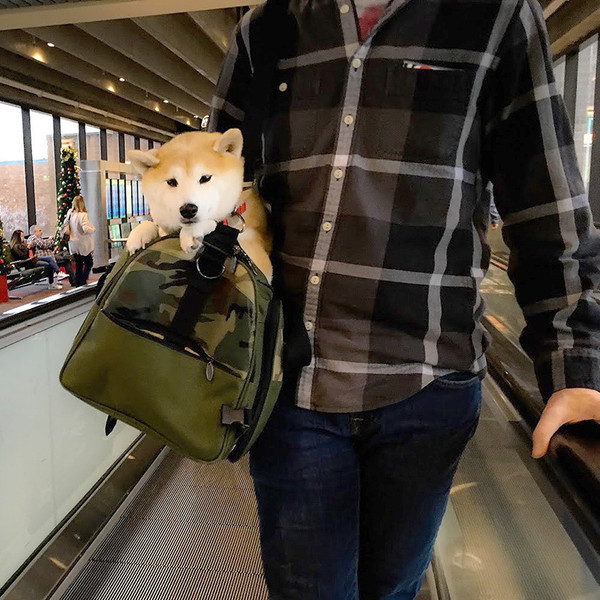
Sometimes, leaving our pet at home is not a choice. It could be finally relocating to a new place or taking an extended vacation at your family house a few hundred miles away. If petsitters are not an option and you prefer the peace of knowing your Shiba is safe with you, then you have to prepare to fly with it.
There are two ways to go when flying with your Shiba Inu. One, it could be an enjoyable trip you’ll never forget, or two, a stressful and exhausting flight you’ll also never forget.
But what’s important is your Shiba is safe and secure during the plane ride and as a responsible dog owner, there are several things you need to know and do.
Flying with a Shiba Inu is doable, but it demands more preparation than most breeds and a hard, honest look at whether the trip is worth the stress for your dog. The core decisions are whether your Shiba flies in-cabin or as cargo (most airlines cap in-cabin carriers around twenty pounds, and adult Shibas often sit right at that line), getting a vet exam and any required health certificate, and acclimating the dog to its carrier months in advance. For many owners, the kindest answer is that a nervous or larger Shiba is better off with trusted boarding than in the cargo hold. Plan early, involve your vet, and be willing to leave the dog home if flying is not right for it.
The short version, in four parts:
- Cabin beats cargo. If your Shiba and carrier fit under the seat, that is far safer and less stressful.
- See your vet early. You may need a health certificate, and it expires, so time it right.
- Train the carrier for months, not days. A carrier-comfortable dog flies far better.
- Be honest about stress. For an anxious or larger Shiba, boarding at home can be the kinder choice.
What You Need to Know when Flying with a Shiba Inu
For first-time fur parent travelers, flying out with a dog can be overwhelming. There are rules and regulations to look out for, extra costs to cover, and the anxiety-inducing thought of ‘is it safe?’
True, it’s more complicated and expensive than flying pet-free and there are a lot of factors to consider. But it is doable, as long as you do your research and is well-informed.
Here, we’ve listed what you need to know about flying with your Shiba Inu.
Check airline requirements
If you’ve decided to fly with your Shiba Inu, it is best to reach out to your airline and ask for their policies regarding pets on flights. Different airlines have different requirements so you must narrow down to which airline suits you and your pet’s needs first before you even book a ticket.
There will be restrictions on the size, breed, and age, and what carrier or crate is allowed inside the plane. Some airlines only allow limited pets on a flight so it is best to make a reservation as soon as you can.
There are two ways you can fly with your pet: In-cabin or cargo.
In-cabin
The general rule is if your dog in its carrier can fit in the under-seat space of the aircraft, then you are allowed to bring it to the cabin. Usually, these are dogs weighing up to 20 pounds.
You can’t buy your dog an actual sit and bringing your Shiba (if his size allows it) as a carry-on is cheaper than having it checked in as cargo. Remember, your pet carrier counts as your carry-on bag.
You’re also not allowed to take it out of the carrier during the flight. So just a heads up that this might be a bit stressful, especially if your pooch is barking or has an accident that will disturb others.
As cargo
The only option if you own a bigger dog is to have it checked in as cargo. This means your dog will be in a pressurized, temperature-controlled compartment not too different from the passenger cabin. Essentially, it is flying as a checked bag on the same flight as you.
Again, you need to check with your airlines as some don’t even allow animals as cargo.
Visit the vet before your flight
It’s always best to visit your veterinarian before flying with your dog. A check-up will reveal your Shiba’s health and if they are fit to travel.
Common health requirements for dogs are deworming should be completed at least three days before the flight and that dogs who have undergone recent surgeries are not allowed to travel.
You might be required to submit a health certificate for your dog, but this also varies per airline and if you’re traveling domestically or internationally. Some might require for pets flying in the cargo apartment, but not for pets in the cabin.
However, for international flights, a health certificate is always required. This is also why you need to visit your vet before flying as the airline will ask for a signed international health certificate for traveling cats and dogs.
Also, note that these health certificates expire after 30 days so always plan accordingly.
For vaccinations, most international flights might require the following:
- Rabies vaccine and signed rabies certificate
- Canine distemper virus vaccination
- Canine parvovirus vaccination
- Infections canine hepatitis vaccination
- Leptospirosis vaccination
If your Shiba is the anxious kind, the veterinarian might prescribe a sleeping or anti-anxiety medication. However, this is not always necessary and a lot of dog owners avoid this.
A good non-medicated way to call your dog is to give them a chewing toy or their favorite blanket. This will help relax them throughout the flight.
Get your Shiba comfy with its carrier
If your Shiba is not carrier-trained, then immediately shoving them inside one will only cause stress and panic in your pooch.
So months before your flight, it is best to get it used to its carrier. You can start gradually until they get comfortable. You can use a very similar training process when you were just crate training them.
This a very important tip, as most airlines require your dog to be in a carrier unless it is a service animal.
As mentioned, start carrier training four months, or even earlier, before your flight. First, leave it out in the open, letting your Shiba sniff, just introducing the physical form of the carrier.
Next is slowly coaxing them inside. This might take time, days, but eventually, your pooch will get comfortable. Start training for a few minutes a day and as always, reward with treats or positive reinforcement everytime your Shiba gets in the carrier on its own.
Surround it with your dog’s favorite things like their stuffed toy or familiar blanket. And make sure to not rush your Shiba. Do each step slowly and consistently.
Cost of flying
The cost of flying your dog varies per airline. But usually, the standard fee is $125 and that’s just the base price. If your dog is flying as checked-in cargo, the charge will be based on the weight of your dog and its carrier and your destination.
Best prepare extra money when traveling with your pooch as additional charges might not be included when you booked your ticket.
So it is more expensive to travel with your pets than to travel pet-free, not to mention the additional fees you’ve already paid when you visited the vet or even the purchase of its carrier.
Health risks for dogs
Unlike humans who immediately tell you they are not feeling well, your lovable Shiba Inu can’t.
True, some dogs love flying and usually behave well during their flight, but some dogs aren’t just as excited as others.
This is why you need to look at the pros and cons of flying with your dog. Are your and your dog’s stress worth it wherever you are going? If you have a nervous pooch and you are off to a vacation, it might be better to leave them with a trusted family or friend instead of having them go through the terrors of flying.
Here are some health risks that you should look out for when flying with your dog.
Anxiety
Air travel for your dog can be stressful, most especially if they are in cargo and on an international flight. The long hours with layovers can be a nightmare for you and your pet.
This travel experience can be traumatizing for your Shiba Inu. The airport and the plane are filled with new and loud noises, there are changes in air pressure and temperature, plus a whole lot of strangers and new scents your dog is not used to.
This is a whole new level of discomfort for them.
Injuries
If your dog is riding in cargo, you won’t be able to see them until you finally land. Now, this is a challenge if your pooch is on medication and needs constant supervision. This is why more airlines have newer policies that prevent pets from flying in cargo and also lessen the risk of injuries.
It is definitely better if your dog is with you in the cabin where you can attend to their needs at all times.
Temperature changes
Most health-related issues in this article involve your dog flying in cargo. This is because we don’t see them and there’s just no way to know how they are doing in the belly of the plane.
One of the main health concerns when it comes to flying with your dog is the temperature. Most cargo holds are pressurized and climate controlled so this should give you a bit of an assurance that your pet is safe.
However, this doesn’t mean that there won’t be temperature changes at any time of the flight. Your dog might experience extremely hot or extremely cold temperatures, which can lead to overheating or hypothermia.
Other health consideration
If your Shiba Inu is pregnant or you have a senior dog, there are more issues you need to consider aside from the ones mentioned. For older dogs, a thorough check-up and a geriatric blood panel assessment at the vet are needed to make sure there are no health complications.
.
A pre-flight framework for Shiba owners
If you decide to fly, work through these five decisions in order. The first one shapes everything after it.
- In-cabin or cargo. This is the biggest decision. In-cabin is far safer and less stressful, but it usually requires the dog and carrier to fit under the seat, often a twenty-pound limit. Adult Shibas frequently sit near that line, so measure and weigh honestly. If your dog can only fly cargo, weigh that risk seriously before booking.
- Airline rules and early booking. Every airline sets its own size, breed, age, and carrier rules, and many cap how many animals fly per flight. Confirm the policy before you buy any ticket, and reserve the pet spot as early as possible, because they fill up.
- Vet exam and paperwork. Book a veterinary visit well ahead. You may need a signed health certificate, which is typically required for international travel and expires after about thirty days, so timing matters. Confirm vaccination requirements for your route, and make sure the dog is genuinely fit to fly.
- Carrier acclimation, months ahead. Do not spring the carrier on your Shiba days before the flight. Start months out, using the same gradual, treat-based approach as crate training, until the carrier is a calm, familiar space. A dog that already loves its carrier is a dramatically better traveler.
- The honest cost and stress check. Flying with a dog costs more, adds paperwork, and stresses many animals, especially anxious ones or those relegated to cargo. Ask plainly whether the trip is worth it for your dog. Sometimes the responsible answer is to leave the Shiba somewhere safe at home.
One Shiba whose family consulted us was set on flying the dog cross-country in cargo for a two-week trip. The dog was a poor flyer, near the cabin weight limit, and deeply anxious around noise. Once they walked through the cargo stress, the paperwork, and the cost against a stay in familiar boarding, they chose to leave the dog home. It was the right call for that dog, and the trip was better for everyone.
How well a Shiba copes with the noise, confinement, and strangers of air travel comes down to temperament, which is worth understanding before you adopt. For the honest read, see whether a Shiba Inu is right for you. And since carrier comfort is the foundation of a decent flight, our guide to successfully crate training your dog is the place to start.
How this plays out
Across 250-plus Shibas since 2019, our most common flying conversation is not about logistics, it is about whether to fly at all. Owners often assume flying the dog is the default, then realize once they weigh cargo risk, cost, and their dog's anxiety that boarding at home is the calmer, safer option. Flying can go fine, but it is rarely the low-stress choice people imagine.
What worked: choosing in-cabin whenever the dog fit, starting carrier training months ahead, handling vet paperwork early, and being willing to change plans for a dog that clearly could not cope. What did not work: last-minute carrier introductions, assuming cargo is no big deal for a nervous Shiba, and booking before checking the specific airline's rules.
One firm caution. Talk to your veterinarian before flying, and ask specifically about sedation, because many vets advise against sedating dogs for air travel due to the risks at altitude, particularly in cargo. Your vet can also confirm your dog is medically fit and handle required certificates. And if the honest answer is that flying is too much for your Shiba, our in-home boarding keeps the dog comfortable and supervised while you travel.
Common followup questions
Can a Shiba Inu fly in the cabin?
Often yes, if the dog and its carrier fit in the under-seat space, which usually means a weight limit around twenty pounds. Many adult Shibas fall near that line, so measure and weigh your dog and check the specific airline's carrier dimensions before booking. In-cabin is far safer and less stressful than cargo, so it is worth confirming eligibility early.
Should I sedate my Shiba for a flight?
Usually not without veterinary guidance. Many veterinarians advise against sedating dogs for air travel, because sedatives can affect breathing and heart rate at altitude, a particular concern in cargo. Talk to your vet about your specific dog. Non-medicated calming aids, a familiar blanket, and thorough carrier training are safer first steps for most Shibas.
Is flying safe for my Shiba, or should I board instead?
It depends on the dog. A calm, carrier-trained Shiba that fits in-cabin can fly reasonably safely. An anxious dog, or one large enough to require cargo, faces real stress and risk, and for many of those dogs, staying home with trusted boarding is the kinder, safer choice. Weigh your individual dog honestly rather than defaulting to bringing it along.
What to read next
If you are still weighing the breed, our honest guide on whether a Shiba Inu is right for you covers temperament and stress tolerance. For ground travel, read car safety tips for traveling with your Shiba, and for the carrier work flying depends on, how to successfully crate train your dog. When flying is not right for your dog, our in-home boarding is the calmer option.
Looking to adopt or rehome a Shiba?
Rescue-first rehoming with vetted families, 1-year health guarantee, lifetime support.