
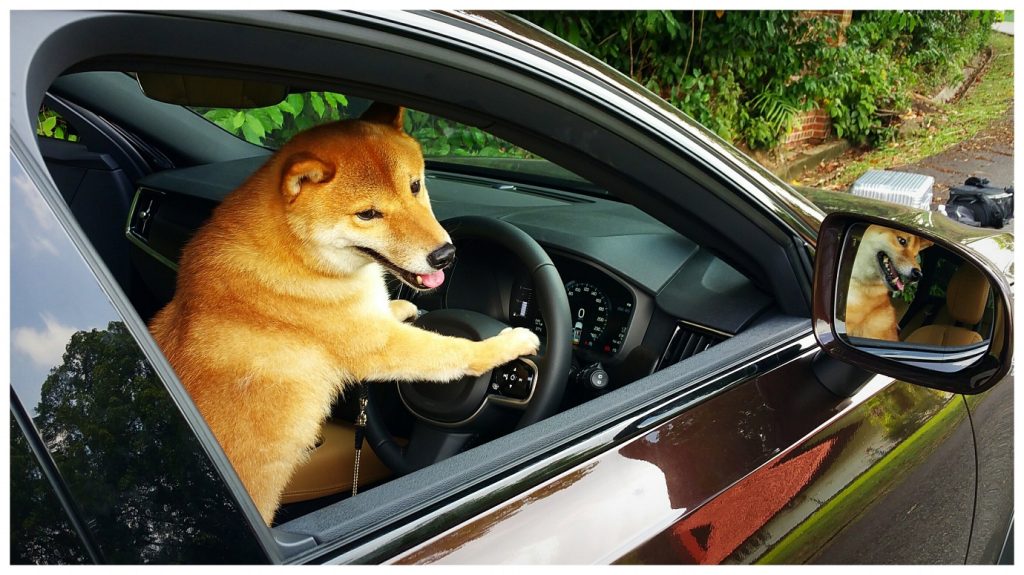
The Shiba Inu is an adventurous breed. They have a lot of energy to spare and are good companions for your outdoor activities. But before you can go on epic trips with your dog, the first thing you should cover is how to drive and travel with a Shiba Inu.
Dogs are not used to car rides. The motion, sights, noise, bumps, and uncertainty of where they are going can cause them anxiety and stress. Now, you must prioritize your dog’s safety when traveling, not only for their well-being but also to stop them from distracting you.
Here are some car safety tips you need to know before you travel with your Shiba Inu.
The single most important rule for car travel with a Shiba Inu is simple: the dog is always secured, never loose. A crated puppy or an adult in a crash-tested harness is protected in a sudden stop and cannot distract the driver, and just as importantly, a secured dog cannot bolt the instant a door opens. That last point matters more with this breed than most, because Shibas are flight risks, and a rest stop with an unsecured dog is exactly where they vanish. Add gradual acclimation to the car, a plan for motion sickness, and the absolute rule of never leaving a Shiba in a parked car, and travel becomes safe and even enjoyable.
The short version, in four parts:
- Always restrain the dog: a secured crate or a crash-tested harness in the back seat, never loose.
- The open door is an escape risk. Secure your Shiba before anyone opens a car door at a stop.
- Build tolerance gradually, and manage motion sickness with empty stomach, fresh air, and breaks.
- Never leave a Shiba in a parked car. Temperatures turn lethal in minutes.
How to safely drive with your Shiba Inu
Crates
For Shiba Inu puppies, the best way to secure them is in a travel crate or pet carrier.
We all know puppies can be cute troublemakers, always exploring their surroundings, and excited to sniff and see more. But these can be driving hazards as they can disturb the driver of the vehicle.
With a crate or a pet carrier, it keeps the Shiba puppy in one, secure spot. Make sure to provide them with a blanket for comfort.
Dog hammocks
For larger or adult dogs, a dog hammock is a better option.
A dog car hammock covers the entire back seat of your car. It is padded and provides a comfortable and secure nest for your Shiba during the ride. It loops over the front headrests and also acts as a barrier to keep your dog from jumping over to the front.
Since it occupies the back seat, it gives your Shiba room to stretch and lay down.
Seatbelts/Harnesses
There are seatbelts or harnesses made specifically for dogs. Similar to human seatbelts, this prevents unfortunate situations during accidents.
It is best to belt your Shiba in the back seat where there is less space for them to bounce if anything were to happen.
A bathroom schedule
Just like humans who needs to take breaks during car trips, your Shiba Inu needs a few pitstop as well.
Adult dogs need a 15 to 30-minute break every 2 to 4 hours. This is for eating, drinking, bathroom time, or just stretching. Puppies and elderly dogs need more stops, suggested 15-minute breaks once every hour because they have less control over their bladders.
Water should be offered once every 2 hours.
Regular stops also destress your Shiba and give them a chance to recover from motion sickness.
A doggy travel bag
When you are traveling, what your dog needs might not be readily available in rest stop stores. So make sure you prepare everything before leaving. It is better to overpack than under pack and panic in the middle of nowhere.
The basics for your doggy travel bag are food, treats, toys, a bowl, water, diapers (if needed), and paper towels. You can add more depending on the needs of your dog.
Training
Aside from physical products (mentioned above), training is also important. A well-trained Shiba will cause fewer distractions, making the car ride safer.
To start, get your Shiba used to getting in and out of the car and introduce the sounds of the doors, the engine, and the horn.
Once he’s fully used to that, go for a short ride and as your Shiba gets comfortable, increase the distance. Eventually, your dog will learn how to behave.
What to look out for
There are dogs, especially those who are used to it, that will find car rides exciting. But other dogs are anxious and panicky the whole time.
If you are unsure of how your Shiba might be feeling during the trip, here are some common signs to look out for.
Barking
There are excited barks but there are also barks that say stress and displeasure. If your Shiba’s bark is bordering between a whine and a cry, take a break and check up on them.
Excessive panting
Excessive panting might be a sign of a warm car temperature or your Shiba being worked up. They might be sensitive to the car movement, the changing scene or overwhelmed with the smell. Their panting might be from being uncomfortable.
Yawning and excessive drooling
These are signs of stress, but also motion sickness.
Here are a few ways to help manage your dog’s car sickness:
- Limit your dog’s food and water a few hours before driving
- Destress them by taking them out in a 15-20 walk.
- Make sure they are comfortable.
- Open a window so the chilly wind can soothe them.
A safe Shiba car-travel setup, layer by layer
A calm, safe car trip with a Shiba is built from five layers. Each one covers a different failure point.
- Secure restraint. Puppies ride safest in a secured travel crate, adults in a crash-tested harness clipped to a seatbelt, always in the back seat. A loose dog is both a crash hazard and a driver distraction. This is the non-negotiable layer everything else builds on.
- Escape-proofing the stops. Most Shiba travel disasters happen at rest stops, not on the road. Clip the leash before you open any door, use a well-fitted harness the dog cannot back out of, and treat every door as a potential bolt point. A slip lead as a backup is cheap insurance for a flight-risk breed.
- Acclimation and training. Do not make the first car ride a long one. Let the dog explore a parked car, feed treats inside, start the engine, then build from short trips to longer ones. A Shiba that finds the car boring and predictable travels far better than one thrown straight into a road trip.
- Motion sickness and comfort. Many dogs get carsick, especially early on. Limit food a few hours before departure, keep the cabin cool with fresh air, take regular breaks, and watch for drooling and yawning as early stress and nausea signs. Adult dogs need a break every two to four hours, puppies and seniors more often.
- Never the hot car, always the kit. A parked car heats to deadly levels in minutes, so a Shiba never waits in one, even briefly. Pack a travel bag with water, a bowl, food, waste bags, and current ID before you leave, because what your dog needs will not be at the next gas station.
One Shiba we boarded had a near-miss on a road trip when the family opened the tailgate at a rest area and the unclipped dog shot out toward the parking lot. Nothing came of it that time, but it was pure luck. After that, the rule became leash-clipped-before-doors-open, every single stop, no exceptions. For a breed this quick to bolt, that one habit prevents the worst outcome on the road.
How much of a flight risk you are managing in the car comes straight from the breed's temperament, which is worth understanding before adoption. For the honest read, see whether a Shiba Inu is right for you. Because the open door is the real danger, pair this with how to keep your Shiba from slipping past you.
What we have seen
Across 250-plus Shibas since 2019, including plenty of vet-transport runs, the pattern is consistent: the road is rarely the danger, the stops are. A well-restrained dog on the highway is fine. The risk spikes the moment a door opens in a new place and a curious or spooked Shiba sees an opening.
What worked: crating or crash-harnessing every dog, clipping the leash before any door opened, acclimating nervous dogs over several short trips, and keeping the cabin cool with breaks every couple of hours. What did not work: letting a dog ride loose "just this once," opening a hatch with an unsecured dog inside, and pushing a first-time traveler straight into hours on the freeway.
Two cautions we repeat. If your Shiba's car anxiety is severe (panic panting, relentless whining, vomiting on every trip), that is worth raising with your veterinarian, who can rule out illness and discuss anti-nausea or anti-anxiety options, and a certified trainer can help with desensitization. Building calm, confident car behavior from the ground up is the kind of work we do in our 1-on-1 training sessions.
Common followup questions
How do I keep my Shiba from getting carsick?
Limit food for a few hours before the trip, keep the cabin cool with some fresh air, and take regular breaks so the dog can reset. Start with short rides and build up, since tolerance often improves with exposure. Watch for drooling and yawning as early signs. If motion sickness is severe or constant, ask your veterinarian about anti-nausea medication.
What is the safest way to restrain a Shiba in the car?
Puppies are safest in a secured travel crate, and adults in a crash-tested harness clipped to a seatbelt, both in the back seat. A loose dog can be injured in a stop and can distract the driver or bolt when a door opens. Whatever you choose, it should hold the dog securely and be impossible to slip out of.
How do I stop my Shiba bolting at rest stops?
Treat every door as an escape point. Clip the leash to a snug, escape-resistant harness before anyone opens a door, and consider a backup slip lead. Never rely on the dog staying put on its own, because a Shiba in prey drive will not. Keep ID and microchip details current in case the worst happens anyway.
What to read next
If you are still weighing the breed, our honest guide on whether a Shiba Inu is right for you covers the flight-risk reality. For other travel, read what you need to know when flying with a Shiba Inu, and for the escape side, how to keep your Shiba from slipping past you. When a trip is not dog-friendly, our in-home boarding is a safer option than a stressful ride.
Looking to adopt or rehome a Shiba?
Rescue-first rehoming with vetted families, 1-year health guarantee, lifetime support.