
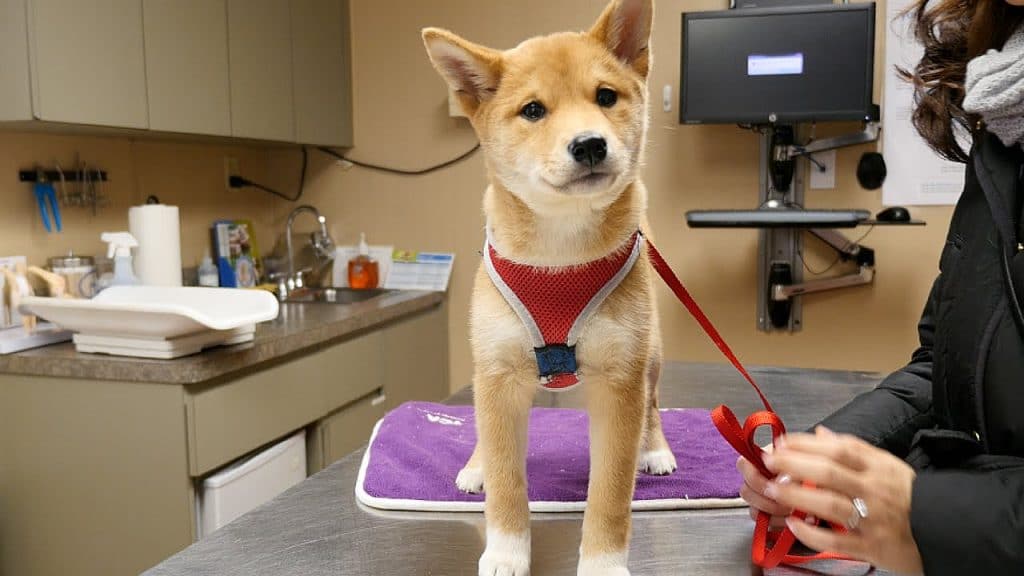
Shibas are notorious escape artists. Therefore, you need to practice additional safety measures to keep them safe. The following information will help you keep your pup from getting into trouble and prevent any problems with tracking him.
The reliable way to keep a Shiba from slipping past you is to stack several layers of prevention rather than trust any single one. This breed combines a strong prey drive, real intelligence, and a stubborn independent streak, which means a Shiba will test gates, doors, and your attention constantly. No fence and no command is escape-proof on its own, but physical containment, disciplined door habits, a fitted harness, a full identification stack, and trained boundaries together make a loose dog very unlikely. Assume your Shiba would leave if it could, and build accordingly.
The short version, in four parts:
- Layer your defenses. Fencing, door habits, equipment, ID, and training back each other up.
- The door is the number one escape point, so manage every entry and exit deliberately.
- Identification is your safety net. Microchip, current ID tags, and a GPS tracker together.
- A tired, well-exercised Shiba wants to escape far less than a bored one.
Microchipping Your Shiba Inu
One of the things every Shiba owner should do is have their dog microchipped. This is imperative, as a Shiba likes to break free and roam if he can. That is why professional dog trainers always recommend that owners keep their Shiba Inus on a leash while they are being walked.
Besides the need to roam and explore, Shibas can always get distracted and get away from you if they see a squirrel or bunny. Shibas have a predatory nature. Therefore, the sight of one of these smaller animals might trigger predatory drift, or the need to chase the animals. If this happens, you can lose your Inu if you do not have tags on its collar or the dog is not microchipped.
So, one of the first things you want to do when you have an Inu is to have it microchipped. The chip is injected into the scruff of the dog’s neck and contains all his vital contact information. If the dog is found and taken to a shelter, a quick scan and computer look-up can verify where a microchipped dog lives and the contact number.
A Back-up Identification
Besides microchipping, add identification tags to the dog’s collar, so he has a backup means of being identified. Both microchipping and dog tags can help you relieve your mind somewhat if you Inu runs away or gets lost and you cannot find him.
How to Ensure Your Dog’s Safety
You can also take the following measures around your property and with the dog’s care to ensure he stays where he is supposed to be.
- Place notices near the entrances of your house warning visitors to be careful about opening the fence or going inside the house, as your dog might slip out.
- Make sure that your Inu’s harness or collar is fitting properly. To ensure the fit, you should be able to fit just two fingers beneath the collar or harness.
- Get into the routine of inspecting the gates and fences in your yard and fix any damage you notice.
- To keep your Inu from digging under a fence, extend the barrier at least a foot or more under the ground, making it hard for him to get out.
- You might also think about placing a thick level of gravel around the bottom of your yard’s fence. This often will prevent any attempt to dig out and escape.
- When you exit or enter your home, block the door with your body.
- Keep all your fence gates locked so your Shiba cannot open a latch and get out.
- Keep any outdoor furniture away from fences, as a table or chair makes it easy for your dog to jump on the furniture and get over the fence.
- Be careful around the holidays when people ignite fireworks. They often can scare the Shiba, which can cause him to run off.
Attach a GPS
Besides installing a microchip and adding dog I.D. tags, you also should attach a GPS tracker on your dog. That way, you can check, via your cell phone, where your dog may be roaming. If you have the microchip installed, use a GPS tracker, and add an ID tag, you will have a far greater chance of reuniting with your pup.
Tracking Your Shiba
In the unfortunate event, your preventative measures don’t work and your dog still plays the escape artist, you need to do some other things. For example, take lots of pictures of your Shiba Inu in case you need to post them so others may call you about his whereabouts. When posting signs in your local community, make sure you add your name and contact information.
If you must pound the pavement in search of your Inu, ask someone you know well to stay at your house in case your Shiba happens to return home. Also, ask everyone you see if they have seen your dog. People who do not have a dog often will notice a stray dog running around by itself in the neighborhood.
Tell all your neighbors who are dog parents about your little escape artist. They often will see other dogs while they are walking their own pooches.
If you see your Shiba, call it over to you. Never run in the dog’s direction, as it may think you are being playful, which will cause it to dart away from you.
Always keep looking, even for months. Don’t give up. While some dogs are recovered in several hours, others are found several months later or even a year after they’ve run away.
How to Keep Your Shiba Inu From Wanting to Escape
If you take your Shiba Inu on daily walks so it can explore its surroundings, it will be less likely to escape. Therefore, it is always a good ideal to follow a protocol where your dog can check out new environments. This will also make your daily walks more interesting.
When you open the door, make sure your dog is not hovering near to get out of the house. If your dog is near your feet, direct it away from the entry. It is also a good idea to let your Shiba interact with other canines or people. If it sees people or dogs walking past your home, it will be less likely to leave its home to check out the “strangers.”
The above tips can greatly reduce the chance that your Shiba will escape and set about roaming around your neighborhood. The more you socialize your pet, the less likely he will be interested in checking out the neighborhood for himself.
What Methods Do You Use?
What methods do you use to keep your Shiba safe? Do you keep your dog on a leash? Will it stay in the house if you open the door? Some Shiba owners teach their dogs to stay even when the door is open. Do you have any training tips to share about teaching a Shiba about stay or and keeping it safe behind its fence or inside the house?
A layered escape-prevention system for Shibas
Think of containment as five layers. When one fails, and one eventually will, the others hold.
- Physical containment. Solid fencing with no gaps, dig barriers extended below ground, locked latches a clever paw cannot flip, and no furniture parked near the fence line to use as a launch pad. Inspect it on a schedule, because Shibas find the one loose board you missed.
- Door and threshold management. The front door is where most Shibas get out. Block the gap with your body, teach the dog to sit back from the threshold, and use a baby gate or an airlock entryway so a bolt for freedom meets a second barrier.
- Correct equipment. A properly fitted harness (two fingers of clearance, no more) is much harder to back out of than a flat collar. Many Shiba owners use a martingale or an escape-resistant harness on walks precisely because a spooked Shiba can slip a loose collar in a second.
- The identification stack. Microchip with registration kept current, a physical ID tag on the collar, and a GPS tracker for real-time location. Each covers the others' weak spots, and together they turn a lost dog into a found one.
- Trained boundaries and recall. A trained door boundary and the best recall you can build are worth the effort, even though Shiba recall is never guaranteed off a long line. Pair training with enough exercise and enrichment that the dog is not desperate to leave in the first place.
One Shiba we boarded was an experienced fence-digger whose family had already raised the fence twice. The dog was not jumping, it was excavating at a soft corner near a flower bed. Extending a buried barrier and laying gravel along that run ended the escapes, but the real change was adding a real morning walk so the dog had somewhere for its energy to go. Containment plus a met need, not containment alone.
How much of a flight risk you are signing up for is a breed-level question worth understanding before adoption. For the honest read, see whether a Shiba Inu is right for you. Since so many escapes start on-leash when a Shiba lunges or backs out of a collar, our guide to loose-leash walking your Shiba Inu is a useful companion.
What we have seen
Across 250-plus Shibas since 2019, nearly every "my dog got out" story traces back to a single unmanaged moment rather than a failed fence: a propped-open door on moving day, a gate a contractor left ajar, a leash clip that was not seated, a collar one notch too loose. The dogs that stay home are not the obedient ones, they are the ones whose owners built habits that assume the dog will try.
What worked: the full ID stack on every dog, harnesses instead of collars for walks, door routines practiced until they were automatic, and daily exercise to take the edge off the roaming urge. What did not work: relying on recall alone with a distracted Shiba near an open gate, and assuming a tall fence settles the question for a dog that digs.
One honest limit. Recall in a Shiba is never fully reliable off-leash in open space, and no amount of training makes it so. If your dog's escaping is tied to panic (fireworks, storms, separation) rather than opportunism, a certified trainer or a veterinary behaviorist should shape the plan. Building a solid door boundary and a strong recall foundation is exactly the kind of work we do in our 1-on-1 training sessions.
Common followup questions
Why are Shiba Inus such escape artists?
It is baked into the breed. Shibas were developed to hunt in rough terrain, so they carry strong prey drive, real problem-solving intelligence, and an independent streak that treats a fence as a puzzle. A squirrel, an open gate, or a moment of boredom is all it takes. That combination is exactly why layered prevention matters more with this breed than most.
Can you train a Shiba to have reliable recall?
You can build a strong recall, but you should never treat it as guaranteed off-leash in an open area. A Shiba in prey drive can tune you out completely. Train recall hard, reward it richly, and still use a long line or secure space rather than betting your dog's safety on a command alone.
What should I do the moment my Shiba gets loose?
Do not chase. Running at a Shiba reads as a game and sends it farther away. Instead crouch, turn sideways, and call happily or run the other direction so the dog chases you. Alert neighbors, post recent photos with your contact number, leave someone at home, and keep searching for weeks if needed, since dogs are recovered long after they go missing.
What to read next
If you are still weighing the breed, our honest guide on whether a Shiba Inu is right for you covers the flight-risk reality. For walking safety, read loose-leash walking your Shiba Inu, and for the seasons when escapes spike, keeping your Shiba calm during fireworks. When you travel, our in-home boarding keeps a flight-prone Shiba secure.
Need in-home boarding for your Shiba?
Small groups, five walks a day, never a kennel. Daycare and vet transport included.