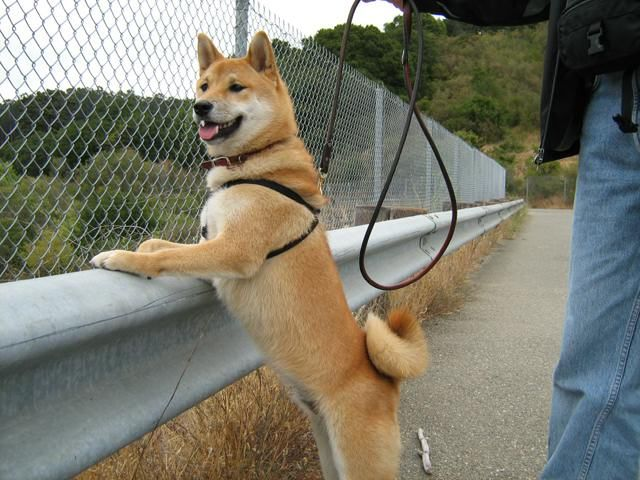
Walking with your Shiba Inu should be an enjoyable activity, but when they are constantly pulling on their leash and dragging you to places, then walking becomes a tedious task. This is why teaching your dog loose leash walking is important.
Loose-leash walking a Shiba Inu comes down to one deal your dog has to learn cold: pulling never gets it where it wants to go, and staying near you always pays. Shibas are strong, opinionated, and quick to decide a walk is theirs to lead, so the training has to be more consistent than the dog is stubborn. You are not teaching a perfect heel, you are teaching a slack line and a habit of checking in with you. The work is repetitive and unglamorous, and it is the single most reliable way to turn a dragging walk into a calm one. Start where your dog can already succeed and add difficulty slowly, because a Shiba that rehearses pulling for months will not unlearn it in a weekend.
The short version, in four parts:
- Pulling stops the walk. The instant the leash goes tight, you stop moving, every time, no exceptions.
- Slack pays. Reward the loose line and the checkin look, not just the position at your side.
- Build on a curve. Master it indoors first, then a quiet street, then a busy sidewalk, never all at once.
- Gear matters. A front-clip harness and a fixed six-foot leash beat a retractable for teaching this.
What is loose leash walking and why is it important?
For your dog, the outside world is full of things that stimulate them, like other dogs, noises, people, and scents. These factors excite them and are the reasons why they pull on their leashes, resulting in them dragging their owners.
Loose leash walking is when your dog is calmly walking by your side and not pulling on its leash.
It is not the same as the heel, where your dog sticks to your side as you walk. Loose leash walking is keeping the leash slack and gives your dog enough freedom to explore its surroundings without pulling.
Remember to teach your dog to loose leash walk in a positive manner. This means while training, you shouldn’t jerk, yank, or choke your dog.
There are two reasons why loose leash walking is important: comfort and safety.
Walking an overly excited dog who’s not taught to loose leash walk is a pain, mentally and physically. When it intensely pulls, your body will take the brunt of the impact. And when you strongly jerk the leash back to get your dog to listen, this also destroys its walking experience.
But when your dog knows to calmly walk with a slacked leash, then walkies is an enjoyable activity both for the owner and the dog.
The second importance is safety. Loose leash is also keeping your dog under control. This means it is less likely to run out in dangerous areas, like in front of a car, or inflict injury to itself or someone else.
How to teach your Shiba to loose leash walk
There are two ways you can teach your dog to loose leash walk.
Stop and be still
This technique is walking and then stopping and completely stilling when your dog’s leash tightens.
When the leash slackens (because your dog turned around to see what you’re doing or took steps back to you), praise, give him a treat, and resume the walk.
When they start to pull, repeat the steps above.
Teach with treats
Teaching with treats has to be your dog’s favorite and it works every time!
What you want to do is start with your dog standing on your left side. And with treats enclosed in your left hand, place it right in front of your dog’s nose. In this position, your dog will be able to smell the treats inside your palm.
Walk and every few seconds, offer a treat to your dog as a reward for walking along at your pace.
Continue daily and at least for a week. If you feel like your dog is getting a hang of it, stop luring with treats and just carry your empty hand in a natural position. Every now and then, you can reward it with a treat for keeping the pace.
Eventually, you can increase the walking distance and the time you offer your treats.
A five-step loose-leash method built for a stubborn breed
Generic leash advice assumes an eager-to-please dog. A Shiba is not that dog. It will test whether you actually mean it, so the method has to remove the reward for pulling completely and make the slack line the only path forward. Here is the sequence we walk new owners through.
- Start indoors with nothing to compete with. Clip the leash on in your hallway and reward your Shiba for standing near you on a loose line. If the dog cannot hold a slack leash where there is nothing interesting, it has no chance on a sidewalk. Build the habit where success is easy.
- Make pulling stop the walk, every single time. The moment the leash goes tight, freeze. Do not yank back, do not drag forward. Stand like a tree until the line softens, then move again. Shibas learn contingencies fast, and this one teaches that tension is a dead end. The catch is consistency: one walk where pulling works undoes ten where it did not.
- Reward the checkin, not just the heel. Any time your dog glances back at you or the leash goes slack on its own, mark it and pay. You are building a dog that voluntarily orients to you, which is worth far more than a forced position. This is where a reward-based approach earns its keep.
- Add distance and distraction on a curve. Only raise difficulty when the current level is boring-easy. Quiet street before busy street, midday before the after-work dog rush. If your Shiba blows past a threshold and starts pulling again, you moved too fast, so back up a level.
- Fix the gear before you fight the dog. A front-clip harness reduces the pull a lunge generates so it does not reward itself, and a fixed six-foot leash gives you consistent feedback. A retractable trains the exact opposite of what you want, constant light tension that says pulling extends the world.
One young Shiba we placed pulled like a sled dog for the first month, and the owners were ready to give up. The problem was not the dog, it was that they let it drag them to the park entrance daily, paying the pull with the best reward on the route. Once every tight leash meant a full stop and every slack one meant forward motion, the pulling faded in about three weeks. For the reward mechanics underneath this, read our guide on training a Shiba with positive reinforcement, and if you are still weighing whether the breed's independence fits your life, is a Shiba Inu right for me is an honest starting point.
How this plays out in real life
Across 250-plus Shibas placed since 2019, loose-leash walking is one of the most common things owners ask for help with, and the pattern behind the struggle is almost always the same. It is not that the dog cannot learn, it is that the walk is inconsistent. Pulling works on Tuesday because someone was in a hurry, so the dog keeps testing it. Shibas are relentless auditors of what actually pays, and intermittent success on pulling makes the behavior stronger, not weaker. The owners who win are the ones who decide that a slow, boring walk for two weeks is the price of a calm walk for years.
The other pattern is people mistaking leash reactivity for stubbornness. A dog that lunges and barks at other dogs on leash is not being difficult, it is over threshold, and no amount of stop-and-stand fixes an emotional response. That is a different problem with a different fix, and it is worth reading our Shiba Inu aggression and reactivity guide to tell the two apart. When we cannot sort out whether a dog is pulling from excitement, habit, or genuine stress, we bring in structured help. Our one-on-one training starts by watching the actual walk, because the fix for an excited puller and a reactive dog look nothing alike, and any qualified trainer or veterinary behaviorist will make that distinction first.
Related questions
Why does my Shiba pull so hard on walks?
Usually because pulling has worked. Dogs repeat what gets them where they want to go, and if lunging toward a smell or the park has ever succeeded, a Shiba will keep trying it. The independent streak makes them quicker than most breeds to lead. The fix is not strength, it is making sure a tight leash never once earns forward motion.
Should I use a harness or a collar for loose-leash training?
A front-clip harness is the better teaching tool. It reduces the pulling power a lunging dog gets and steers the chest gently toward you without putting pressure on the neck. Collars can encourage a dog to lean into pressure, and they carry more risk on a hard puller. Once loose-leash walking is solid, the gear matters less.
How long does it take to teach a Shiba to walk on a loose leash?
For a dog with an established pulling habit, expect a few weeks of consistent work before it feels reliable, and longer to hold up in busy places. Puppies without the habit can pick it up faster. The timeline depends far more on your consistency than on the dog. Every inconsistent walk resets the clock.
What to read next
Ground the method in our guide to training a Shiba with positive reinforcement, and pick your gear with our review of retractable dog leashes and why a fixed leash usually wins for training. If leash lunging looks like more than excitement, the aggression and reactivity guide will help, and our one-on-one training can build a plan around your specific walk.
Need help training your Shiba?
Long-term behavior modification and skill training, built for the breed.