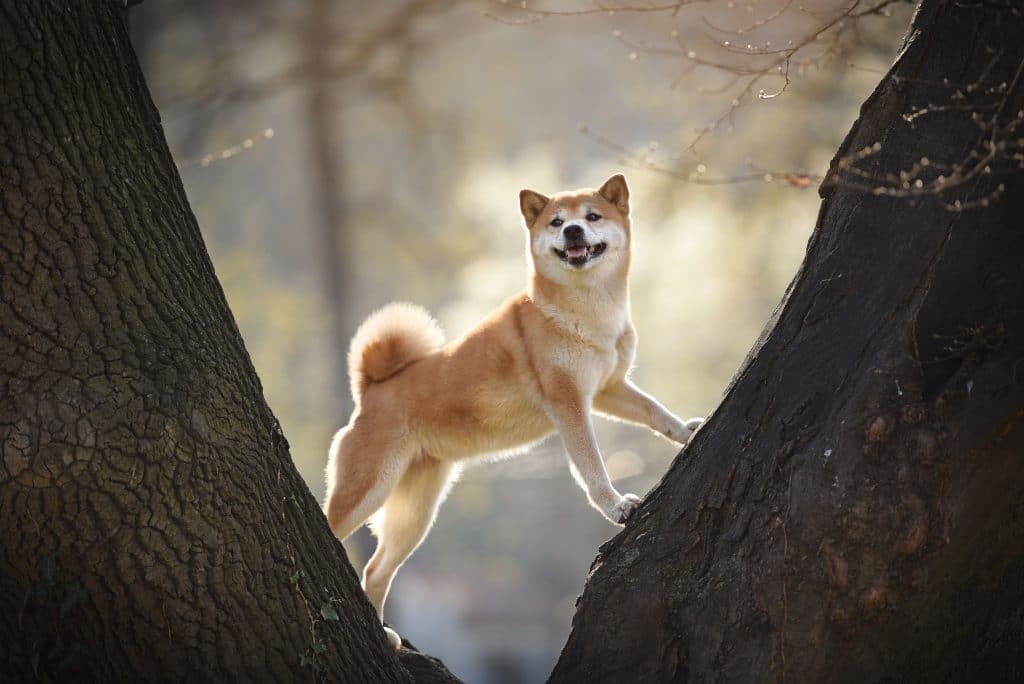
One of the distinct features of the Shiba Inu is its eyes – a feature that distinguishes it from western dog breeds. The triangular shape of the recessed eyes gives the dog a plaintive look, one that is pronounced by the dog’s thick eyelids. Shibas do not feature the round eyes of many dog breeds, such as the Pekinese, Pomeranian, or Maltese. Instead, the Shiba’s eyes almost give the dog a lonesome and quiet quality – one that suggests a fiery spirit combined with a touch of the outdoors.
The Shiba Inu's most recognizable feature is its deep-set, triangular eyes, which give the breed its alert, fox-like, faintly wild expression, but the eyes are only the start of a distinctly primitive package: a dense double coat, a compact and muscular build, upright ears, and a curled tail. Those features are not just for looks. They reflect the breed's origins as a hardy Japanese hunting dog built for rough terrain and temperature extremes. Understanding these traits helps you care for the whole dog, from protecting those beautiful eyes to feeding the coat that frames them. The look and the health behind it go together.
The short version, in four parts:
- The triangular, deep-set eyes are the signature feature and deserve regular veterinary checks.
- The double coat, curled tail, upright ears, and compact build complete the primitive look.
- These features trace to the breed's origins as a rugged Japanese hunting dog.
- Coat and eye health are supported by good nutrition and routine veterinary care.
Therefore, the uniquely shaped eyes of the Shiba depict the dog’s toughness and sturdiness. The dog’s insulated coat enables it to withstand both cold and hot temperature extremes. Because of the little dog’s robust character, it rarely requires grooming and pampering. Their muscular and compact bodies enable them to convey an attitude that is marked by elegance, dignity, and gracefulness.
What captivates most people about the Shiba is its fox-like appearance – one that emphasizes the dog’s primitive behaviors. Almost acting wolf-like during play, the dog also likes the night over the day. Indeed, this dog is unlike any other dog. The Shiba watches other dogs at play, seeming to prefer the solitude over pulling or chewing things. This may confuse some Shiba owners during dog or puppy training, as they may be confused by the dog’s lack of canine interaction.
Many Shiba owners in Japan state that their dog is not only loyal but a reliable and trusted friend. The traits of the dog suggest the characteristics of ancient Japanese people – sensitive, valiant, gentle, and good-natured. Therefore, dog lovers are drawn to the Shiba because of its dignified yet playful demeanor. Other qualities associated with the dog include the following:
- Loyal to their owners, or those whom they trust
- Self-reliant and self-confident
- Protective of their owners and family
- Athletic and energetic
- Fearless and bold
To perfect the above traits, you need to socialize your dog early and involve it in puppy training as soon as possible. If the Shiba is not socialized or trained early, it may snap at others when it is nervous or be possessive of its foods or toys. It can also become territorial when dealing with larger dogs. If the dog becomes bored or suffers from separation anxiety, it will howl or chew on items that it should leave alone.
Therefore, having a Shiba is a big but rewarding responsibility, as the dog is filled with personality. As long as you are consistent in directing the dog in a calm and firm manner, the Shiba will end up being a lovable companion dog and pet.
Plus, you don’t have to spend a good deal of time on puppy potty training, as the Shiba is cat-like when it comes to grooming and cleanliness. This makes the dog easy to housebreak and keep clean. While you do have to bathe the dog every now and then, you don’t have to invest a large amount of time in the process. To make sure the Shiba is more amenable to getting a bath or getting groomed, get the dog used to the activity when it is a puppy. Again, early socialization and training can go a long way in developing a strong bond with your Inu pet.
When you adopt a Shiba Inu, you should summarize the health conditions that usually affect the dog. That way, you can create a preventative health plan that will keep your dog healthy and well in its later years. You can prevent some predictable risks by knowing which conditions are related to the Shiba breed. While these conditions do not mean your Shiba will have them, it will help you prepare in case your Shiba gets sick or has an unexplained illness.
Because the dog’s eyes make the Shiba a one-of-a-kind dog breed, it helps to learn more about any possible future vision problems. Actually, the dog is predisposed to several vision conditions that you should note.
Glaucoma can affect Inus and can quickly lead to blindness if the condition is not addressed immediately. Symptoms may include a bluing of the clear part of the eye, or the cornea, squinting, and redness. Glaucoma can be extremely painful, and, in advanced cases, can cause bulging or swelling. If you suspect this problem, consider it a medical emergency.
Cataracts can also affect older Shibas. If your dog’s lenses become cloudy, he probably is suffering from cataracts. Surgery may be prescribed to restore or improve the Shiba’s sight.
Distichiasis is yet another vision condition that can affect the Shiba Inu. Distichiasis occurs when additional hairs grow inside the dog’s eyelid, thereby rubbing the eyeball and causing irritation.
A Shiba is more likely to inherit this vision condition than other dogs, so you need to make sure your Shiba is checked by the vet regularly. If distichiasis is not treated, the additional hair can trigger chronic eye pain or the development of corneal ulcers. Once the extra hairs are removed, the prognosis is good for recovery.
As you might imagine, the eyeballs are pretty complex and may not develop according to plan, which may cause some structural abnormalities. While some of these abnormalities are not a cause for concern, others can lead to specific eye problems. That is why you need to have your Shiba’s vision checked twice a year by a vet.
For example, sometimes some small pieces of tissue, may get attached to the dog’s iris. This condition, called persistent pupillary membrane, is more likely to affect Shibas than other dogs. While these bits of tissue usually do not impede the sight or hurt, they may occasionally lead to an optical problem if the tissue fragments are not removed.
No doubt about it, when you adopt a Shiba, you have one unique breed of dog. That is why it is important to learn all about its features and traits. By taking this initiative, you can form a bond with your dog that will make him a special companion dog and friend.
The Features That Define a Shiba Inu
People fall for the Shiba's face first, but the breed is a whole system of primitive traits that work together. Here is how those features break down and why each one matters for care.
- The eyes. Deep-set and triangular, framed by thick eyelids, giving that alert, slightly aloof expression. Beyond the look, the shape and the breed's genetics make eye health worth watching. Shibas are predisposed to conditions like glaucoma, cataracts, and distichiasis, so twice-yearly eye checks are a smart routine, not an overreaction.
- The double coat. A stiff outer coat over a soft, dense undercoat insulates the Shiba against both cold and heat and gives it that plush, foxy silhouette. It sheds heavily twice a year and needs regular brushing, but is otherwise low-maintenance. A glossy coat is also a visible read on the dog's overall health and diet.
- The build. Compact, muscular, and well-balanced, built for agility over rough ground. This athleticism is why Shibas need real daily exercise and why keeping them lean protects their joints. The elegant, dignified carriage people love is a fit, well-conditioned dog.
- Ears and tail. Small, upright, triangular ears and a thick tail carried in a curl over the back are hallmarks of the breed's spitz-type ancestry. The upright ears are worth keeping clean and dry as part of routine care.
- The temperament behind the look. That fox-like face comes with a self-reliant, bold, cat-clean personality. Shibas groom themselves, housebreak easily, and prize their independence. It is part of the charm and part of why early socialization matters so much.
An adopter once told us she chose her Shiba entirely for those "wild wolf eyes," then admitted she had never thought about eye health. During settling in, we noticed the dog squinting and rubbing at one eye. Because she got it to the vet promptly rather than waiting, a case of distichiasis (extra eyelash hairs rubbing the eye) was caught and treated before it caused corneal damage. The feature that drew her to the breed was also the one that needed watching. That is the Shiba in a nutshell: the striking looks come with specific care.
To understand whether this striking but demanding breed suits you, read our honest guide on is a Shiba Inu right for me, and for the coat that frames those eyes, our guide to grooming your Shiba Inu.
What We Have Seen With Shiba Features and Health
Across more than 250 Shibas placed since 2019 and years of boarding, the breed's signature features are also its signature care points. The eyes that make people fall in love are the same eyes we keep a close watch on, because Shibas do carry a higher likelihood of certain vision conditions. Owners who build twice-yearly eye checks into their routine catch the treatable problems early, and early is what determines the outcome for things like glaucoma, which is a genuine emergency.
The coat is the other feature-turned-health-signal we pay attention to. A Shiba's double coat is a live readout of how the dog is doing. A dull, flaky, or thinning coat often points to diet, skin issues, or an underlying problem, while a dense, glossy coat usually tracks with a healthy, well-fed dog. Good nutrition, with adequate protein and omega fatty acids, shows up in that coat, which is one place the food bowl and the striking looks connect directly.
We also see owners underestimate how much the breed's independence shapes daily life. That aloof, self-possessed expression is not a pose. Shibas really are more cat-like, self-cleaning, and solitary than most breeds, which makes early socialization and consistent, calm handling essential to raising a balanced dog.
What has worked: routine veterinary eye exams, a quality diet that keeps the coat healthy, regular brushing, and early socialization to match the bold temperament behind the face. What has not: treating the Shiba's low grooming needs as no care needs, or ignoring eye symptoms because the dog "looks fine." Squinting, redness, cloudiness, or a bluish cast to the eye are veterinary matters, sometimes urgent ones. When a Shiba boards with us, we note any eye or coat conditions on intake and follow the owner's care plan. If you are meeting the breed for the first time, our adoption process walks through what caring for one really involves.
Common Followup Questions
Why do Shiba Inus have such distinctive eyes?
The Shiba's deep-set, triangular eyes come from its ancient spitz-type ancestry as a Japanese hunting dog, and they give the breed its alert, fox-like expression. The shape is set into thick eyelids, which is part of why the look is so pronounced. Beyond appearance, the breed is genetically predisposed to a few eye conditions, so those distinctive eyes are worth having checked by a veterinarian regularly to catch any problems early.
What eye problems are common in Shiba Inus?
Shibas are more prone than many breeds to glaucoma, cataracts, distichiasis (extra eyelash hairs that rub the eye), and persistent pupillary membrane (small tissue strands on the iris). Glaucoma in particular is painful and can cause rapid blindness, so squinting, redness, cloudiness, or a bluish cornea should be treated as urgent. Twice-yearly vet eye checks help catch these conditions early, when treatment works best. Never ignore a change in your Shiba's eyes.
Does diet affect a Shiba's coat and eyes?
Diet strongly affects the coat and supports overall eye health, though it does not override genetics. A complete-and-balanced food with quality protein and omega-3 and omega-6 fatty acids helps maintain that dense, glossy double coat, and a dull or flaky coat can be an early sign that something is off. For the eyes, good general nutrition supports health, but the breed's specific eye conditions still need veterinary care, not just a food change.
What to Read Next
To decide whether this striking, independent breed fits your life, read our honest guide on is a Shiba Inu right for me, and to care for that famous coat, see grooming your Shiba Inu. The diet behind a healthy coat and body is covered in our nutritional guide for your Shiba's diet. And if you are ready to welcome one of these one-of-a-kind dogs, see how our adoption program works.
Looking to adopt or rehome a Shiba?
Rescue-first rehoming with vetted families, 1-year health guarantee, lifetime support.