
The typical dog diet consists of the dog food that best suits them, kibble, dog treats, and for some, a few pieces of table food from their human’s meals. This is absolutely delicious for your canine friends but it doesn’t provide everything their health needs. Aside from a healthy diet, the best dog vitamins and supplements are also among the basic needs to maintain your pooch’s health.
Dog vitamins include vitamin A, vitamin D, vitamin E, vitamin K, B-complex vitamins, calcium, folic acid, and phosphorus. These needed nutrients are usually included in most dog food that are labeled as complete and balanced, but taking an additional way to make sure your best friend is getting all the nutrition it deserves is never a bad thing, especially if they are on a homemade diet.
Most healthy Shiba Inus eating a complete-and-balanced food do not need a general multivitamin, because that food is already formulated to meet their vitamin and mineral needs. The "best" dog vitamins are the ones your dog actually needs for a specific reason: a vet-diagnosed deficiency, a life-stage or health condition, joint support for an aging or active dog, or gut support during a rough patch. Adding supplements on top of a balanced diet is at best a waste and at worst harmful, since some vitamins are toxic in excess. The right first step is not shopping, it is asking your veterinarian whether a supplement is warranted at all.
The short version, in four parts:
- A complete-and-balanced food already covers vitamins and minerals for a healthy dog.
- Supplement for a specific, vet-identified reason, not as blanket insurance.
- More is not better: fat-soluble vitamins in excess can be genuinely harmful.
- Choose targeted, quality products (joint, omega, probiotic) over broad multivitamins.
Does my dog need supplements?
Dog food labeled with “complete and balanced” is usually formulated with all the vitamins, minerals, and essential nutrients that your dog needs. If your canine friend is solely fed with appropriate commercial food then they don’t require vitamin supplements unless prescribed by a veterinarian.
On the other hand, if your pooch is on a homemade diet, they might not be getting enough vitamins and minerals from their meals. What’s also important to take note of is to ensure full effectivity, vitamin supplements should match and be compatible with their diet.
It is always highly recommended to talk to your veterinarian first before making changes to your dog’s diet or having them take medicine or vitamins. The vet knows which are the best vitamins that are most suitable for your dog, as well as the dosage to take.
The Best Dog Vitamins for Optimum Health
Though choosing vitamins for your dog is not rocket science, there are still certain factors dog owners should keep in mind. Before ultimately purchasing and having your dog intake vitamins, it is best to consult with your veterinarian first, especially if your pooch has an existing medical concern or behavioral issues. Your vet will most likely check and run a few tests for your dog.
Once you have the needed details to understand your dog’s health then choosing the best dog vitamins will be a lot easier.
So we’ve rounded up the top-rated dog vitamins to ensure your pooch’s enhanced health.
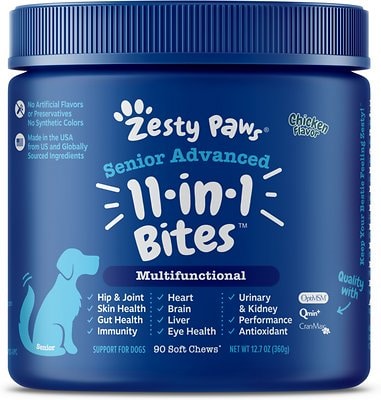
Best multivitamin: Zesty Paws 11-in-1 Bites
The brand Zesty Paws is NASC-approved and highly recommended by pet owners. The Zesty Paws 11-in-1 Bites is formulated to help with joint support, heart, gut, immune system, skin health, liver, and urinary tract health. Its ingredients are all vet-approved, including cranberry, curcumin, glucosamine, a gut health blend, and omega 3 fish oil. Zesty Paws are available in an enticing chicken flavor so it is definitely something your dog will love and know as a tasty kibble.
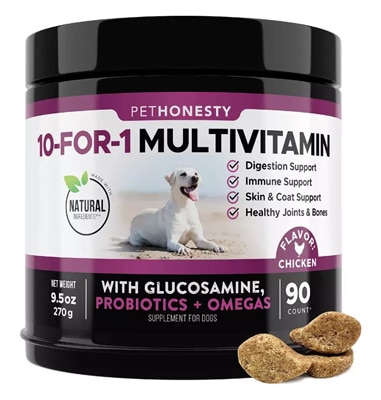
For all ages: PetHonesty 10-For-1 Multivitamin
PetHonesty 10-for-1 Multivitamin is packed with 10 benefits, all for the enhanced health of your dog. It helps with mobility, digestion, skin health, energy, and more. It is available in a chicken flavor so it is something that your dog won’t be able to resist. This product is free from additives like wheat, corn, soy, and dairy, as well as harsh chemicals, preservatives, and artificial flavorings.
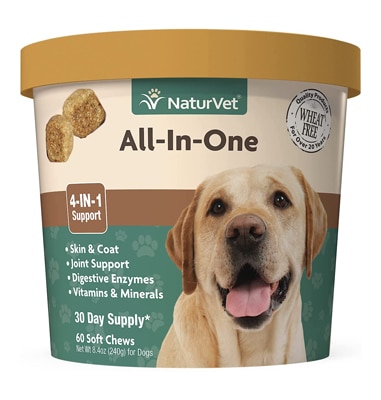
Affordable for all ages: NaturVet All-in-One Dog Supplement
If your pooch is over 12 weeks, then NaturVet All-in-One Dog Supplement is a dog vitamin it can take. It has 4-in-1 support and is packed in a resealable jar so you are guaranteed freshness. The product claims improvement in joints and digestion, as well as healthier skin and coat. The brand, NaturVet, is FDA- and NSAC-audited manufacturer so the product is safe, regulated, and the company is reputable.
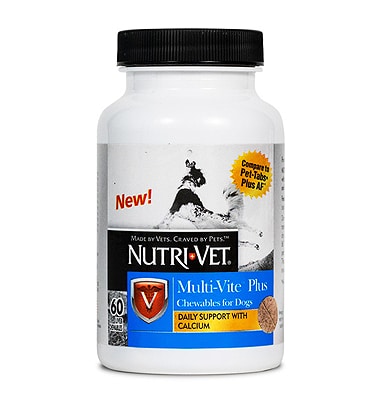
Affordable puppy vitamins: Nutri-Vet Multi-Vite Chewable Supplement for Puppies
The Nutri-Vet Multi-Vite Chewable Supplement for Puppies is a multipurpose vitamin. Since it is liver flavor, it can be used as a treat while training and at the same time, vitamins for your puppy’s health. It is formulated by veterinarians and is guaranteed to contain all the minerals and vitamins that your puppy needs. It helps build strong bones and teeth, as well as fight infection and support the nervous system and brain function.
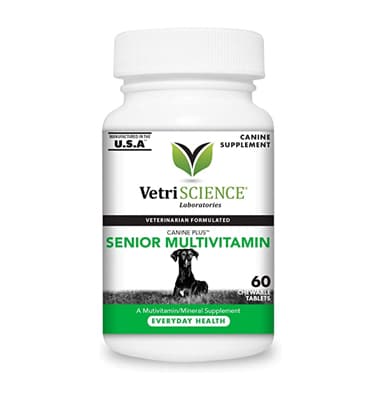
For senior dogs: VetriScience Laboratories Canine Plus Senior Multivitamin
The VetriScience Laboratories Canine Plus Senior Multivitamin is formulated by veterinarians specifically for senior dogs. It is made to support heart, liver, brain, eye function, and boost physical and mental health. These are vegetable-flavored that contain vitamins A, D3, B1, B2, B12, and C vitamins, antioxidants, amino acids, and omega fish oil. Senior dog multivitamins are must-have products for your older pooch.
When a Shiba Actually Needs a Supplement
The supplement aisle is built to make you feel like you are missing something. Usually you are not. Here is how we think about when a supplement earns its place.
- Diagnosed deficiency or condition. The clearest reason to supplement is a veterinarian identifying a specific gap or a health condition that calls for it. This is targeted and monitored, not guesswork. If a vet prescribes it, follow the plan.
- Joint support. Glucosamine and chondroitin are among the most genuinely useful supplements for aging or hard-working dogs, supporting the cartilage that cushions joints. A Shiba with early stiffness or a lot of impact activity is a reasonable candidate, ideally with a vet's guidance on dosing.
- Omega fatty acids. Fish-oil omega-3s can help skin, coat, and inflammation. Many quality foods already include them, so check before stacking more on top. Useful for a dull coat or itchy skin, but confirm the underlying cause with your vet rather than assuming.
- Digestive support. Probiotics can help a dog through a bout of digestive upset, a course of antibiotics, or a stressful transition. They are a targeted tool for gut balance, not a daily necessity for a dog with a healthy stomach.
- Home-cooked or unusual diets. A dog on a home-prepared diet is the real case for careful supplementation, because balancing such a diet is genuinely hard. That work belongs with a veterinarian or a board-certified veterinary nutritionist, not a guessed handful of pills.
An adopter once arrived with a shoebox of supplements: a multivitamin, a coat blend, a joint chew, and a "immune" powder, all layered on top of an already-complete food. Her Shiba was fine, but she worried she was under-doing it. We walked through each product and, with her vet, cut it down to a single joint supplement the aging dog genuinely benefited from. Everything else was redundant, and the fat-soluble vitamins stacked across products were a small but real risk. Less was the upgrade.
For the diet that makes most supplements unnecessary in the first place, see our dog food for a Shiba Inu guide, and for the specific joint case, our roundup of the best joint supplements for dogs goes deeper.
What We Have Seen With Supplements
Across more than 250 Shibas placed since 2019 and years of boarding, the supplement story is mostly one of good intentions outrunning need. Owners who love their dogs want to do everything, and the market is happy to sell it. The reality is that a Shiba on a quality complete-and-balanced food is already getting its vitamins and minerals, and piling on a general multivitamin adds cost and risk without benefit.
Where we do see real value is targeted: a joint supplement for an older or athletic dog, omega-3s for a genuinely dull coat, a probiotic to steady a dog through a stressful transition or a digestive upset. Those are specific tools for specific jobs. The dogs that benefit are the ones with a reason, not the ones whose owners are supplementing as blanket insurance.
The risk people underestimate is over-supplementation. Fat-soluble vitamins like A and D are stored in the body and can build to harmful levels, and stacking several products that each include the same vitamins is an easy way to overdo it without realizing. More is not safer. With supplements, precision beats enthusiasm.
What has worked: a strong base diet, and any supplement chosen for a clear reason with a vet's input. What has not: the shoebox approach, layering products in the hope that something helps. If your Shiba has a symptom you are trying to fix, dull coat, stiffness, digestive trouble, low energy, the right move is to find the cause with your veterinarian, not to guess with the supplement aisle. When we board a dog on vet-prescribed supplements, our boarding program administers them exactly as directed and nothing extra.
Common Followup Questions
Does my Shiba need a daily multivitamin?
Usually not. A Shiba eating a complete-and-balanced commercial food is already getting the vitamins and minerals it needs, so a general multivitamin is typically redundant. The exceptions are dogs on home-cooked or unbalanced diets, or those with a vet-identified deficiency. Before adding a daily multivitamin, ask your veterinarian whether there is an actual gap to fill, since stacking vitamins on top of a balanced diet can do more harm than good.
Can you give a dog too many vitamins?
Yes. Fat-soluble vitamins such as A and D are stored in the body rather than flushed out, so excess can build up to harmful levels. Giving several supplements that each contain the same vitamins is an easy way to over-dose without meaning to. This is why blanket supplementing is risky and why targeted, vet-guided use is safer. If you are unsure how products stack, bring the labels to your vet.
Which supplements are actually worth giving a Shiba?
The ones tied to a real need. Joint supplements (glucosamine and chondroitin) genuinely help many aging or active dogs, omega-3 fatty acids can support skin and coat, and probiotics help during digestive upset or transitions. Beyond those targeted cases, most healthy Shibas on a good diet do not need more. Pick quality products for a specific purpose, and confirm the choice and dose with your veterinarian.
What to Read Next
For the diet that covers most nutritional bases, read our dog food for a Shiba Inu guide, and for joint care specifically, our roundup of the best joint supplements for dogs. If gut health is your concern, see our complete guide to dog probiotics. And if you are still deciding whether you can meet a Shiba's care needs, start with is a Shiba Inu right for me, or see how our adoption program works.
Looking to adopt or rehome a Shiba?
Rescue-first rehoming with vetted families, 1-year health guarantee, lifetime support.