
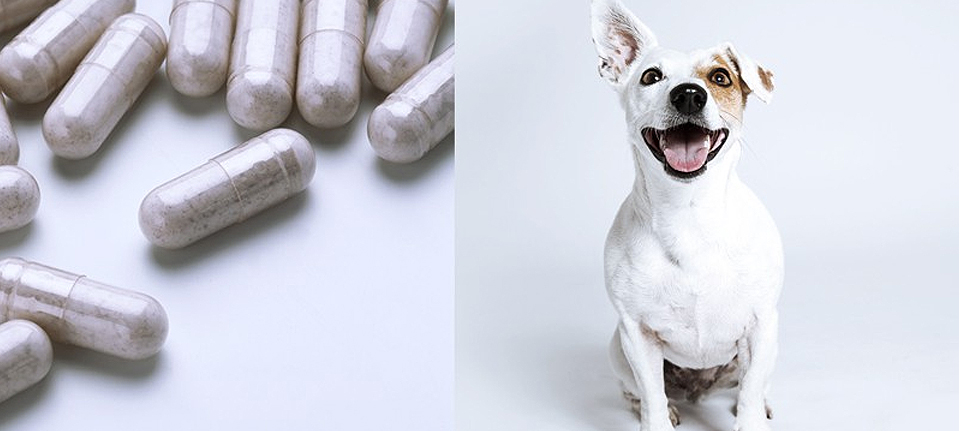
According to a study, dogs basically behave like toddlers and one thing these two have in common is that they can be pleasantly weird like eating food directly off the floor or just picking up anything and eating it.
One of the problems that happen when our fur babies eat just about anything is that they’re put on a higher risk for diarrhea and other diseases. This is why it’s important that as a fur parent, we are educated with how to manage this. The best strategy to promote gut health is none other than dog probiotics.
Here is a quick question and answer compilation on everything we need to know about this magical solution.
A dog probiotic is a supplement of beneficial live bacteria and yeasts that supports the balance of microbes in your dog's gut, and the honest answer to whether your dog needs one is that it depends on the dog, which is a question for your veterinarian. Probiotics can help a dog through a diet change, a course of antibiotics, or a bout of stress-related digestive upset, but they are a support tool, not a cure, and they do not replace a vet visit when something is genuinely wrong. Strains matter, quality varies widely between products, and the right choice for a sensitive Shiba is not always the cheapest tub on the shelf. Used well, a probiotic is a quiet, low-drama addition to a healthy dog's routine.
The short version, in four parts:
- Probiotics support gut balance, they do not cure disease.
- Strain and quality matter more than price, so read the label.
- They shine around diet changes, antibiotics, and stress, not as a fix for red-flag symptoms.
- Persistent or severe digestive trouble is a vet visit, not a probiotic experiment.
What are Dog Probiotics?
Probiotics which literally means “life-promoting” are basically beneficial microorganisms that live in the gastrointestinal system of dogs. While there are already plenty of good bacteria in a dog’s system, dog probiotics add in more healthy bacteria to the equation. These healthy gut bacteria maintain and balance out the bad bacteria that co-inhabit inside the G.I. tract of our canine friend promoting a healthy internal environment, keeping our dog healthy and free from diseases or infection.
These probiotics perform tasks like helping to break down food for easier digestion, fighting off potential pathogens, and making nutrients and vitamins which strengthens immunity.
Some of these good bacteria are: Bifidobacterium animalis, Bifidobacterium breve, Bifidobacterium lactis, Enterococcus faecium, Lactobacillus acidophilus, and Lactobacillus casei. These bacteria each play a specific role and also have specific effects on the health of our dogs which is why it is important that as dog owners, we consult a veterinarian first to help us choose what type of strain is best for our dogs.
You can check out this article to know what are the best dog probiotics: The 8 Best Probiotics for Dogs in 2020.
What are the sources of Dog Probiotics?
Probiotics can be found in a variety of food like yogurts, certain cheeses (like Gouda, mozzarella, cheddar, and cottage cheese), kefir, and Lactobacillus milk (like Yakult!). Additionally, kimchi (salted and fermented vegetables) and sauerkraut (finely cut raw cabbage that has been fermented by various lactic acid bacteria) are also very rich sources of probiotics.
For dogs, there are probiotic dietary supplements with “Lactobacillus species, Bifidobacteria, Saccharomyces boulardii, and Bacillus coagulans” that are sold over-the-counter in pharmacies. These are often produced as powders, capsules, and chews which are often flavored with meat to make it appetizing to dogs. They are also labelled with dosage recommendations and frequency of use.
Some dog foods also contain probiotics.
What are the benefits of probiotics?
According to Dr. Gary Richter, DVM, “The reason to give a dog a probiotic would be exactly the same reasons that a person would take a probiotic. When you give a dog a probiotic, you’re supporting the health of the gastrointestinal tract. And when you do that you’re potentially helping digestion and inflammation levels as well as overall immunity.”
As mentioned earlier, specific good bacteria have specific effects on dogs. According to studies, Lactobacillus and Bifidobacterium have been found to help (1) manage yeast and support the immune system, (2) prevent anxiety, (3) reduce stress, and (4) improve diarrhea and food allergies. On the other hand, Bacillus species are also good aids in immune response.
By introducing these good bacteria, you also create an environment inhospitable for bad ones that can damage the dog’s G.I. tract.
If the dog is already suffering from an upset stomach, dog probiotics can help alleviate the uncomfortable symptoms, improve overall digestion, and also prevent urinary tract infection. It can also regulate behavior and mood as well as keep weight and appetite under control.
Can probiotics be taken daily? How do we know if our dogs need them?
According to Dr. Richter, giving dogs a daily dose of probiotics to dogs is okay. In fact, he encourages that dog probiotics be a part of its daily routine. Though he also notes that, “But, like anything, monitor your dog’s reaction to the supplement.”
But how do we know when they really need them beyond as a supplement? Basically, dogs need higher doses of probiotics when they’re experiencing an upset stomach, diarrhea, and other G.I. tract diseases. But it is important to know that while probiotics help, it’s not always the end solution. It’s best to take the dogs to a veterinarian for further examination and to make sure that there are no underlying health issues that produce the symptoms.
Specific changes in environment which might stress them out as well as changes in medication can also induce G.I. tract issues and probiotics can help prevent it.
Can I give human probiotics to my dog?
Yes, you can. They’re not harmful but generally, this practice is not encouraged by experts. That is because these probiotics do not provide the same benefits compared to species-specific supplements made for dogs. Although a combination of human probiotics can produce a similar strain that is given to dogs.
In terms of food-sourced probiotics, it’s safe to give them to dogs but in limited quantities. For small-sized dogs, limit to a teaspoon. For medium ones, two teaspoons per day and for large ones, maximum of three teaspoons is allowed.
Also make sure to note that these foods are plain, unsweetened varieties that do not contain artificial sweeteners, especially xylitol, as this is toxic to animals.
How do I give probiotics to my dogs?
Since probiotics for dogs come in different forms, it’s best to know which type is compatible with your dog. If they ingest powdered ones well, you can simply sprinkle the recommended amount in your dog’s food. Some dogs like chewy ones which you can give as a treat as they are most likely flavored to appetize them. For pills, it’s like giving any medication, where you can slip the pill inside a tasty treat or into their food.
Are there any side effects?
Dog probiotics are very healthy treats for the dogs and generally, they don’t cause any side effects as long as they are provided in the right dosage. But like humans, dogs can also react differently to any supplement. And anything that is too much is also bad and can cause nausea, vomiting, and diarrhea.
So always take proper caution.
How to Choose and Use a Dog Probiotic Without Guessing
Once you have decided, with your vet, that a probiotic makes sense, the next job is picking a good one and using it well. These are the factors that separate a product that helps from one that just costs money.
- Strains and CFU count. The label should name specific strains, such as Enterococcus faecium or Lactobacillus and Bifidobacterium species, and list the count of live organisms, often shown as CFU. A product that hides behind a vague probiotic blend with no strains and no count is harder to trust than one that tells you exactly what is inside.
- Prebiotics alongside. Prebiotics are the fibers that feed the good bacteria once they arrive. Many quality formulas pair the two, and the combination often does more than probiotics alone. If you see an ingredient like inulin or chicory root, that is the prebiotic doing its job.
- Form that fits your dog. Powders sprinkle over food, chews double as a treat, and capsules tuck into something tasty. A Shiba who inspects every new item in the bowl may accept a chew more readily than a powder that changes the smell of dinner. The best form is the one your dog actually takes every day.
- Quality and viability. Live organisms are fragile, so a product's real value depends on the bacteria still being alive when your dog eats them. Buy from makers that guarantee counts through the expiration date, store the product as directed, and do not stockpile more than you will use.
- The right moments to use one. Probiotics tend to earn their keep around predictable disruptions: a switch to a new food, a course of antibiotics that clears out gut flora, a stressful move, or boarding. Introducing one a few days ahead of a known change, with your vet's blessing, is smarter than scrambling after an upset starts.
- What a probiotic will not do. It will not fix an obstruction, a parasite like giardia, a real food allergy, or an illness that needs medicine. If symptoms are severe, bloody, or dragging on, the probiotic is a distraction from the vet visit your dog needs.
A composite: a Shiba we will call Taro came to us with a stomach that flipped every time his food changed. His owner had cycled through three foods in a month, each switch abrupt, each one triggering loose stools. The fix was not a fancier food. It was slowing every transition down over a week and adding a vet-recommended probiotic during the changeover. Once the changes got gentle and the gut got support, the drama stopped.
If your dog's digestion is the recurring problem, our guide on what to do when your Shiba has a sensitive stomach goes deeper, and if you are still deciding whether the breed suits your life, is a Shiba Inu right for me is an honest starting point.
How We Handle Gut Support During Boarding
Since 2019 we have placed more than 250 Shibas and boarded a steady stream of others, and boarding is exactly the kind of change that tests a dog's gut. New house, new smells, a different routine, and sometimes different water all land at once. A few habits have served us well.
We ask owners to send the dog's own food and, if the dog already takes a probiotic, to send that too. Consistency is the whole game. The dogs who sail through a stay are usually the ones whose diet and supplements do not change just because the address did. Switching a dog to whatever food we have on hand is a reliable way to manufacture loose stools, so we do not do it.
For dogs prone to stress-related upset, we talk with the owner, and often the vet, about starting a probiotic a few days before the stay rather than on day one. Getting ahead of the disruption beats reacting to it. We keep the routine calm and predictable, because a settled dog digests better than an anxious one.
We also watch. A dog whose stool changes, who goes off food, or who seems uncomfortable gets noted and, if it does not resolve quickly or looks serious, gets a vet. A probiotic is not our answer to a sick dog. It is a small support for a healthy one moving through a stressful week.
None of this is veterinary advice, and we do not diagnose. What we offer is a steady environment and honest eyes on your dog. If you want your Shiba's diet and gut routine kept exactly as they are at home while you travel, that is the point of our in-home boarding.
Related questions
How long does a probiotic take to work?
It varies by dog and by why you are giving it. Some owners notice steadier stools within a few days, while support for a longer-standing issue can take longer and should be tracked with your vet. If you have given a probiotic consistently and see no change at all, that is worth reporting, because the underlying cause may need a different approach.
Should I give a probiotic during a course of antibiotics?
Many vets suggest gut support around antibiotics, since the medication clears out bacteria without sorting good from bad. Timing and product choice are worth confirming with the prescribing vet, because some advise spacing the probiotic apart from the antibiotic dose. Ask when the antibiotic is prescribed rather than guessing on your own.
Can a probiotic replace a vet visit for diarrhea?
No. A mild, brief bout of loose stool in an otherwise bright dog may settle with rest, a bland routine, and gut support, but a probiotic does not diagnose or treat the real problem. Blood in the stool, repeated vomiting, lethargy, or diarrhea that drags on past a day or two calls for a vet, not another scoop of supplement.
What to read next
If digestion is your dog's weak spot, read what to do when your Shiba has a sensitive stomach and what to do if your Shiba has diarrhea. Owners still weighing the breed should start with is a Shiba Inu right for me, and if travel is coming up, our in-home boarding keeps your dog's diet and routine steady.
Looking to adopt or rehome a Shiba?
Rescue-first rehoming with vetted families, 1-year health guarantee, lifetime support.