
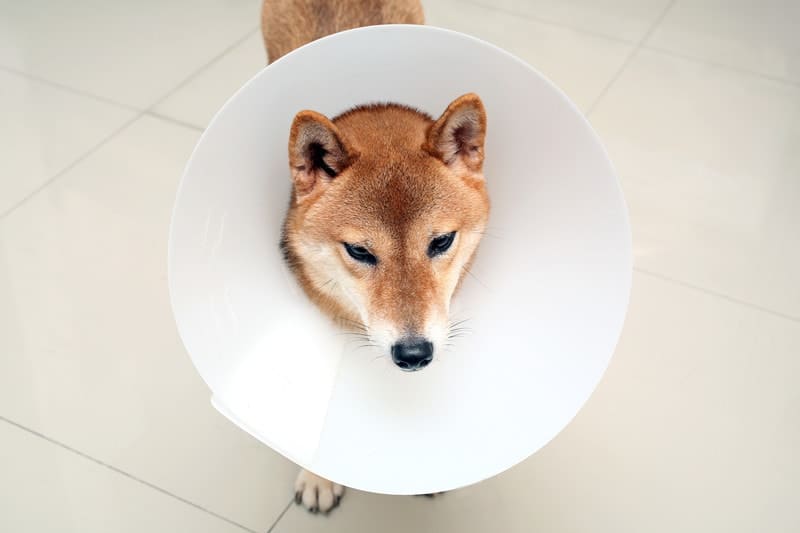
You’ve now decided to bring home your Shiba Inu. You’ve prepared your house for its arrival, bought all the toys it needs and read all the dog training articles and books out there. But one thing you should prepare for and ask yourself is “should I spay or neuter my Shiba Inu?”
If you are a new fur parent, you might be wondering what does spaying or neutering your dog means. Is it safe? What does it do for your dog’s health? How much does it cost? Is it necessary?
Here, we answer the frequently asked questions about spaying or neutering your Shiba Inu.
For most Shiba owners, spaying or neutering is a sound choice, but the timing and the details are a decision to make with your veterinarian rather than from a checklist.
The procedure prevents unplanned litters, reduces some hormone-driven behaviors, and may lower certain health risks, which is why we favor it as a rescue-first operation. It also carries considerations that vary by dog, and there is real professional discussion about the best age to do it. This article is general information, not veterinary advice. The right answer for your Shiba comes from a conversation with your vet who can weigh your dog's sex, size, and situation.
The short version, in four parts:
- Spaying and neutering prevent unplanned litters, which matters in an already crowded shelter world.
- They can reduce hormone-driven behaviors like marking, roaming, and heat agitation.
- Timing carries trade-offs, so decide the age with your vet, not a fixed rule.
- It is a routine, safe procedure in professional hands, with a short recovery.
What is neutering?
Neutering, also known as castration, is when a veterinarian surgically removes a male dog’s testicles through an incision on the front of the scrotum. This prevents them from reproducing.
Neutering your Shiba is a simple and quick procedure. You’d usually be able to take your dog home the same day, but you might need to limit strenuous activity for at least two weeks.
What is spaying?
Spaying is performed on female dogs. Your female Shiba Inu will be put under anesthesia and her uterus and ovaries will be surgically removed. It’s a bit more complex than neutering but it is still a safe procedure that takes less than 90 minutes to finish.
Some veterinarians will recommend keeping your female Shiba overnight, but most can head home the same day. The recovery process will take two to four weeks and strenuous activities such as running, jumping, rough playing, and swimming have to be limited and supervised.
Should I spay or neuter my Shiba Inu?
When you are a new pet owner, the thought of your lovely dog going through surgery might be terrifying. Since neutering your pet is optional, you might be wondering what are the benefits of it?
Well, neutering and spaying have both benefits and risks. Read them below.
Benefits of Neutering or Spaying your Shiba Inu
Reduces unwanted behaviors. Territory marking is a commonly seen habit within the breed. Shiba would usually do this by lifting their leg when peeing. Apparently, the opposite sex finds it more attractive when a male dog sprays its urine high.
However, this could be quite troublesome, especially when they are inside the house. Since this action is hormonal-induced, it’ll be better to neuter your Shiba before it develops this kind of behavior. If they already did and you decided to neuter them, it’ll be difficult to remove this action.
Reduces health risks. One of the best benefits of neutering or spaying your dog is that it reduces health vulnerabilities. For male Shiba Inus, neutering reduces prostate infections and prostate cysts, while spayed Shiba Inu reduces the risks of ovarian tumors and uterine cancer.
Less Aggressive. An intact (unneutered) Shiba Inu is most likely to be more aggressive than neutered ones. Usually, a display of aggression is dominantly seen during heat season.
You will notice your dog being overexcited, constantly pacing, and whining. The worse case is picking fights with other male dogs. It can get violent and damaging. For female Shiba Inus, their heat will prompt them to become aggressive or escaping to breed.
When you neuter or spay them, you are saving yourself a round of these troublesome behaviors.
Risks of Neutering or Spaying your Shiba Inu
Less Mature. It is observed that neutered or spayed Shiba Inus are less mature than intact ones. However, you can avoid this by consulting your veterinarian first before pushing through with the surgery. Some Shiba Inus are better off without being spayed or neutered.
Urinary Incontinence. Though this is very rare, it’s not impossible. This condition is when the bladder leaks as your Shiba Inu ages, due to weak bladder muscles. However, this is only possible when you neuter your Shiba before its full development. To avoid this, neuter or spay your Shiba 6 months or older.
Also comes with health risks. Mentioned in the benefits is that neutering reduces health risks, however, that’s a 100 percent assurance that your dog will never get sick again.
A Shiba Inu who has been neutered or spayed are prone to hypothyroidism, osteosarcoma, and even cognitive impairments.
Is it safe? Painful?
There’s nothing to fret about. The surgery that involves neutering and spaying is safe in the hands of a professional. It’s not painful as your Shiba Inu will be anesthetized and put to sleep.
There will be minor discomfort, but overall it’s a safe and painless surgery.
Is it expensive?
Neutering or spaying your dog is an investment. You are saving more money when deciding to do so. When you have an unspayed Shiba Inu, they are bound to get pregnant sooner or later. Taking care of a pregnant dog and its pups is more expensive than having them spayed in the first place. Since neutering reduces health vulnerabilities, you are also saving money on future trips to the hospital.
Depending on the age, breed, and location, you can expect to pay between $50 to $400. There are also clinics that offer these services at a significantly lowered price so make sure to check that out.
How to Decide on Timing, Together With Your Vet
The whether is usually easy. The when is where the real conversation lives, and it belongs with your veterinarian. Here are the factors worth raising, framed as general points to discuss rather than answers to assume.
- Your dog's sex and size. The considerations differ between males and females, and size can factor into timing recommendations. Your vet weighs these together for your specific dog rather than applying a one-size rule.
- Behavior goals. If you want to head off marking, roaming, or heat-related agitation, doing the procedure before those behaviors become ingrained tends to help more than doing it after. Once a habit is established, surgery alone may not undo it.
- Health considerations. There is ongoing professional discussion about the health trade-offs of earlier versus later procedures. This is precisely the kind of nuance a vet is equipped to talk through with you, and a blog is not.
- Recovery logistics. Both procedures need a stretch of limited activity afterward, and the female recovery runs longer. Plan the timing around when you can realistically keep an energetic Shiba calm and supervised.
- Cost and access. Prices vary, and many communities have lower-cost clinics. Weighed against the cost of an unplanned litter or preventable health issue, the procedure is generally the economical path, which we cover in our cost guide.
As a rescue-first operation, we spay or neuter the dogs in our care as part of responsible placement, and it is one reason we rarely see the accidental litters that fill shelters. For the full financial picture, read our guide to Shiba Inu costs in California, and if you are weighing this because your Shiba is already pregnant or you fear it might be, see caring for a pregnant Shiba Inu.
Why We Spay and Neuter Every Dog We Place
Since 2019 we have placed more than 250 Shibas, and spaying or neutering is built into our process, not left to the adopter to sort out later. The reason is simple. Unplanned litters are a leading driver of dogs ending up in shelters and rescues, and preventing them at the source is the most direct way we reduce that pipeline.
What works: making the procedure part of responsible placement, and helping owners have the timing conversation with a vet rather than guessing. What does not work: putting it off indefinitely and hoping an intact dog never gets loose during a heat cycle, or expecting surgery to fix a behavior problem that is really about training. We are candid that the procedure is a health and population tool, not a cure-all.
Our commitment to responsible ownership runs through everything from this policy to our rehoming process. A dog that is spayed or neutered, well matched, and honestly represented is a dog far less likely to be surrendered later, and keeping dogs in their homes is the entire point of a rescue-first operation.
Related Questions
At what age should I spay or neuter my Shiba Inu?
Timing is genuinely a veterinary decision, not a fixed rule, because the ideal age can depend on sex, size, and your individual dog. There is ongoing professional discussion about the trade-offs of earlier versus later procedures, which is exactly why this belongs to a conversation with your vet rather than a number from a blog. Bring your questions to your veterinarian and let them weigh your specific dog's situation.
Does neutering calm a Shiba Inu down?
It can reduce some hormone-driven behaviors like marking, roaming, and heat-related agitation, especially when done before those habits become established. What it does not do is fix boredom, poor training, or anxiety, which are behavior and management issues rather than hormonal ones. A neutered Shiba still needs exercise, mental stimulation, and consistent training. Surgery is a tool, not a personality transplant, so keep expectations realistic.
Does spaying or neutering change my Shiba's personality?
The core personality stays. What often changes are specific hormone-driven behaviors, such as marking or the restlessness that comes with heat cycles. Your Shiba will still be the same independent, opinionated dog you know. If you are hoping to shift a real behavior problem, address it through training and management alongside any medical decision, and talk the whole picture through with your vet.
What to Read Next
If an unplanned litter is already a possibility, read caring for a pregnant Shiba Inu. For the wider health and cost picture, see common Shiba Inu health issues and our guide to Shiba Inu costs in California. And to understand our responsible-placement standards, explore our rehoming process.
Looking to adopt or rehome a Shiba?
Rescue-first rehoming with vetted families, 1-year health guarantee, lifetime support.