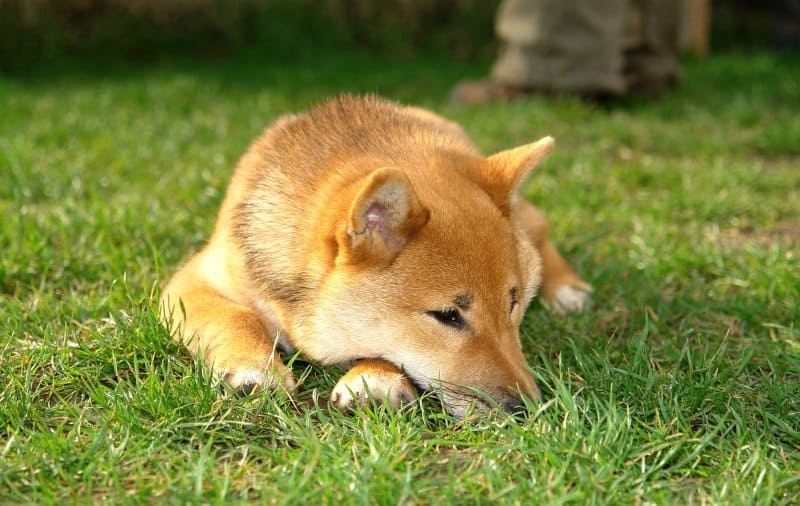
Shiba Inu health issues can range from a slight issue to serious conditions that may even require a trip to the veterinarian. It is your duty as a dog owner to take care of your dog, just as you would for a human family member.
As your Shiba cannot physically tell you that something is wrong, it’ll be up to you to pay very close attention to its body language to watch for any developing health conditions. It is your duty to notice anything that seems out of the ordinary about your dog, or worse, any physical changes that are taking place.
Taking a Shiba Inu home means that you will have an amazing company with a smart and active dog. But you should be fully aware of the health history of the Shiba Inu breed and prepare if the worse has to come.
Here are 6 common Shiba Inu health issues that you should look out for.
Shiba Inus are a generally hardy breed, but they carry a handful of conditions worth knowing so you can catch problems early and keep your dog comfortable for a long life.
Most Shibas live long, active lives, and the point of learning the common issues is not to worry but to notice. Because your dog cannot tell you something hurts, early detection depends entirely on an attentive owner and a good relationship with a vet. This article is general information, not veterinary advice, and anything specific to your dog belongs to your veterinarian. Use it to know what to watch for and when to make the call.
The short version, in four parts:
- Shibas are robust overall, but prone to allergies, joint, hormonal, and eye conditions.
- Early detection matters most, so learn your dog's normal baseline.
- Routine vet checkups catch issues long before they become emergencies.
- Weight, diet, dental care, and exercise are the everyday prevention levers.
Atopy
Also known as inhalant allergies, Atopy is the second most common type of dog allergy. This is when a dog’s immune system overacts when exposed to an airborne inhaled allergen, such as dust, molds, or pollen. This is one of the most common Shiba Inu health issues.
These allergens are everywhere and so this condition cannot be prevented. But your Shiba Inu may be prescribed medication to help with it. Aside from medication, frequent baths can also help reduce Atopy.
Hip Dysplasia
If your Shiba is struggling to put weight on his hind legs (either one or both of them), it could be canine hip dysplasia.
This is a common skeletal condition amongst dogs. Hip dysplasia is when a dog’s hip joint is not properly aligned with the socket. It can be very painful and can make the simplest everyday activities a struggle.
Fortunately, this health condition can be corrected in a variety of ways, including surgery, physical therapy, stem cell treatments, and joint supplements.
Patellar Luxation
Patellar Luxation is a genetic disorder that involves the dog’s kneecaps. It is described by Hillspet as “when the dog patella (kneecap), which normally sits on the groove of the femur (thighbone), shifts out of alignment.”
This condition makes everyday activities difficult, especially when putting weight on the affected legs. Depending on the severity, this can be corrected with surgery. For the pain, veterinarians can also prescribe pain medication.
Hypothyroidism
This is a health condition that involves your dog’s thyroid gland. This is an abnormality of the thyroid gland that leads to different issues, including the reduction of its metabolic state.
Your Shiba might experience lethargy, changes in appetite, and even hair loss. Hypothyroidism can be diagnosed through blood testing. It can be treated but unfortunately, it cannot be cured.
Dogs diagnosed with this health condition needs to have regular replacement hormone through medication in order to stay balanced.
Cataract
Just like humans, your Shiba can also develop cataracts. This health condition involves the eyes of your Shiba. This is when a cloudy grey film appears over the eyes due to the eye’s protein clumping together, eventually blocking the lens.
Cataracts can be inherited, but it is also a result of diabetes. If untreated, it will lead to blindness in dogs. Fortunately, some cataracts (depending on the severity) can be removed through surgery.
To prevent cataracts from developing, make sure your Shiba is getting his regular check-up, including vision tests.
Addison’s Disease
Addison’s Disease has a wide range of symptoms, making it difficult to diagnose. The symptoms vary too, from decreasing to increasing in severity.
Generally, dogs with Addison’s disease might experience repeating instances of gastroenteritis, poor appetite, eventual loss of body condition, and poor response to stress.
According to the VCA Animal Hospital, “Addison’s disease is the common name for hypoadrenocorticism, caused by decreased hormone production from the outer part or cortex of the adrenal gland.” and that it is “primarily caused by an immune-mediated destruction of adrenal tissue.”
If your Shiba is diagnosed with this condition, the treatment for Addison’s disease comes with different steps. First, your dog will be hospitalized and will undergo intensive therapy. Once your Shiba is out of danger, your veterinarian will prescribe a hormone medication to help with the deficiency. Your Shiba is also recommended to do annual or biannual blood work to ensure that the medication is working.
Just like all other dog breeds, Shiba Inu are subjected to their own set of health issues. Being able to spot symptoms, understanding them, and acting quickly will ensure your Shiba will live long lives. It is your responsibility as the owner to do your research on the common Shiba Inu health issues and become pro-active fur parents.
Prevention and Early Detection, Beyond the Big Conditions
Knowing the named conditions is half the job. The other half is the daily and yearly habits that catch trouble early. Here is the framework we use, offered as general guidance to confirm with your vet.
- Keep routine vet exams non-negotiable. Annual or twice-yearly checkups catch many issues, from thyroid changes to early joint problems, long before you would notice at home. Bloodwork and a hands-on exam see what the eye cannot. Skipping these to save money usually costs more later.
- Manage weight carefully. Extra weight strains hips, knees, and joints that this breed is already prone to trouble with. A lean Shiba moves better and often lives longer. Measure food, resist the begging eyes, and ask your vet what a healthy body condition looks like for your dog.
- Do not neglect dental care. Dental disease is common and quietly affects overall health. Regular tooth care and professional cleanings on your vet's schedule protect more than the mouth.
- Watch the coat, skin, and eyes. Allergies and eye conditions show up in the coat and eyes first. New itching, hair loss, cloudiness, or discharge are signs to watch for and mention to your vet rather than wait out.
- Learn your dog's baseline. The owner who knows their Shiba's normal energy, appetite, and gait catches the subtle changes that signal a developing problem. That baseline is the single best diagnostic tool you have, and it costs nothing.
One senior Shiba we cared for after 2019 came to us a little stiff in the hind end. Because the foster knew to flag it early rather than assume it was just age, a vet visit caught a manageable joint issue before it worsened. Attentiveness bought that dog comfort. Health care is also a real budget line, which we cover in our guide to Shiba Inu costs in California, and for joint support specifically, see our overview of joint supplements for dogs.
Why Every Dog We Place Comes With a Health Guarantee
Since 2019 we have placed more than 250 Shibas, and health is not something we leave to chance or hope. Every dog that comes through our program is vetted, and every adoption carries a 1-year written health guarantee. We stand behind the health of the dogs we place because we have seen how much early, honest information matters to a family's peace of mind.
What works: adopters who take the baseline vet records we provide, build a relationship with their own vet immediately, and stay observant. What does not work: assuming a young, healthy-looking Shiba needs no monitoring, or waiting until a small issue becomes an expensive one. The conditions this breed faces are almost all more manageable when caught early, and the guarantee only reinforces a habit that serves the dog regardless.
If you are adopting through us, the health history comes documented as part of the process, and our Lifetime Placement Promise means the support does not end at pickup. We would rather a family call us with an early question than sit on a worry. A Shiba that gets attentive care and prompt vet attention has every chance at the long, robust life the breed is known for.
Related Questions
Are Shiba Inus a healthy breed overall?
Shibas are generally a hardy, robust breed, and many live long, active lives with good care. Like every breed they carry a handful of conditions worth knowing about, including allergies, joint issues such as hip dysplasia and patellar luxation, and some hormonal and eye conditions. Being aware of these lets you catch problems early. Regular veterinary checkups remain the best tool for keeping a Shiba healthy, and your vet is the right source for anything specific to your dog.
What is the life expectancy of a Shiba Inu?
Shibas are a long-lived breed and commonly reach their mid-teens with attentive care, good nutrition, appropriate exercise, and routine veterinary attention. Individual lifespan varies with genetics, weight, and how promptly health issues are caught and managed. The most useful thing an owner can do is stay observant and keep up regular checkups, because early detection is what protects those extra years. Ask your vet what to prioritize at each life stage.
How can I keep my Shiba Inu healthy?
Keep a healthy weight, feed quality food, maintain daily exercise and mental stimulation, stay current on vaccines and dental care, and do not skip routine vet exams. Learn your dog's normal so you notice changes in appetite, energy, movement, or coat early. Most of the conditions Shibas face are far more manageable when caught early, so attentive ownership plus a good vet relationship is the real prevention plan.
What to Read Next
Understand the financial side with our guide to Shiba Inu costs in California, and support aging joints with joint supplements for dogs and care for a senior Shiba Inu. To see how we back our dogs, read about our Lifetime Placement Promise and 1-year health guarantee.
Need in-home boarding for your Shiba?
Small groups, five walks a day, never a kennel. Daycare and vet transport included.