

If you are a pet parent, you already know what it means to have a pet that serves as a companion and a friend. That is why choosing a diet is an important consideration, especially when it comes to your Shiba Inu. You may have heard of raw dog food diets before, but today we’ll sort through the information together and end with a simple raw dog food recipe to try out.
If you are looking for the best dog food for Shiba Inus in general, check out our list of best dog food options.
A raw dog food diet means feeding uncooked meat, organ, bone, and sometimes fruits and vegetables instead of, or alongside, commercial kibble, and it is one of the more debated choices in dog nutrition. Supporters point to shinier coats, better energy, and cleaner teeth, while many veterinarians raise real cautions about bacterial contamination, choking or blockage from bones, and the difficulty of balancing nutrients correctly at home. The honest position is that raw feeding can work for some dogs when it is done carefully and with professional guidance, and it can harm a dog when it is done casually. Before you change your Shiba's diet, the single most useful step is a conversation with your veterinarian, who can weigh your dog's age, health, and needs.
The short version, in four parts:
- Raw feeding is uncooked meat, organ, and bone, sometimes with produce added.
- Reported upsides include coat, energy, and dental benefits, but the evidence is debated.
- Real risks include bacteria, bone hazards, and nutritional imbalance done wrong.
- Talk to your vet before switching, and never feed cooked or splintering bones.
A Significantly Longer Life
Studies reveal that a raw dog food diet contributes to a dog’s continual health and longevity. In fact, statistics show that introducing a raw food diet into a dog’s meal plan can lengthen its lifespan significantly.
Beagles, who like Shiba Inus live an average of twelve years, have been proven to live an additional three years to the age of fifteen with a raw dog food diet. Shibas could potentially see similar results.
Reviewing the Ingredients
Although commercial dog food manufacturers tout the nutrition of their products, many dog owners question the addition of certain byproducts or ingredients. Below are some examples.
Cheap waste products derived from human food manufacturing processes
These products include foods that contain wheat gluten, rice protein concentrate, or corn gluten, all of which supply incomplete nutrition. For example, a rice protein concentrate offers plant protein but is insufficient when compared to animal protein. Soy protein, another common ingredient, is also lacking in this respect.
Lentils and peas
These foods are used to increase protein in dog food as well. However, the plants do not supply all the amino acids that a dog needs in its diet. While you cannot fault the plants for being inadequate as secondary food sources, they should not be included in the main ingredients.
Any dog foods that rely on plant products to supply protein, may not meet all of your dog’s nutritional requirements. This may be true, even if a food is approved by the AAFCO, or the Association of American Feed Control Officials.
That is because the AAFCO is not a regulatory governmental agency. Instead, it operates as a private corporation. While the organization does not directly regulate what is included in commercial dog foods, it has been instrumental in establishing labeling guidelines.
When you consider that wild dogs never eat grains, concocting raw dog food recipes for your dog makes sense. A wild dog’s digestive tract cannot convert grains into sugar for later consumption. Therefore, dog food ingredients should be added with a dog’s special digestive and nutritional needs in mind.
A Major Finding
One Belgian study, conducted over a period of five years and involving over 500 dogs, showed that raw dog food recipes do, in fact, impact a dog’s lifespan. The researchers reviewed a variety of factors, including diet, housing, the number of human family members in a household, and sterilization.
The study showed that sterilization and food significantly impacted a dog’s health and life expectancy. Researchers discovered that sterilization increases a dog’s lifespan by 15 months while a raw food diet boosted longevity by almost three years or 32 months.
Moreover, dogs who ate a raw food diet enjoyed a better quality of life. Raw foods, it was found, reduce allergies, increase stamina, boost energy, and impart mobility in a dog’s later years.
Coming Up with a Recipe
To give you an idea of where to start when creating a raw meal plan, you need to refer to the basic structure of a raw dog food concoction. There are many good resources and guidelines, but let’s use the following guide to make your own raw dog food recipes.
Add 1.5 cups of raw meat
Using some of the meat on the bone. Meat may include tuna, steak, pork chops, lamb chops, or hamburgers. Make sure you don’t give your dog any bones that could get caught in its throat – one of the main reasons for emergency vet visits. Initially, mince a small part of the bone with the meat.
Include an organ in your recipe
Organs, such as livers, spleens, or kidneys, are like vegetables to a dog. Also include 1.5 cups of veggies and/or fruits and dog superfoods.
Lightly steam vegetables
Or run fruits through a juicer or food processor. Doing so adds fiber. Finally, add vitamin and mineral supplementation. Add some fish oil to make your Shiba shine!
Your Shiba Inu should also receive plenty of fresh water to drink. This will help eliminate any internal toxins and keep your dog and friend’s feelings its best. Any pet parent who wants to ensure his or her Shiba’s quality of life should consider nutrition first and foremost in the care of their pet.
What else do we need to look out for?
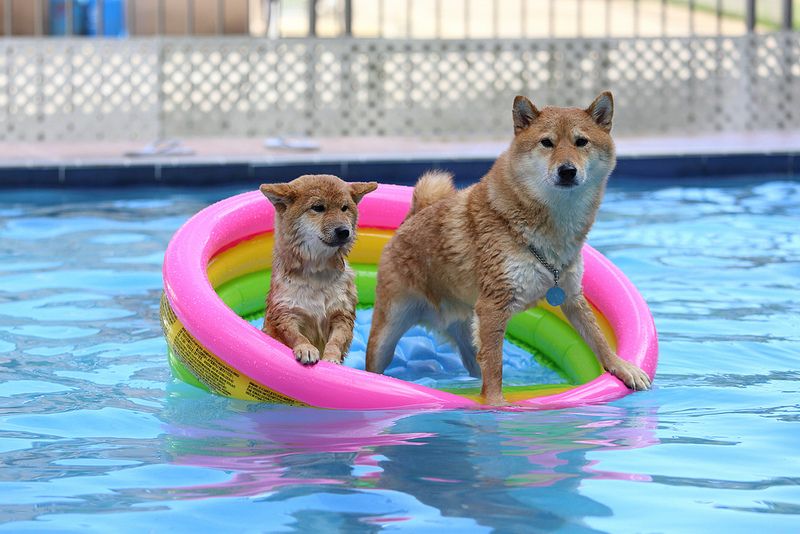
In the summer, the summer heat can reach a sweltering 100°F in some places which puts humans and their pets in danger of heatstroke. How can you keep your Shiba Inu safe from the summer heat?
A dog suffering from heatstroke will have a body temperature above 103°F. What causes this is the high humidity and temperature outside which make panting ineffective at cooling down the dog.
To Avoid Heat Stroke Keep Your Dog Inside
So keep your dog inside the house because it is easier to control the temperature and humidity inside your home if you have air conditioning. In case you don’t have air conditioning, provide your dog with a shade outside using patio umbrellas or just build a DIY shade. Obviously you don’t have to build a shade if you have trees in your backyard.
Exercise and Water
Another protective measure is to take your dog for a walk early in the morning or in the evening hours when the sun is going down. You can let your dog rest in the middle of the day when it’s hottest outside. Make sure your pet has access to cool drinking water throughout the day. If temperatures rise in your home, drape a wet towel over your dog’s neck or under the dog’s limbs so that the dog can cool down faster. To encourage your dog to stay hydrated, freeze low sodium chicken broth and place it in a metal bowl full of water.
Avoid Car Travel
You may also have to avoid taking your dog for car rides because temperatures rise quickly in cars during hot days. There are numerous cases where dogs have died of heatstroke because they were confined in a parked vehicle in the middle of a hot summer day. Some people try to avoid this by having their pet ride in their truck beds. But these truck beds are made of metal which can burn a dog’s paw pads and increase their body temperature.
Dogs That Are Vulnerable To Summer Temperatures
Knowing what type of breed is more susceptible to heatstroke can help you plan adequately for the summer months. Breeds that have a significant risk of heatstroke include Chow chow, Bulldog, French bulldog, French mastiff, Greyhound, Pug, English springer spaniel, Jindo, and Golden retriever. The risk rises significantly for purebred dogs compared to crossbred dogs.
Talk to your veterinarian if you want more information about keeping dogs hydrated and how to treat dogs that are in distress because of hot weather. Best to keep your dog cool and avoid the chance of heatstroke altogether!
What a Safe Raw Feeding Plan Actually Requires
If you and your vet decide raw is worth trying, the difference between a diet that helps and one that harms comes down to a few disciplines. Here is what a careful plan looks like.
- Complete and balanced, not just meat. A bowl of muscle meat is not a diet. Dogs need the right ratios of muscle, organ, bone or a calcium source, and often added fats and micronutrients. Getting this wrong over weeks and months causes deficiencies that are hard to see until they matter, which is why home raw diets are best built with veterinary input rather than a recipe off the internet.
- Food safety and handling. Raw meat can carry salmonella and other bacteria that risk both the dog and the humans in the house. Handle it like you would raw meat for yourself: clean surfaces, wash hands and bowls, store it cold, and do not leave it sitting out. Households with young children, elderly members, or anyone immunocompromised should think especially hard about this.
- Bones done right, or not at all. Cooked bones splinter and are dangerous, full stop. Even raw bones carry a real risk of choking, broken teeth, or blockage, and the wrong bone for the dog's size is a genuine hazard. This is a topic to clear with your vet before offering any bone, not to improvise.
- Transition gradually. A Shiba's gut does not appreciate abrupt change. Switching to raw overnight is a reliable way to trigger loose stools or vomiting. A slow transition over a week or more, watching how the dog responds at each step, is far gentler on a sensitive stomach.
- Know who should skip it. Raw is not right for every dog. Puppies with developing systems, dogs with certain illnesses, and dogs on some medications may do poorly on it. Your vet can tell you whether your individual dog is a reasonable candidate at all.
- Bring in a professional. A veterinarian, and ideally a veterinary nutritionist, can help you build a plan that is actually complete, safe, and matched to your dog. This is the step most home raw feeders skip, and it is the one that most separates good outcomes from bad ones.
A composite: a Shiba we will call Sora switched to a raw diet cold turkey because a neighbor swore by it, and within days had a wrecked stomach and worse stools than before. The problem was not raw food itself. It was an abrupt change, an unbalanced bowl, and no vet involved. Her owner slowed everything down and worked with a vet, and either way the lesson held: how you feed matters as much as what you feed.
If your dog already has a touchy gut, read our guide on what to do when your Shiba has a sensitive stomach before making any change, and owners still deciding on the breed should start with is a Shiba Inu right for me.
How We Handle Diet Questions Across the Pack
Since 2019 we have placed more than 250 Shibas and boarded many more, which means we have seen dogs on nearly every diet you can name, kibble, gently cooked, raw, and every mix in between. A few honest observations.
The first is that we do not push any one diet, and neither should a rescue. We have seen dogs thrive on carefully managed raw diets and dogs thrive on quality kibble. What we have not seen is a magic bowl that fixes a dog whose real problem is weight, stress, or an untreated medical issue. The diet is one input, not the whole story.
The second is that consistency during boarding matters more than the diet itself. When owners send a raw-fed dog to us, we ask for their exact food, prepped and portioned, with clear handling instructions, because switching a raw-fed dog to kibble for a week, or handling raw meat carelessly, causes more problems than it solves. We keep the dog on what it knows.
The third is that we watch the dog, not the label. A dog on any diet that develops loose stools, vomiting, or low energy gets noticed and, if it does not resolve, gets a vet. We are not going to diagnose a food allergy or declare a diet a success or failure. That belongs to a professional.
To be plain, none of this is veterinary advice, and diet changes should run through your vet. What we offer is steady, careful handling of whatever feeding plan you and your vet have chosen. If you want your Shiba's diet kept exactly as it is at home while you travel, that is what our in-home boarding is set up to do.
Related questions
Is a raw diet safe for my Shiba Inu?
It can be for some dogs when it is complete, balanced, and handled safely, and it can be risky when it is not. The main concerns are bacterial contamination, bone hazards, and nutritional gaps from a home diet that is not properly built. Whether raw is safe for your particular dog is a question for your veterinarian, who knows the dog's age and health.
Can I just feed raw meat and nothing else?
No. Muscle meat alone leaves out the organ, calcium, and micronutrients a dog needs, and feeding it as a sole diet leads to deficiencies over time. A real raw diet is a balanced formulation, not a plate of steak. If you want to feed raw, build the plan with veterinary guidance rather than improvising.
Do raw diets really make dogs live longer?
You will find strong claims in both directions, and the science is far from settled, so it is wise to treat sweeping longevity promises with caution. What is clearer is that keeping a dog lean, active, and under regular veterinary care supports a long life regardless of the diet's format. Focus on the fundamentals and let your vet guide the specifics.
What to read next
Before changing anything, read our nutritional guide for your Shiba Inu's diet and, if your dog has a touchy gut, what to do when your Shiba has a sensitive stomach. Owners weighing the breed should start with is a Shiba Inu right for me, and if you travel, our in-home boarding keeps your dog's feeding plan steady.
Need in-home boarding for your Shiba?
Small groups, five walks a day, never a kennel. Daycare and vet transport included.