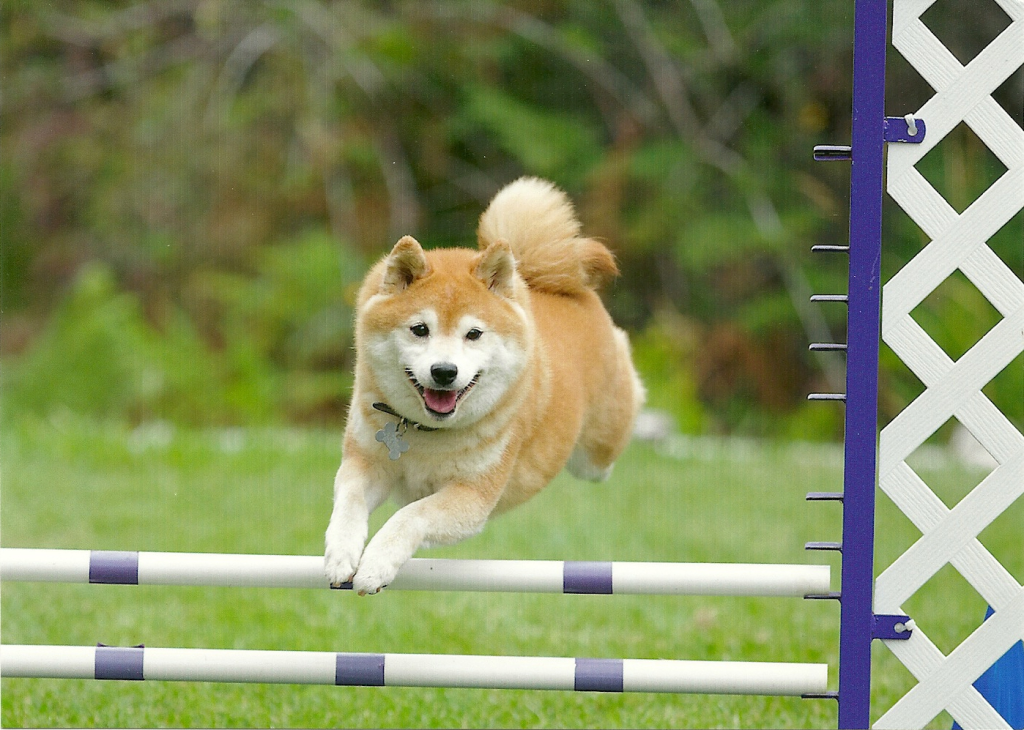
The Shiba Inu is an athletic dog breed. They are energetic, smart, playful, and enjoy physical activities. Their size, strength, and stamina make them a good candidate for agility training.
However, Shiba Inu is infamous for being stubborn, independent, and easily bored. They like doing things their way, so agility training can be challenging.
But this shouldn’t stop you from trying anyway! Dog sports have many benefits, including keeping your dog occupied so they wouldn’t look for trouble, one thing Shiba Inu is well-known for.
Dog sports will keep your dog physically fit and mentally stimulated and is also a good opportunity for the dog and owner to bond.
A Shiba Inu can absolutely do agility, but it will never be a border collie about it, and pretending otherwise is where most owners get frustrated. Agility rewards a dog that stays in tight partnership with its handler through a fast, off-leash course, and a Shiba's whole personality is built around doing its own thing. That does not rule it out, it just changes the order of work: you earn a reliable recall and genuine focus before you ever touch a jump. The Shibas who do well in agility are the ones whose owners made the sport more rewarding than the dog's own agenda, using play, food, and patience rather than pressure. Go in expecting a fun hobby that sharpens your bond, not a podium, and both you and the dog will enjoy it far more.
The short version, in four parts:
- Foundation before obstacles. Rock-solid recall and focus come first. An off-leash Shiba without them will self-release.
- Find real motivation. The reward has to beat the environment. Discover what your Shiba will actually work for.
- Build body awareness slowly. Low obstacles and balance work protect joints and build confidence before speed.
- Keep it force-free and short. Shibas quit under pressure. Fun, brief sessions keep them in the game.
What is dog agility?
Dog agility is a timed obstacle course the dog must complete in a pattern. It comprises jumps, ramps, tunnels, weave poles, and walkways. It is a competitive activity that challenges a dog’s mind and body.
Agility is a sport for dogs and is popular among owners of high-energy breeds. The dog and handler work as a team, guiding the dog through obstacles in the correct order.
But, some prefer to use agility as a fun exercise for their dogs at home. It is a great way to bond, an enjoyable way to train and burn off your dog’s energy.
Benefits of Dog Agility
Dog agility reaps many benefits for your dog. Many owners would like their dogs to participate in such activities, competitively or at home.
Exercise. Agility is particularly for high-energy dogs with much energy to spare. Dog agility has running, jumping, climbing, and other exercises that are good for your dog’s health. It will surely tire your dog out at the end of these obstacles.
Rid of boredom. When your dog is bored, it tends to look for trouble. This is where destructive behaviors manifest. But with agility, not only does it keep your dog moving, but it also stimulates their mind and keeps them occupied. After the day, they’ll be so tired trouble is the last thing in their heads.
Builds good behavior. One of the best outcomes of agility is your dog’s ability to listen to your commands. To finish the obstacle course, your dog relies on your commands as you correctly guide them through the hurdles. This training increases how much they pay attention and obey you.
Strengthens owner/handler-dog bond. As you work and train as a team, you’ll also be spending time and bonding with your dog.
Is my dog suited for agility?
All healthy adult dogs are suitable for agility. That said, recently injured dogs or seniors with health issues will have to sit out from this extensive activity.
Puppies can gradually start and complete a whole course when they are 12-18 months old.
And for dogs like Dachshunds and Basset Hounds prone to arthritis or back injuries, you should remove certain obstacles like jumping.
Agility works great for dogs with common behavioral issues like:
Nervous or anxious dogs. Nervous dogs are scared of uncertainty. Not knowing what’s coming next can trigger their anxiousness. But with agility, the course’s pattern is predetermined so the training and event can be treated as a routine. Nervous dogs can quickly warm up to the sport because of its repetitive activities, which helps with their nervous behavior.
High-energy dogs. High-energy working dog breeds have lots of energy they need to burn. And some owners need help keeping up with this stamina or providing them with an outlet to spend their energy. This is why dog sports are often dominated by working dog breeds because this is where they excel. They find the physical and mental challenge fun and help burn their energy.
If your dog displays confidence, it might pick up on agility easier than some. But it doesn’t mean your timid or troublemaking dog couldn’t do it. With training and honing their obedience and focus, almost all dogs can excel in agility.
Is agility for me?
Agility is not a one-man team. Just because it is for dogs doesn’t mean the handler or the owner is not involved. That’s why before signing up your dog for these extensive activities, you also have to consider yourself.
Are you suited for agility?
Dog agility not only exercises the dogs but their humans as well. You and your dog must be on the same page regarding this. You will also need a solid fitness mindset as you will accompany and teach your dog a training and exercise routine.
Like your dog, you also need strength, balance, and stamina to support your dog throughout the agility course.
Tips to get started with dog agility
Before riding the waves to the actual sport, there are a few things you need to train your dog on. These basic but fundamental skills’ll make dog agility a bit easier.
Brush up on basic obedience
In the agility course, your dog must closely follow your instructions and understand your cues. So build his obedience skills, including sit, stay, and come and use positive reinforcement.
Improve attention span
The agility course needs intense focus, and you need to train your dog to keep his attention on you and not be distracted by anything in the surroundings, like other dogs and noises.
Get them used to different movements
The sport is filled with different and strange movements that your dog might need to become more familiar with, like crawling or climbing. So before introducing him to the entire course, get them used to different movements like walking backward, stepping on top of things, climbing over, and crawling.
Develop flexibility
Increasing a dog’s flexibility is one way to start with agility training. You can lead them to twirl to their right or left to stretch their side or use their nose to lead them around in a circle.
Overcome fear of the dark
One obstacle that can be seen in an agility course is a tunnel your dog has to run through. If your dog is intimidated by the dark opening, some training needs to be done.
First, your dog must get comfortable in a narrow, covered space. You can purchase an agility tunnel at home to train your dog or build a mock tunnel with blankets, chairs, or a big cardboard box.
Keep the length of your tunnel short so your dog can see the other side, and most importantly, don’t force him. Instead, lure and encourage them with positive reinforcement and peaking your head from the other side.
What agility with a Shiba really takes
Agility looks like the obstacles, but the obstacles are the last thing you teach. The real sport is a dog choosing to work with you at speed, off leash, surrounded by distractions. For an independent breed, that partnership is the whole project. Here is what it actually takes, in order.
- A recall you would bet money on. Agility runs off leash, and a Shiba with a shaky recall will take itself on a tour of the ring or the parking lot. Before any equipment, you need a dog that comes back reliably and checks in with you by habit. This is the single biggest gate for the breed, and it is non-negotiable for safety.
- Motivation that beats the environment. Every dog in agility is being paid to ignore a world full of smells and other dogs. With a Shiba, you have to find the reward it genuinely values, high-value food for some, a tug or chase game for others, and build real drive for it. A Shiba that is not motivated will simply opt out, and no correction fixes that.
- Body awareness and low-impact foundations. Start with flat work, balance, and low or flat obstacles before anything high or fast. This protects growing or aging joints and builds the confidence a Shiba needs to commit to equipment. Rushing a nervous dog onto a full-height obstacle usually creates avoidance you then have to undo.
- Handling the independence, not fighting it. Expect a Shiba to test whether the course is optional. Keep sessions short, end on a win, and make yourself the most interesting thing in the ring. If your dog checks out, that is information: you went too long, the reward was too weak, or the criteria jumped too fast. Adjust rather than push.
- Force-free throughout. Pressure and corrections make Shibas shut down or quit, which is the opposite of the joyful drive agility needs. Everything here rides on reward-based training, the same foundation covered in our guide to using positive reinforcement with a Shiba. If the recall foundation is not there yet, our broader breed reality check is worth a read on what the independence really means day to day.
One agility-curious owner brought a young Shiba that could weave and jump beautifully in the backyard and completely ignored them at class. Nothing was wrong with the dog. The backyard had no competition, and the class was a buffet of distractions the owner had never trained around. We backed all the way up to recall and focus games in gradually harder settings, and only then reintroduced obstacles. The dog that "could not do agility" was just never taught to choose the handler over the environment.
How this plays out in real life
Across 250-plus Shibas placed since 2019, the ones who take to dog sports share owners who treat it as a game, not a performance. Shibas can be athletic, quick, and surprisingly precise when they are bought in, and a good agility hobby burns physical and mental energy that would otherwise go into mischief. The failures almost always trace to two things: a missing recall foundation, and handlers leaning on pressure when the dog disengages. A Shiba reads correction as a reason to quit, so the harder you push, the less dog you get.
The honest caveat is that agility is not for every Shiba, and that is fine. A dog that is fearful, reactive around other dogs, or simply not interested does not need to be in a ring, and forcing it helps no one. Before committing, it is worth an outside read on your dog's drive and temperament, and any good agility instructor or certified trainer will start there rather than with equipment. If you want structured help building the recall and focus that make the sport possible, our one-on-one training is built around exactly those foundations, tailored to how stubborn or soft your particular Shiba turns out to be.
Related questions
Are Shiba Inus good at agility?
They can be, but they are unconventional agility dogs. Shibas are athletic and smart enough for the obstacles, yet their independence means the hard part is the partnership, not the jumping. Owners who build strong recall, focus, and motivation get a capable, fun agility partner. Those expecting border-collie-style biddability out of the box usually end up frustrated. Set expectations around a hobby, not a title.
What should I train before starting agility with my Shiba?
A reliable off-leash recall and solid focus around distractions come first, followed by basic body awareness and a genuine, high-value reward the dog will work for. Without a recall you cannot safely run a course, and without motivation a Shiba simply opts out. Get those foundations solid and the obstacles themselves are the easy part.
Is agility safe for a Shiba Inu's joints?
It can be, with sensible progression. Keep young dogs off high-impact jumps and contacts until they are physically mature, warm up before sessions, and build strength and body awareness gradually. Check with your veterinarian before starting, especially for a growing or older dog. Rushing height and speed is where injuries happen, so patient foundations protect the dog.
What to read next
Start with our guide to training a Shiba with positive reinforcement and the broader Shiba Inu training overview, since recall and focus are the real prerequisites. Good socialization makes a class setting far easier, and our one-on-one training can build the foundations a sport demands.
Need help training your Shiba?
Long-term behavior modification and skill training, built for the breed.