
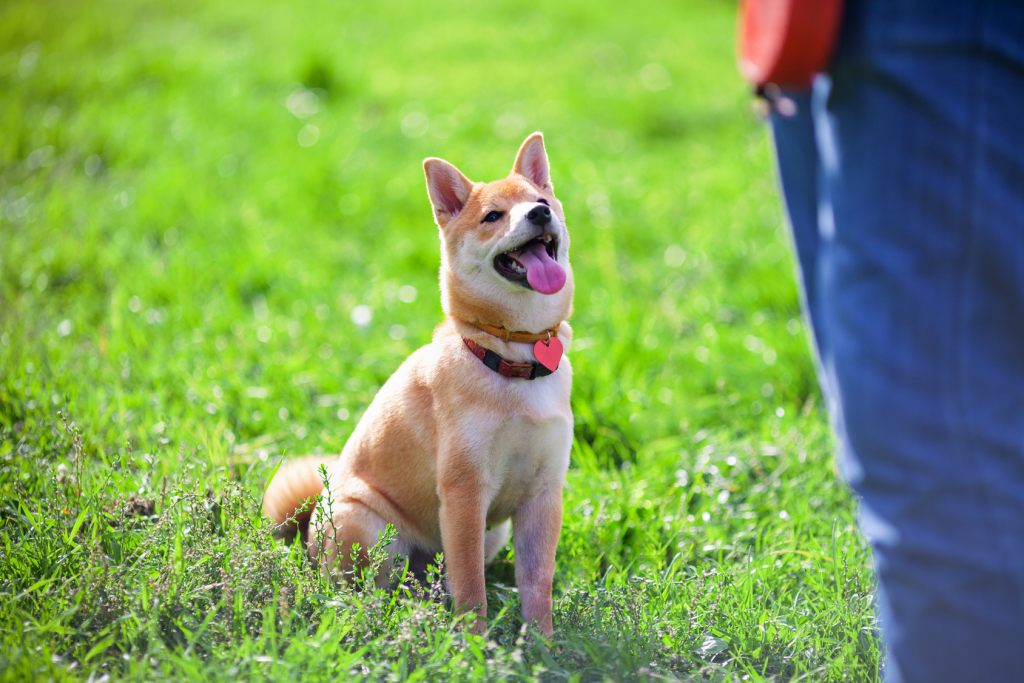
Regardless of the reason why they ended up in the shelter, rescue dogs can be the sweetest companion you’ll ever have. However, since we don’t know much of their history, training one really requires patience and extra consideration.
Are rescue dogs harder to train? This depends if they had, at least, basic obedience training from previous owners. Also, remember that there is a reason for their behavioral issue, that’s why it is important to gain their trust, take time with training, and socialize with them.
Remember, your household is a new environment for these dogs. And as they are creatures of habit, new surroundings, new scents, sounds, and sights can bring about new feelings that they need to get used to.
Training a rescue Shiba Inu starts with something that looks like nothing: giving the dog weeks to decompress before you ask for a single command. A newly rehomed Shiba is often carrying stress, a broken routine, and sometimes a rough history, and a dog in that state cannot learn well no matter how good your treats are. Your first job is safety and predictability, not sit and stay. Once the dog trusts that its new home is stable, its people are kind, and the routine holds, the actual training goes far faster than if you had rushed it. Shibas are independent and slow to hand out trust even in the best case, so a rescue Shiba needs patience up front and consistency forever. Skip the decompression and you build skills on top of a scared dog, which rarely holds.
The short version, in four parts:
- Decompress first. Give a new rescue weeks of quiet routine before expecting real training to land.
- Build trust and safety. Predictable food, walks, and rest teach the dog the new home is stable.
- Manage triggers. Avoid flooding a fearful dog. Change the setup so it can succeed instead of react.
- Reward-based only. Force and punishment break fragile trust. Positive reinforcement builds it back.
How to Train Rescue Dogs?
Every dog has different needs, especially rescue dogs. If they have a history from their previous home, they might have unique needs you need to cater to so they’ll regain their confidence.
Here are a few things you can do to train your rescue Shiba Inu.
Expect an adjustment period
Rescue dogs have a history; before you adopt one, you must ensure you’ll be able to handle that. In most cases, they are less trusting and less confident. So when bringing them home, you have to expect they won’t be the most enthusiastic dog just yet.
This is normal as the dog needs an adjustment period. Your home is an entirely new environment and it needs to decompress first.
Decompression in dogs means little to no training, not too much handling, such as petting or picking up, and giving them space and time to themselves.
Decompression time depends on age, past experiences, and how long they were in the shelter or foster home. In most cases, the average decompression time is two weeks.
However, you can still set boundaries for certain behaviors, such as eliminating on the carpet or chewing on furniture during this time. And once they are comfortable, then you can start the formal training.
Start with the basic
If your rescue dog had basic obedience training from their previous owners, training them might not be as challenging. But if they haven’t, then you need to start from the five basic cues:
- Sit
- Down
- Stay
- Heel
- Come
Keep the sessions short (10 to 15 minutes) and do it two to three times a day. For rescue puppies, sessions should be shorter (3 to 5 minutes).
Use positive reinforcement
The best way to train a rescue dog (or all dogs) is through positive reinforcement.
Positive reinforcement is rewarding your dog for doing what’s right instead of scolding them for doing something wrong. Rewards can be their favorite treat, food, praise, or their favorite toy.
It is “force-free” training and encourages your dog to repeat the same good behavior so they’ll have treats or toys.
This gentle approach lets your dog understand that you love him and discourages punishment.
Establish a routine
Establish a routine and stick to it.
Dogs love routines, but when put into a shelter, they can be quite stressed as things can be unpredictable. So when you bring him home, set a routine to establish feeding, walking, playing, and bedtime.
Getting into a routine will also help your dog get used to its new home.
The rescue Shiba training roadmap
A rescue dog is not a blank slate, it is a dog with a history you may not fully know. That changes the order of operations. You are rebuilding trust and a sense of safety before you layer on obedience, and with a Shiba's independent streak, that foundation matters even more. Here is the sequence we hand every adopter.
- Decompression before anything else. A common rule of thumb is that a dog needs about three days to stop being overwhelmed, three weeks to settle into a routine, and three months to fully relax into a home. Treat the early weeks as low-pressure: quiet, predictable, minimal demands. A dog that is still overwhelmed is not ignoring you, it simply cannot process training yet.
- Build safety and routine. Feed, walk, and rest at consistent times, and give the dog a den or safe spot it can retreat to. Predictability is what tells a rescue the chaos is over. Shibas in particular relax faster when the day is legible and no one is forcing interaction on them.
- Manage, do not flood. If your dog is scared of something, do not repeatedly expose it hoping it toughens up. Flooding usually makes fear worse. Change the setup instead: more distance, an escape route, a calmer time of day, so the dog can stay under threshold and succeed. Management buys you the room to train.
- Add foundation skills with reward-based methods. Once the dog is settled, start easy: name response, sit, coming when called, all paid generously and never forced. A rescue Shiba that has learned humans can be harsh needs proof that cooperation pays. Our guide to training a Shiba with positive reinforcement covers the mechanics.
- Get a professional read early. If you see real fear, resource guarding, or reactivity, do not wait it out alone. An early assessment from someone qualified saves months and prevents a small issue from setting. Rehoming and settling a Shiba is its own topic, covered in how to rehome a Shiba Inu in California.
One Shiba came to us having been passed between homes, and it spent its first week hiding under a table, refusing food from anyone standing. The instinct to "train" it out of hiding would have backfired. Instead the adopters did almost nothing on purpose: quiet routine, food left nearby, no reaching or forcing. By week three the dog was taking treats by hand, and only then did real training start. The patience up front was the training. It is a pattern we see over and over.
What we have seen across the pack
Across 250-plus Shibas placed since 2019, the rescue dogs who thrive share one thing: owners who let the dog set the pace early. The ones who struggle usually did the opposite, treating a scared new dog like a project to fix on day two, flooding it with visitors, dog parks, and drills before it felt safe. Shibas remember pressure, and a rescue that already learned to distrust people will double down if the new home feels like more of the same. Slow is fast here. The dogs given room to decompress often turn out to be the easiest trainers a month later.
The other honest pattern is that not every rescue behavior is a training problem. Deep fear, genuine aggression, and separation panic are behavioral and sometimes medical issues, not obedience gaps, and they need a real plan. Any board-certified veterinary behaviorist or credentialed trainer will tell you that reward-based work plus management beats force every time with a fearful dog, and that punishment on a scared Shiba often converts fear into aggression. When we place a dog with any known history, we start with a behavioral evaluation so the adopter knows what they are working with and has a plan from day one, rather than guessing and reacting.
Related questions
How long before a rescue Shiba settles into a new home?
A useful frame is three days to stop being overwhelmed, three weeks to learn the routine, and three months to fully relax, though every dog differs and some take longer. A Shiba with a rough history may need more time and more patience. Push training before the dog has settled and it rarely sticks. The early quiet is not wasted time, it is the foundation.
Can you train an adult rescue Shiba, or is it too late?
You can absolutely train an adult rescue. The old idea that adult dogs cannot learn is a myth. Adults often focus better than puppies once they feel safe. What changes with a rescue is that you may first have to undo some learned fear or bad associations, which takes patience, but the capacity to learn is fully there.
My rescue Shiba is scared of everything. Where do I start?
Start with safety, not exposure. Give the dog a quiet space, a predictable routine, and the freedom to retreat, and avoid forcing it toward the things that scare it. Reward any brave choice it makes on its own. If the fear is severe or looks like it is getting worse, get a qualified trainer or veterinary behaviorist involved early rather than trying to push through it.
What to read next
Build the skills with our guide to training a Shiba with positive reinforcement and work carefully through how to socialize a Shiba Inu, going slow with a rescue. For the bigger picture, read how to rehome a Shiba Inu in California, and a behavioral evaluation gives you a real plan when a rescue arrives with unknowns.
Need help training your Shiba?
Long-term behavior modification and skill training, built for the breed.