The Shiba Inu is a smart and energetic breed, which makes training them extremely fun. Fur parents have different methods of training but one of the best methods is to use dog training treats for Shiba Inu.
There are many types of dog treats, each serving different purposes but rest assured, they are all for the goodness and health of your dog.
Dental treats help improve teeth and gums, reduce bad breath, and remove tartar and plaque. Sweet treats are great to have some variation during treat time. Reward treats are usually savory, and you can give to your dog as a small snack. Lastly, training treats are for training sessions – they are usually smaller in size.
The best training treat for a Shiba Inu is small, soft, aromatic, and gone in one bite, so the reward lands the instant your dog earns it and the session keeps moving. Shibas are food-motivated in short bursts rather than endlessly, so the treat has to be worth interrupting their independence for without filling them up in ten reps. Size matters more than flavor here: a treat you can break into pea-sized pieces pays for twenty repetitions on the calories of one biscuit. Softness matters too, because a crunchy treat that takes ten seconds to chew breaks the rhythm every reward-based session relies on. The rule of thumb is to match the value of the treat to the difficulty of the ask, plain kibble for easy behaviors at home, high-value meat for recall near a squirrel.
The short version, in four parts:
- Small and soft. Pea-sized and one bite, with no crumbs on the floor to hunt for.
- Low-calorie. Around 4 kcal per piece or less, so a full session does not blow the daily food budget.
- Tiered by value. Boring treats for easy work, jackpot treats for hard or distracting places.
- Fast to eat. Swallowed in a second so attention snaps back to you, not to the chewing.
The Benefits of Dog Training Treats for Shiba Inu
An employee who works regular hours clocks out at the end of their shift and receives their basic pay. This is similar to a dog’s routine. They have their usual meals and everyday activities.
But if the employee worked overtime and delivered wonderful results, he should be rewarded extra. You can see how dogs who behave well and comply with training ought to receive dog treats as rewards, too.
Dog training treats serve as motivation, something your pooch can look forward to every training session. It can also be used as a cue for your dog that it is time to learn something new.
Dog training treats are not only used for training but it is highly beneficial for their health too.
Here are some benefits to dog training treats.
- It adds extra nutrition and healthy supplements
- Effective for dog training as a reward for good behavior
- Long-lasting chew treats are ideal for bored and destructive dogs
- Can provide oral care to your dog
The Best Dog Training Treats for Shiba Inu
In this article, we’ve listed out the fan favorites among dozens of dog training treats for Shiba Inu in the market for you to choose and try.
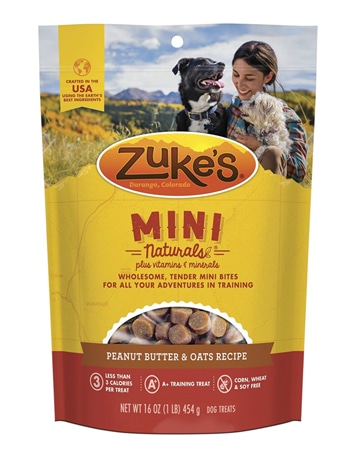
Zuke’s Mini Naturals Peanut Butter & Oats Recipe
One of our top picks for the best dog training treats for Shiba Inu is Zuke’s Mini Natural Peanut Butter and Oats Recipe treats. It is made with real peanut butter and only has 2.2 kcal per treat. These treats are free of corn, wheat, and soy and are filled with healthy ingredients like cherries and oats sourced from the US, Canada, and Europe.
Because of their soft and chewy texture, they can easily be broken in half or quarters which is ideal if you are training smaller dogs. It is available in two bag sizes and comes in a resealable bag.
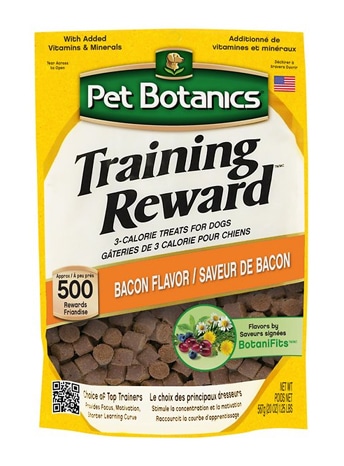
Pet Botanics Training Reward Bacon Flavor
If you are looking for dog training treats for Shiba Inu that gives the best value for your money, the Pet Botanics Training Rewards Bacon Flavor treat is worth the try. It comes in a large bag size with around 500 treats per bag and 3kcal per treat.
The treats are bacon-flavored and have pork liver as their first ingredient. It is all jampacked with ingredients rich in nutrients like eggs and blueberries and botanical mixture for added flavor. Almost all of the ingredients are sourced in the US, with tapioca from France and palm oil from South America.
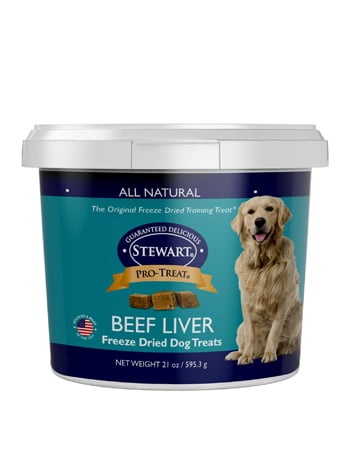
Stewart Pro-Treat Beef Liver Freeze-Dried Dog Treats
The Stewart Pro-Treat Beed Liver Freeze-Dried Dog Treats is our premium pick on this list. It is made with 100% beef liver with each treat consisting of around 4kcal. Though it might vary since this product comes in different sizes but since they are easily broken, you still have control over your dog’s calorie intake.
The treats are rich in nutrients and highly palatable. They can also be crumbled into almost-like a powder form as a meal topper. This dog training treat contains no artificial flavors, wheat, soy, or corn.
The Stewart Pro-Treat Beef Liver Freeze-Dried Dog Treats is more expensive than other dog training treats for Shiba Inu but it does come from a reputable brand that’s been making dog treats since 1973 so you are assured of healthy ingredients.
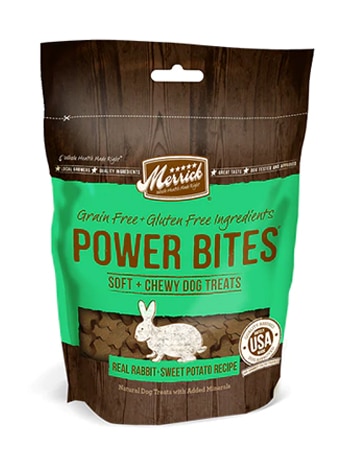
Merrick Power Bites Real Rabbit & Sweet Potato Recipe
If your Shiba Inu is sensitive to food, the Merrick Power Bites Real Rabbit & Sweet Potato Recipe is a great choice. It consists of de-boned rabbit meat, which is an excellent source of protein for dogs.
These treats don’t contain poultry or beef products, corn, wheat, or soy. Yet they are higher in calories at 5.3 kcal per treat. They are easily breakable, so you can tear them into smaller pieces if necessary. It’s only available in one package size but they are a wonderful budget-friendly option.
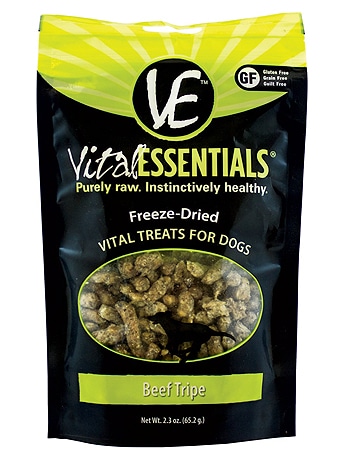
Vital Essentials Freeze-Dried Beef Tripe
If your Shiba is on a raw diet (or maybe they are just picky eaters), the Vital Essentials Freeze-Dried Beed Tripe is a good treat to try. This product only contains freeze-dried beef tripe and is highly palatable to dogs. Tripe is a nutrient-rich food and is recommended for dogs with food sensitivities.
The treats contain 155 kcal per ounce in various sizes. But since they are easy to break, you can split them into smaller pieces. It’s only available in one package size.
How to build a Shiba treat hierarchy that works
A single bag of treats rarely holds a Shiba across an entire session. The breed reads the room fast, and a reward that pays well in your kitchen loses all its value once a delivery truck rolls by. The fix is a hierarchy, three or four tiers you can reach for depending on how hard the moment is. Here is the structure we hand to new adopters.
- Tier one, everyday kibble currency. Set aside a portion of your Shiba's normal daily kibble and pay for the easy, known behaviors with it: a sit in the living room, a name response with nothing else going on. This costs zero extra calories and keeps the mundane stuff from draining your good treats.
- Tier two, the soft store workhorse. A soft, pea-sized commercial training treat around 2 to 4 kcal is the backbone of most sessions. This is what you use for teaching something new indoors or on a quiet walk. The soft treats reviewed above sit in this tier because they break cleanly and disappear in one bite.
- Tier three, real meat and cheese jackpots. Boiled chicken, a sliver of string cheese, or freeze-dried liver is your currency for hard asks: holding a stay while someone knocks, or turning away from another dog. Shibas will work through their stubbornness for food they consider genuinely worth it, and plain protein usually clears that bar.
- Tier four, the outdoor emergency reward. Keep one thing your dog almost never gets any other way, reserved for recall and for the moment a squirrel appears. If the jackpot is predictable, it stops being a jackpot, so protect it.
- Portion math so treats do not become the meal. Treats should stay under roughly ten percent of daily calories. On a heavy training day, cut the dinner bowl to match. A Shiba that gets pudgy loses the food drive that makes any of this work, so weigh the trade honestly.
One adopter came to us frustrated that their Shiba "ignored treats" outdoors. The dog was not ignoring food, it was being paid tier-two rates for a tier-four job. We moved the outdoor recall reward to warm chicken and the recall came back inside a week. The treat was never the problem, the pay grade was. For the mechanics of how rewards actually change behavior, see our guide on training a Shiba with positive reinforcement, and if you are still deciding whether the breed fits your household, read is a Shiba Inu right for me before you commit.
What we have seen across the pack
Across 250-plus Shibas placed since 2019, the treat mistakes cluster into a short, predictable list. The most common is over-treating: owners so eager to reward that the dog is full and disinterested by rep eight. The second is treats that are too big, which turns every rep into a chewing pause and kills momentum. The third is flavor monotony, one bag forever, until the dog decides the reward is boring and its own agenda is more interesting. Shibas punish monotony harder than most breeds because they are always running a cost-benefit check on you.
What consistently works is the opposite pattern. Owners who pre-portion tiny pieces before a session, who rotate two or three flavors so the reward stays a small surprise, and who fade food out on mastered behaviors while keeping praise and life rewards, get a dog that stays engaged. Fading matters: the goal is a Shiba that sits because you asked, not because it audited your hand for a treat first. We coach owners to move to intermittent rewards once a behavior is solid, which paradoxically makes it stronger.
Food also is not the answer to every behavior. When a dog is over threshold, lunging, fixated, or genuinely anxious, no treat cuts through, and any board-certified veterinary behaviorist will tell you the same. That is a signal to lower the difficulty or get a real assessment, not to wave better bacon. If treats keep failing in a specific situation, our one-on-one training starts by figuring out whether the issue is motivation, environment, or something underneath that needs a proper plan.
Related questions
Can I use my Shiba's regular kibble as training treats?
Yes, and you should for the easy stuff. Measured out of the daily ration, kibble is a free, low-value reward that is perfect for known behaviors in low-distraction settings. Save the higher tiers for new skills or hard environments. Using kibble for the boring reps means your good treats keep their punch when you actually need them.
How many treats a day is too many for a Shiba?
Keep treats under roughly ten percent of daily calories and adjust meals down on heavy training days. Shibas gain weight easily and a pudgy Shiba loses food drive, which undercuts training. Tiny pieces are the lever here: you can run dozens of reps on the calories of a couple of biscuits if you break treats down small.
What if my Shiba refuses treats during training?
First rule out a full stomach, then check whether the reward matches the difficulty. A dog that takes treats indoors but refuses them at the park is usually over threshold or underpaid, not stubborn. Lower the difficulty, raise the value to real meat, and if refusal persists across settings, have a professional evaluate whether stress is the real driver.
What to read next
Build the foundation with our guide to training a Shiba with positive reinforcement, then work through the broader Shiba Inu training overview for the skills treats support. If treats are not solving a specific behavior, our one-on-one training program builds a plan around your dog, and is a Shiba Inu right for me is worth a read if you are still weighing the breed's independent streak.
Need help training your Shiba?
Long-term behavior modification and skill training, built for the breed.