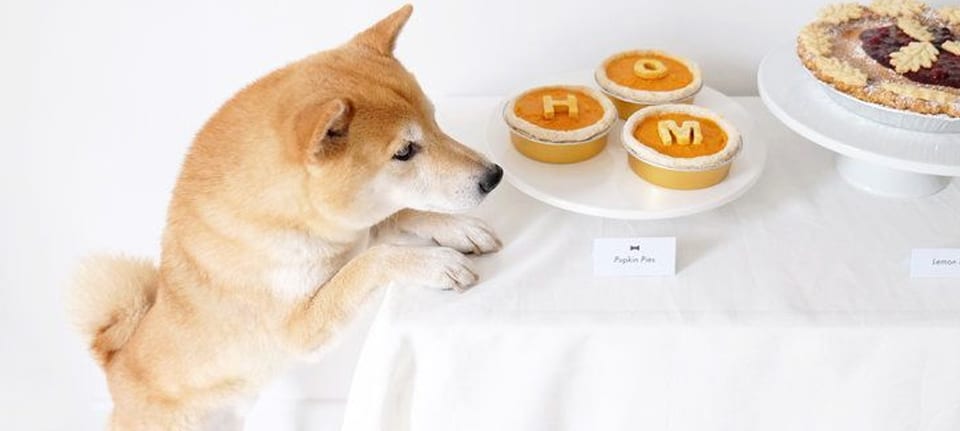
Giving a treat to your Shiba Inu is one approach to communicate with him. It is also a way to strengthen the enthusiastic bonds you have with your kid.
In any case, these treats must be given with some restraint so your Shiba Inu doesn’t get obsessed with these treats or to get obese in the long run.
Moreover, they should be nutritionally balanced and adjusted to your Shiba Inu so as to avoid making him sick.
Whatever kind of treats you give to your Shiba Inu can rely upon whether you are utilizing the treats purposely for something special or for training your pet.
The best treats for a Shiba Inu are small, high-value, made from a named protein, and matched to the job you are asking them to do. A training treat, a dental chew, and a long-lasting enrichment chew are three different tools, and picking the right category matters more than picking the trendiest brand. Because Shibas gain weight quietly and can get fixated on food, the guiding rule is quality ingredients in small pieces, counted into the daily calorie budget. Get the category and the portion right and almost any clean treat will serve you well.
The short version, in four parts:
- Match the treat to the purpose: training, dental, enrichment, or a plain reward.
- Favor short ingredient lists with a named protein and no artificial colors or sugar.
- Keep pieces tiny for a weight-prone breed, and count treats toward daily calories.
- Rotate a couple of options so a picky Shiba does not get bored or over-fixated on one.
What are the things to search for in great treats for Shiba Inus?
The best treats for Shiba Inu canines and doggies are produced using a high protein, for example treats that are made from peanut butter or real meat and not meat by-products. The treats ought not to contain sugar, grain, or added substances.
The treats should be little or handily broken into small pieces to restrict the measure of treats and the time it would take for your Shiba Inu to eat them.
You can give your Shiba Inu pieces of boiled chicken or other meat and high-fiber, new leafy foods, for instance, green beans, broccoli, and carrots.
Likewise, you can attempt to get your Shiba Inu to acknowledge a portion of their regular kibble as a training treat.
Oftentimes, you will be giving your Shiba Inu treats as a training reward, but at the same time, you may give your Shiba Inu a treat to share something extraordinary or special. Since various training treats are allowed in a day, the dietary benefit and calories in these treats must be truly thought of.
Training treats ought not to be given notwithstanding your Shiba Inu’s regular eating regimen. The rule is that the calories from treats ought not to surpass in ten-percent the amount of your Shiba Inu’s everyday caloric consumption.
Treats that are just given sometimes ought to be deducted from the everyday caloric consumption, however, they can be somewhat less restrictive. Simply don’t let your Shiba Inu’s health as well as
the nutritional eating routine would be seriously affected or would cause any harm by such indulgent treats.
What are the things to consider when purchasing treats for your Shiba Inu?
Checking the ingredients should be one of the things to consider in purchasing a treat for your Shiba Inu. The formula should be mostly protein, and make sure that it doesn’t contain any additive or grains.
They should be low in calories so they don’t meddle with your Shiba Inu’s regular eating routine. As mentioned above, they should be little in size or effortlessly broken into more small pieces.
Moreover, you should also consider its taste and convenience it can offer to your pet.
Training treats need to be anything but difficult to go for with you on strolls and to the dog park. They ought not to disintegrate or be mussy to deal with.
Additionally, you should get treats that function admirably in toys that require your Shiba Inu to accomplish a little work to recover the treats from the toy.
The best Shiba Inu doggy treats or dog treats must be something that your Shiba Inu enjoys well enough to think of them as a reward for doing what you want them to do.
What are the things to consider when using treats for training your Shiba Inu?
Other than the health benefit, the calories, the convenience, the size, and the taste, you have to consider the recurrence that you grant training treats to your Shiba Inu. Truth be told, probably the best doggy treats for Shiba Inu will be small, chewy, and ideal for training your puppy.
Have your Shiba Inu perform a few errands prior to granting a treat, yet, without fail, tell your Shiba Inu how great they did utilize repeated words or catchphrases to recognize the particular assignment that they achieved.
For your Shiba Inu to be able to recognize words with a particular assignment you want him to do, just repeat the keywords enough times in front of him.
This way they’re aware why they are getting a treat, however, they don’t expect a treat every time you ask them to do something.
If you notice that your Shiba Inu are too excited or they’re only thinking for treats, then don’t attempt to train them. Simply play with them until they are somewhat more settled.
Try not to make instructional sessions excessively long or excessively near supper time. Your Shiba Inu ought not to have eaten such a large number of treats that they don’t need their dinner.
The best Shiba Inu training treats should just be given whenever you’re on the training so that accepting them doesn’t lose noteworthiness.
In addition, here are a few lists of the best treats for Shiba Inus where you can choose from.
Open Farm Dehydrated Chicken Treats
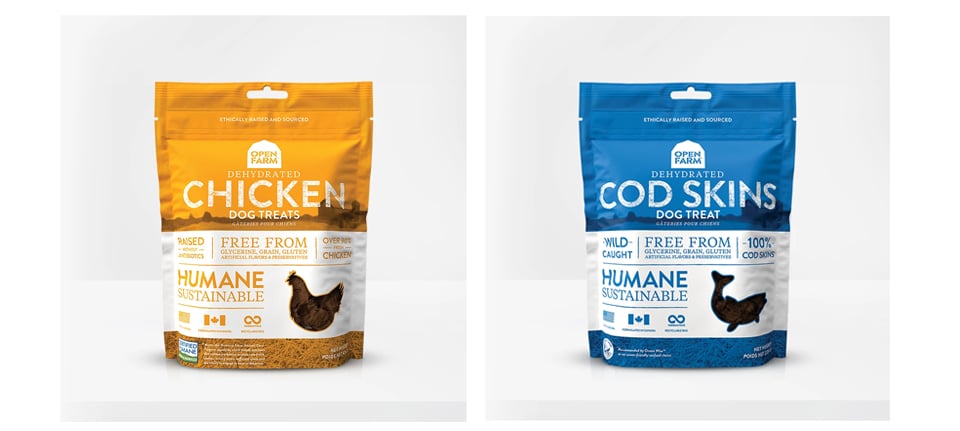
These treats are a combination of ingredients such as molasses, a protein with garbanzo beans, sunflower lecithin, mixed tocopherols, sea salt, and rosemary extract. They are without grain and contain no processed fillers, wheat, corn, soy, rice, hormones, antibiotics, artificial colors, or additives.
These treats have protein ( between 26-37 percent) with cod ( higher at 82- percent). They also contain crude fat (between 30-40 percent) with cod (lower at two-percent). Per treat, it contains somewhere in the range of 13.5 and 16 kilocalories with the cod (lower at 8 kilocalories).
Moreover, Open Farms utilizes low temperatures to dry out the treats for a more beneficial bite. The treats are sold in a 1.4-ounce package and are accessible in flavors such as chicken, turkey, beef, pork, and cod.
Open Farms just uses human-grade meat raised by humane strategies. The fruits and vegetables used as ingredients are non-GMO from sustainable sources. Plus, no ingredients are coming from China, and those ingredients that are used are ethically sourced.
Check it out here!
Pros:
- Open Farm dried out treats are without grain and contain no handled fillers, wheat, corn, soy, rice, antimicrobials, hormones, artificial colors, or additives.
- They are accessible in flavors such as chicken, beef, turkey, pork, and cod.
- The whole ingredients included are ethically and sustainably sourced. Plus, the meats are humanely raised.
Zuke’s Mini Naturals Peanut Butter Treats
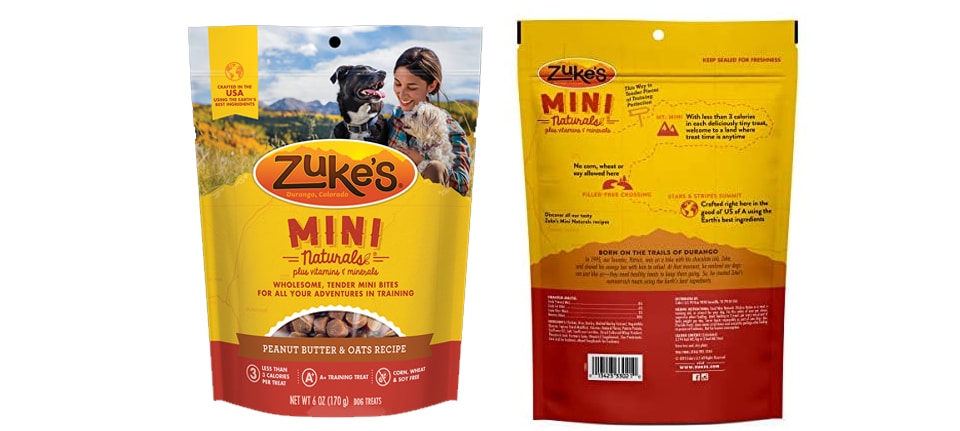
These treats are small, however, it offer simple to cut pieces with under three kilocalories each before they are cut. They are accessible in three, six, 16, and 32 ounce size1s and flavors such as peanut butter, rabbit, chicken, duck, pork, and salmon.
Zuke’s Mini Natural Treats are a mix of meat protein with ground rice, ground barley, ground oats, malted grain, tapioca, vegetable glycerin, cherries, gelatin, lecithin, salt, phosphoric corrosive, sorbic corrosive, turmeric, ascorbic corrosive (Vitamin C), Vitamin E supplement, zinc proteinate, citrus extract (additive), blended tocopherols (additive), and rosemary extract.
They have no additional wheat, corn, or soy. They have protein (8-10 percent) and crude fat (6-8 percent).
Check it out here!
Pros:
- These are great to use as training treats since they are small and low-calorie. The way that they can be cut much smaller gives all the more training reward openings without running up your Shiba Inu’s everyday calorie consumption.
- They are produced from meat, not meat by-products.
- They have no additional wheat, corn, or soy.
Cons:
- A few canines are not keen on these treats
Filled Dog Bones
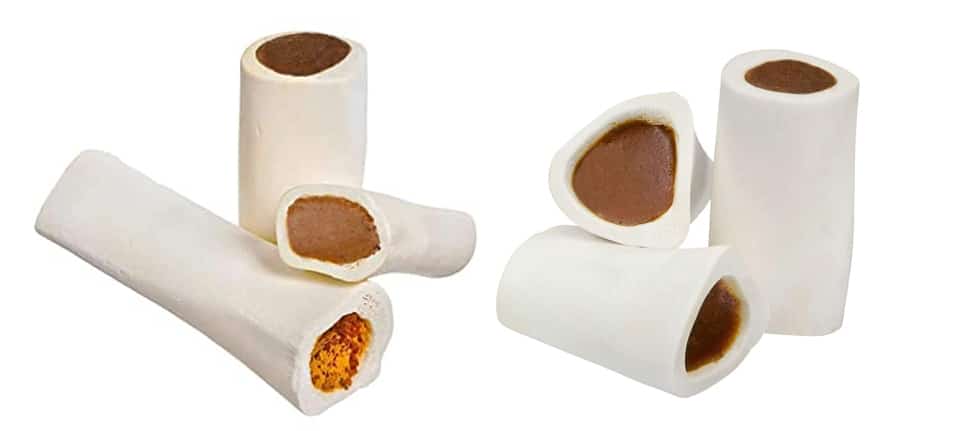
Why pick these bones for your Shiba Inu?
To be sure, you should relate a sort of treat as indicated by the purpose behind the reward. In the event that the expectation you have of your Shiba Inu is significant and hard for him, his reward ought to be of incredible worth. You can always opt for a bigger treat for your pet and use it as a reward and for basic and important repetitive learning instead of giving the usual mini-treats. As it will require some time to manage it, this award has a solid added value for your Shiba Inu.
It is a chewable bone loaded up with a blend of meat with different and tasty flavors. It is also rich in protein, the Shiba Inu sets aside a long time to taste and eat. And it doesn’t contain any artificial flavors or colors, and without such a large number of calories, this item is useful and good for the well-being of your Shiba Inu.
Check it out here!
Users’ reviews
Filled dog bones have very good ratings on the internet. Plus, the quality of this product is being featured.
One individual says it’s a very good item, that he hasn’t tasted it actually, yet when he sees his canine, he knows he’s appreciating and enjoying it. Another person says that his Shiba Inu is gnawing him delicately and that he has a feeling that he needs to keep it as far as might be possible.
The Four Treat Categories Every Shiba Owner Should Know
Owners tend to shop for "the best treat" as if there is one answer. There is not. There are jobs, and each job wants a different kind of treat. Here is how we sort them.
- Training treats. Small, soft, and high-value. You want something a Shiba will work hard for, that you can deliver fast and repeatedly without filling the dog up. Soft treats you can tear into tiny pieces beat hard biscuits here, because a training session is dozens of reps and every crumb adds up.
- Dental chews. Firmer treats designed to be gnawed, which can help scrape plaque as the dog chews. These are useful but not a substitute for real dental care. Pick appropriately sized ones and supervise, since a determined Shiba can break off chunks.
- Enrichment and long-lasting chews. The job here is time and mental work, not calories or training. A tough chew or a stuffed, frozen toy keeps a bored, independent Shiba occupied and can take the edge off alone-time restlessness. Choose durable, appropriately hard options and watch for pieces that could be swallowed.
- Everyday rewards. The plain "good dog" treat for house manners and affection. This is where overfeeding sneaks in, because the hand reaches into the jar all day. Keep these smallest of all, or use a few pieces of the dog's own kibble so casual rewards do not blow the calorie budget.
A picky adopter we worked with insisted her Shiba "did not like treats." When we watched, the truth was that she only owned one kind, a hard biscuit the dog had grown bored of, and she was offering it whole at the end of long, unfocused sessions. We swapped to a soft, high-value protein treat broken into pea-sized bits, delivered the instant the dog did the right thing. Suddenly the same "treat-indifferent" Shiba was locked in. The dog was never the problem. The category and the timing were.
For a closer look at meat-based options specifically, see our roundup of beef jerky treats and snacks, and to keep all those rewards from adding up, read how to maintain your Shiba's weight.
How This Plays Out in Training and Boarding
Across more than 250 Shibas placed since 2019 and the dogs that pass through boarding, treats are how you get an aloof, independent breed to opt into working with you. Shibas are not eager-to-please the way some breeds are. They ask "what is in it for me," and a well-chosen treat is the honest answer. The owners who train successfully are the ones who found their dog's true high-value treat and reserved it for that.
The most common mistake we see is treating everything the same. The same biscuit used for a hard recall, a casual "sit," and a bedtime reward teaches the dog that the biscuit is cheap and everywhere, so it stops being motivating. Tiering treats fixes this: plain kibble for easy asks, a mid-value treat for practice, and one reserved high-value treat for the genuinely hard stuff like recall away from a distraction.
The second pattern is enrichment neglect. A Shiba left with nothing to chew will find something to chew, usually something of yours. A rotation of durable chews and stuffed toys is not a luxury for this breed, it is behavioral maintenance, and it pairs well with the alone-time work described in our separation-anxiety resources.
What has worked: a small, tiered treat kit, tiny pieces, and treats always counted as food. What has not: free-handing snacks all day and expecting a lean, motivated dog. If your Shiba's food fixation has tipped into guarding treats or snapping around the food bowl, that is a behavior issue worth a certified trainer or a veterinary behaviorist, and a good starting point is our behavioral evaluation.
Common Followup Questions
What treats are best for training a Shiba Inu?
Small, soft, high-value treats made from a named protein work best for training, because you can deliver them fast, break them tiny, and keep the dog engaged through many reps without filling it up. Reserve your single highest-value treat for the hardest asks, like recall, and use plainer rewards or kibble for easy behaviors. This tiering keeps the good treat meaningful for an independent breed that needs a real reason to cooperate.
How do I give treats without my Shiba gaining weight?
Keep total treats to roughly ten percent of daily calories, break everything into small pieces, and count treats as part of the day's food rather than extra. For casual rewards, use a few pieces of your dog's regular kibble instead of richer treats. If you train a lot, trim the dinner portion slightly to make room. Weigh the dog and feel the ribs every few weeks so weight does not creep up unnoticed.
Are dental chews enough to keep my Shiba's teeth clean?
Dental chews can help reduce plaque as the dog gnaws, but they are not a replacement for brushing and professional dental care. Use them as one part of a routine that includes regular tooth brushing and vet checkups. Choose an appropriately sized chew for your dog and supervise, since a strong chewer can break off pieces. If you see red gums, bad breath, or loose teeth, that is a vet visit, not a chew problem.
What to Read Next
For meat-based reward options, see our roundup of beef jerky treats and snacks, and to keep those rewards from adding up, read how to maintain your Shiba's weight. If your Shiba struggles with alone time, our pillar on Shiba Inu separation anxiety covers enrichment in depth. And if you want structured help turning treats into real obedience, our one-on-one training builds a plan around your dog.
Need in-home boarding for your Shiba?
Small groups, five walks a day, never a kennel. Daycare and vet transport included.