Before you adopt a Shiba Inu, it is nice to know something about its history. This Japanese bred dog’s name means “little brushwood” (Shiba) “dog” (Inu). “Inu” translates to “dog” in Japan as does the word “ken.” Therefore, both these words may be used Shiba Inu or Shiba Ken to describe the smallest of the Japanese breeds of dogs.
The Shiba Inu originated in the mountainous interior of Japan, where it was bred for thousands of years as a small, agile hunting dog long before it was ever a companion. Its roots reach back to the Jomon period, and Japan's oldest chronicle, the Nihon Shoki, already records dogs used for hunting in the brush. The breed took shape across distinct regions, and the modern Shiba is a blend of three ancestral strains named for the areas that produced them. Everything charming and challenging about the dog today was forged by that Japanese landscape and purpose.
The short version, in four parts:
- The Shiba is native to Japan's cold, landlocked mountains, bred there for millennia as a hunter.
- Its name means "little brushwood dog," describing the terrain it worked in.
- Three regional strains, the San'in, the Mino, and the Shinshu, combined to form the modern breed.
- Japanese preservation efforts, including national-monument status, saved the breed from disappearing.
A Dog from Japan’s Joman Period
A well-loved companion dog in Japan, the Shiba Inu’s history goes back thousands of years. In fact, the dog can be traced back to Japan’s Joman period, which dates all the way back to 7,000 BC. Therefore, these findings suggest that this type of dog existed during the Stone Age. The modern Shiba has been developed through careful breeding of Japanese strains.
The Chronicles of Japan
Japans’ oldest historical document, called Nihon Shoki, (The Chronicles of Japan) notates the importation of dogs from the Asian continent. The document indicates that dogs, during the time, were frequently used for hunting, and therefore named accordingly – thus, the name, “Shiba Inu.” The dog was used for hunting in the underlying brush in the mountains of Japan.
The Western Influence
At the end of Japan’s Tokugawa period, which lasted from 1603 to 1867, a variety of canines were imported from other countries outside of Japan. At this time, the trend was to respect all things western. As a result, dogs from foreign countries were considered highly valuable. This did not bode well, however, for Japanese dogs, who were gradually mixed out because of their status during this time. The situation became even more serious, especially during Japan’s Taisho period, which spanned from 1912 to 1926.
A National Monument
As a result, some Japanese dog enthusiasts at the time were prompted to protect the lovable canines. Therefore, to preserve the standing and importance of the Japanese dog, the Education Ministry in Japan gave dogs indigenous to the country the designation of national monuments. A national monument in Japan is a highly prized and valuable property. Because of this initiative, the pure blood standing of dogs, such as the Shiba Inu, is recognized today.
Japanese Dog Sizes
Dogs who originate from Japan are categorized by their size and where they were bred for use. The sizes are classified as follows:
- Akita – Large sized dogs
- Kishu and Shikoku – Medium-sized dogs
- Shiba – Small dogs
With respect to use, all these sized dogs were bred to hunt prey.
Little Brushwood Dog
The Shiba Inu represents a breed whose name comes from a Nagano prefecture dialect translation of “little brushwood dog.” It was considered the smallest ancient Japanese dog until around the third century BC. As noted, the Shiba of today has been bred through a careful mix of strains of small and medium dogs in Japan. All Shiba Inus come from the landlocked and mountainous terrains of Japan. In these areas, the dogs thrive in the cold and in natural outdoor settings.
Aka-Inu
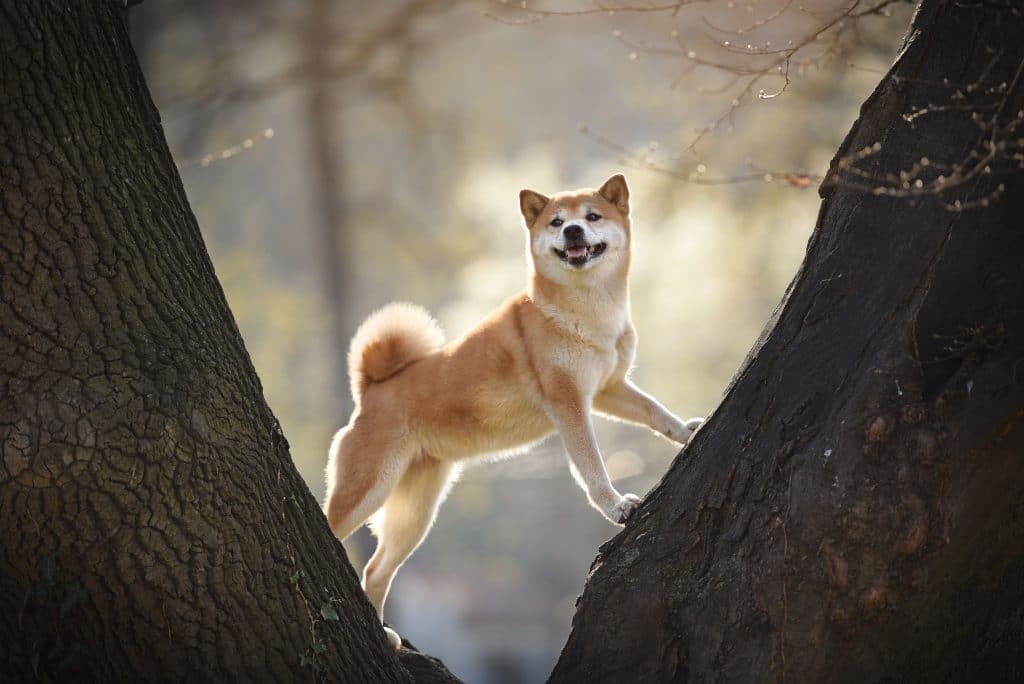
As traditional pets, Shiba Inus in Japan were beloved family dogs who were used as companion dogs and guard dogs. They were used for hunting small game on the ground and, in some cases, helped with the hunting of boars and bears. While the Shiba Inu may be bred in one or more colors, it is best known as Aka-Inu or red dog, and loved for its reddish coat.
Today’s Shiba Inu originates from the select breeding of three primary ancient strains of Shiba Inus, or the San’in, the Mino, and Shinshu. The San’in strain comes from the Sekishu and Imba breeds, and prevailed in the Tottori and Shimane prefectures in Japan.
The San’in was larger than the standard Shiba of today, and would have been considered a medium-sized dog. The dog’s coat was mottled black, and it did not show off the white cheeks that is prized in the black-and-tan Shibas of today. San’ins were known for lacking affection, which has been passed down to today’s Shiba as independence and feistiness.
The second of the strains, the Mino Shiba, was smaller than the San’in, and featured a fiery red coat. This dog was known to have lived in the Gifu prefecture in Japan. What was notable about the Mino was its fleshy, triangular, and erect ears as well as its triangular eyes. These features are well known in today’s Shiba Inu. It also displayed a sashi-o (extended tail), as opposed to a curved tail, displayed by some Shibas.
The third of the ancient strains, the Shinshu Shiba, hailed from the Nagano prefecture and was bred from the Kimawa Shiba. This small dog was mostly red and displayed a soft and dense undercoat and bristly outer coat. The two weaknesses of the strain were the dog’s rounded eyes, versus the preferred inset triangular eyes in today’s Shiba show dogs, and its black mask.
While those who loved the Shiba worked to preserve the breed, the Shiba almost became extinct during the Second Word War. Later, during the 1950s, the breed was almost wiped out by distemper. During this time, a number of strains were interbred, which mixed the lighter-boned canines of Japan’s lowlands with heavier-boned dogs in the mountains. These characteristics give the Shiba its unique and appealing appearance nowadays.
When Shibas Became Popular in the U.S.
The first Shibas entered the U.S. in the 1950s. However, the Shiba Inu breed has only gained AKC recognition recently (in 1993). Since that time, the dog has become increasingly popular – loved in Japan and the U.S. for its headstrong and hardy demeanor.
When you learn more about the history of the Shiba Inu, you can truly see why this dog is so special from the standpoint of personality and features. Almost lost to extinction, the companion dog and pet proves to be a great addition to a single household or to a family. If you are interested in adopting a unique breed of dog, you will find that the Shiba is as interesting as its history. Knowing this information will make owning this dog both enjoyable and inspirational.
What the Japanese origins tell you about the breed
The Shiba did not become independent, hardy, and aloof by accident. Each of those traits was written by a specific feature of its Japanese origins. Here is what the history actually explains.
- A primitive spitz from the Jomon era. The Shiba belongs to the ancient spitz family, the same group that gives it the upright ears, curled tail, and self-directed mind. These are among the oldest dog types on earth, closer to the ancestral dog than most modern breeds, which is why the Shiba feels less domesticated in its instincts.
- Bred for terrain, not obedience. The dog worked dense mountain brush, flushing birds and small game and occasionally facing boar. That job rewarded a dog that thought for itself and moved fast, not one that waited for orders, and the modern Shiba's "stubbornness" is really that independent working brain.
- Regional isolation created the strains. Japan's mountainous geography kept populations separate, so distinct regional lines developed. The San'in, Mino, and Shinshu each carried their own build, coat, and temperament, shaped by centuries of local breeding before they were ever combined.
- Named for coat and country. "Shiba Inu" means little brushwood dog, and the breed is also called Shiba Ken, since "ken" also means dog. Its most prized coat earned it the name Aka-Inu, or red dog. The names themselves record what the Japanese valued in the breed.
- Nearly lost, then deliberately rebuilt. Western imports during the Tokugawa and Taisho eras diluted native dogs, and then World War II and a 1950s distemper epidemic nearly finished the breed. Today's Shiba exists because Japanese enthusiasts interbred the surviving regional strains on purpose.
- From working dog to national symbol. The push to grant indigenous dogs national-monument status turned the Shiba from a rural hunter into a protected piece of Japanese heritage. That cultural weight is part of why the breed's type was preserved so carefully.
A composite of why origins matter: a new owner who reads the Shiba as "a small fox-colored pet" is surprised by the hunting drive and self-reliance, while an owner who understands the breed came from centuries of mountain work expects exactly that dog. For how these traits play out day to day, our fuller history of the Shiba Inu connects the past to the present, and our honest guide on whether a Shiba Inu is right for you turns it into a decision.
What we have seen
Across 250+ Shibas placed since 2019, the breed's origins are not a history lesson, they are a warning label most people skip. The dog was bred for a job that no longer exists, dropped into homes that expect a lapdog, and the mismatch is where most surrenders begin. The owners who read the Shiba as an ancient working breed, not a trendy accessory, are the ones whose placements hold.
The regional-hunter heritage shows up in concrete ways. A Shiba that fixates on squirrels, resists a fenced-in life, or refuses to be handled like a plush toy is not malfunctioning. It is a mountain hunting dog being a mountain hunting dog in a city apartment. We spend a lot of our matching effort making sure adopters actually want that animal and not just its photogenic face.
What has worked: placing origin-honest dogs with owners who respect the breed's history and are ready for a self-reliant animal. What has not worked: adoptions driven by looks and internet fame. If you want a Shiba whose ancestry you understand going in, our rehoming process starts with that conversation, and a trainer can help you work with the breed's instincts instead of against them.
Common followup questions
What does "Shiba Inu" mean?
It translates roughly to "little brushwood dog." "Inu" means dog in Japanese, as does "ken," so the breed is also called Shiba Ken. The "Shiba" part is often linked to the brushwood terrain the dog hunted in, and possibly to a dialect word for small. Its red-coated form also earned the name Aka-Inu, meaning red dog.
Where in Japan did the Shiba Inu come from?
The mountainous, landlocked interior of Japan, where the breed developed across several regions. The three ancestral strains are named for their areas: the San'in from the Tottori and Shimane region, the Mino from Gifu, and the Shinshu from Nagano. The breed thrived in cold, rugged, outdoor conditions, which shaped its hardy constitution.
What is the difference between a Shiba Inu and an Akita?
Size and origin within Japan, mainly. Both are native Japanese spitz breeds, but the Akita is large, the Shiba is small, and the two were bred in different regions for different game. They share the upright ears, curled tail, and independent temperament, which is why they are so often confused. A Shiba is essentially the smallest of Japan's native breeds.
What to read next
For the same story told through modern behavior, read our history of the Shiba Inu, and untangle Shiba-versus-Akita confusion in our Shiba, Akita, and the "Shibakita" explainer. If the origins have you considering the breed, our honest guide on whether a Shiba Inu is right for you is the next step, and our rehoming process shows how adoption works.
Looking to adopt or rehome a Shiba?
Rescue-first rehoming with vetted families, 1-year health guarantee, lifetime support.