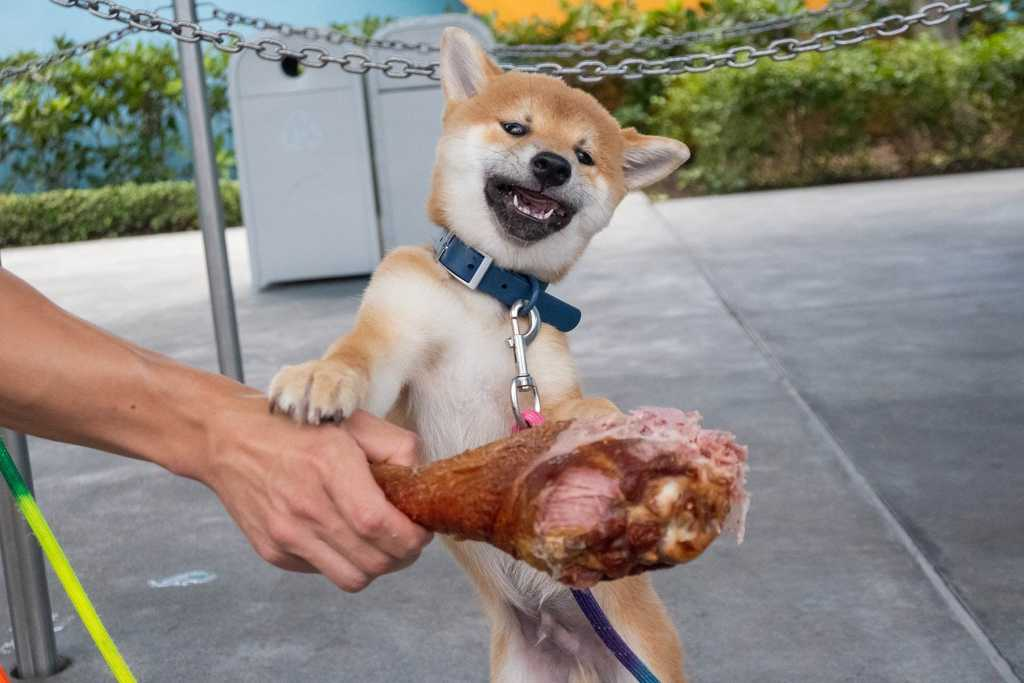
It’s no secret all Shiba Inu love food. However, not all have big appetites. If you find yourself with a dog who only sniffs, licks, and knocks over its bowl, you have a picky eater on hand.
And for fur parents who have choosy dogs, mealtime can be difficult. It is also a struggle for the dog, so it is crucial to find a solution as soon as possible. Worst-case scenario, picky eating is a sign of a health issue, so it is important to narrow down the reasons why your dog is a picky eater and what you can do about it.
Most Shiba Inu picky eating is behavioral, not medical, and it usually traces to routine rather than to the food itself: free-feeding, too many treats and toppers, mealtime stress, or a smart dog that learned holding out gets it something better. The fix is a consistent, no-drama feeding routine paired with ruling out real health causes first. Put the food down at set times, pick it up after fifteen minutes, cut the extras, and let a healthy appetite reassert itself. If your Shiba truly will not eat for more than a day or two, or shows other symptoms, that moves from a training problem to a veterinary one.
The short version, in four parts:
- Rule out medical causes first, especially if the refusal is sudden or paired with other symptoms.
- Stop free-feeding and cut treats and toppers that teach the dog to hold out for better.
- Use fixed mealtimes: food down for fifteen minutes, then up, no snacks between.
- Stay calm and consistent, because coaxing and worry often make picky eating worse.
Causes of picky eating. Is it normal?
According to Dr. Mason Romero, DVM, it is rare for a pet to refuse to eat. So when your Shiba is suddenly aversive to its mealtime, it’s time to crack up why.
Health problems
A lot of factors lead to a lack of appetite and can be a sign of a serious health issue.
These are the possible medical concerns that lead to your Shiba Inu being a picky eater:
- Cancer
- Kidney issues
- Liver issues
- Pyometra (infection in a female dog’s reproductive tract)
- Dental complications
- Gastrointestinal disorders
There are also health conditions that guise as pickiness even if your dog wants to eat.
Food intolerances can lead to discomfort after eating and result in digestive problems like gas, vomiting, and diarrhea. Your dog might hesitate to eat if it is suffering from these issues.
Another common reason for picky eating is an oral injury. If you notice your dog has been very picky with food, one of the first steps you can do is to check their mouth, tongue, and gums. If these areas look sensitive and tender, you can rule that as the reason for their lack of appetite.
Oral injury or diseases are the causes of poor dental hygiene or if your Shiba has been playing with sharp objects.
If your dog’s pickiness with food has worsened, immediately consult your veterinarian.
Environment and Stress
Like humans, stress and the environment can greatly affect your Shiba Inu’s normal behavior, including eating patterns.
These could be changes in your home, circumstances that cause your dog anxiety, or even intimidation from other pets.
The best thing you can do is ensure your dog feels safe and comfortable while they are trying to eat.
How to determine the cause?
To determine what causes the change in appetite, make sure to know if the picky eating is a sudden change or is a consistent habit.
If your Shiba has always been a picky eater but is overall healthy, then pickiness is just a trait, just like humans’ food preferences.
However, if their pickiness is sudden, you need to monitor them as this might be a medical issue, especially if it is accompanied by lethargy. If your Shiba’s appetite does not return within 48 hours, immediately contact your veterinarian.
What to look out for if your dog is a picky eater?
Just because your Shiba’s pickiness is not caused by a health problem doesn’t mean it’s not dangerous.
Picky eating can lead to serious complications like malnutrition, gastrointestinal upset, and weight loss.
How to feed a picky eater?
Eating less can lead to health complications, and if the problem is not a medical issue but rather your Shiba Inu just not feeling the food, then you need to put a break on this.
Here are a few tips you can do to rid of picky eating.
Remove your dog’s meal
A mean technique, but fur parents swear by it.
First, offer dinner as you normally would and leave the room. If your dog refuses to eat and follows you, ignore him. If the food is not eaten within 15-30 minutes, take it away and wait until the following day before offering a fresh meal.
If he still refuses to eat it within 15 minutes, take it away. By dinner, your dog hasn’t eaten anything for one day and will realize he is hungry. He will be left with nothing but to eat the food you will offer him.
No healthy dog will starve himself, and don’t worry! This is not a dangerous technique as, generally, most dogs can go a few days without eating.
Change to tastier meals
One of the first steps you can do when your Shiba Inu has been really picky is to change to a new food. He refuses to eat because he doesn’t like the taste, so avoid switching to similar flavors as his previous meals.
If his old food is chicken and he’s starting to hate it, change to fish or beef instead.
Also, the switch doesn’t mean taking the more expensive path. Cheap doesn’t mean tasteless, and there are cheaper brands out there that offer more delicious food, so you can give them a try.
If you change your dog’s food, remember to do it gradually. Dogs typically don’t like a change in their routine, which also applies to food. So start really small and slow before completely switching to the new food.
Lots of exercise
Exercising is a great way to increase your dog’s appetite. This is because after intense activities, your dog will feel hungry. So if you find him getting choosy over food, go for a long walk before meals.
If long walkies are not possible, you can also do other activities to tire your dog, like tug of war and fetch.
This pent-up energy will burn off, and your Shiba will need refueling. It will take on whatever meal you offer.
Don’t immediately offer food after exercising, and give it 15 minutes for your dog’s stomach to settle.
A Step-by-Step Plan for a Picky Shiba
Picky eating almost always responds to structure, but the order of operations matters. Here is the sequence we use.
- Rule out health first. A sudden appetite change, especially with vomiting, diarrhea, lethargy, drooling, or bad breath, can signal dental pain, nausea, or illness. Before you treat it as pickiness, get a healthy-eating dog that stops eating checked by a veterinarian. Behavioral fixes assume a healthy dog.
- End free-feeding. A bowl left down all day tells a Shiba that food is always available and never urgent. Switch to scheduled meals so hunger and mealtime line up. This single change resolves a large share of "picky" cases on its own.
- Cut the competition. Every treat, topper, chew, and table scrap makes the plain bowl less appealing. A clever Shiba quickly learns that refusing dinner produces something tastier. Strip the extras back so the meal is the best option on offer, not the fallback.
- Use the fifteen-minute rule. Put food down, give the dog fifteen to twenty minutes, then pick it up whether or not it was eaten, and offer nothing until the next scheduled meal. A healthy dog will not starve itself, and within a few days most learn that mealtime is the time to eat.
- Keep it calm. Hovering, coaxing, and hand-feeding turn dinner into a negotiation the dog enjoys winning. Set the bowl down, walk away, and stay neutral. Boredom and pressure both suppress appetite, so a quiet, predictable routine helps more than any coaxing.
A picky eater we boarded was the textbook case. At home she "barely ate," which her owner countered with a rotating buffet of premium foods and hand-fed toppers, which of course taught her to wait for the good stuff. In boarding she got the same food twice a day on a fixed schedule, down for fifteen minutes then up, no toppers, no fuss. By day three she was eating full meals. Nothing was wrong with the dog or the food. The routine had been training her to be picky.
For the food side of the equation, our dog food for a Shiba Inu guide covers how to pick a formula and switch it safely, and if stress is the driver, our pillar on Shiba Inu separation anxiety digs into the anxious behaviors that suppress appetite.
What We Have Seen With Picky Shibas
Across more than 250 Shibas placed since 2019 and years of boarding, "my Shiba won't eat" is one of the most frequent worries owners bring us, and one of the least frequently medical. The overwhelming pattern is that the household, out of love, has trained the pickiness in: free-fed bowls, generous treats, hand-feeding, and a new premium food every time the dog hesitates for a day.
Stress is the other big driver we see, and it is why so many "picky" dogs eat normally in boarding within a few days. A newly rehomed Shiba, a dog in an anxious household, or one dealing with change will often go off its food for a stretch. That is usually self-correcting as the dog settles, and the right move is a calm, consistent routine, not a panic buffet.
The cases that are not behavioral tend to announce themselves. A dog that ate happily and then abruptly stops, or one that refuses food alongside vomiting, lethargy, or signs of mouth pain, is telling you something is wrong. Those go to a veterinarian, not to a feeding-routine tweak. Dental disease in particular is an underappreciated appetite killer in this breed.
What has worked: scheduled meals, the fifteen-minute rule, cutting extras, and a calm handler who does not turn dinner into a performance. What has not: chasing the perfect food, hand-feeding, and coaxing, all of which reward the refusal. If you have tried a consistent routine for a couple of weeks with no improvement, loop in your vet, and consider whether anxiety is the real driver. When we board a picky dog, we keep its own food and simply enforce a boring, predictable routine, which is usually all it takes. Our boarding program is built around exactly that kind of consistency.
Common Followup Questions
How long can a Shiba go without eating before I worry?
A healthy adult Shiba skipping a meal or two, or eating lightly for a day, is usually not an emergency, and a consistent routine often resolves it. But if your dog refuses all food for more than about 24 to 48 hours, or the refusal comes with vomiting, diarrhea, lethargy, or other symptoms, call your veterinarian. Puppies, seniors, and dogs with health conditions have less margin, so err toward calling sooner for them.
Should I add toppers to get my picky Shiba to eat?
Usually no. Toppers and mix-ins often make picky eating worse, because a smart Shiba learns that refusing the plain bowl produces something better. The more reliable fix is to remove the extras and let a scheduled, no-drama routine restore the appetite. If your vet recommends a topper for a medical reason, that is different, but as a response to garden-variety pickiness, toppers tend to reward the behavior you want to stop.
Is picky eating a sign my Shiba is sick?
It can be, which is why sudden appetite changes deserve a vet check, especially with other symptoms like vomiting, lethargy, drooling, or bad breath. But in a Shiba that is otherwise bright, active, and healthy, picky eating is far more often behavioral, driven by free-feeding, treats, stress, or learned holding-out. Rule out health first, then address the routine. When in doubt, your veterinarian can tell you which one you are dealing with.
What to Read Next
To choose and switch foods well, read our dog food for a Shiba Inu guide, and for the full nutrient picture, our nutritional guide for your Shiba's diet. If anxiety is suppressing your dog's appetite, our pillar on Shiba Inu separation anxiety is the deeper read. And if a stubborn eating problem is part of a bigger behavior picture, our behavioral evaluation can help you sort it out.
Need in-home boarding for your Shiba?
Small groups, five walks a day, never a kennel. Daycare and vet transport included.