
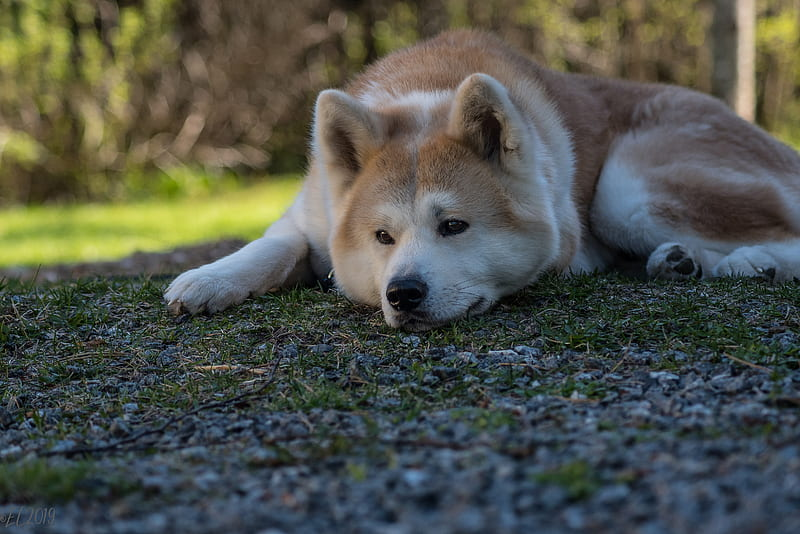
Depression is a medical illness that affects how humans feel, think, and act. It is a daily struggle and for most, it means losing interest in their favorite activities. Symptoms range from mild to chronic conditions that will affect a human’s daily life.
According to research conducted by the U.K. Charity Guide Dogs, nearly 75% of dogs may display symptoms of anxiety or depression. However, depression in dogs is not exactly the same as clinical depression in humans, but they do feel blues, sadness, and grief.
Dogs can show depression-like behavior, meaning withdrawal, low energy, loss of interest in food or play, and changes in sleep, usually after a loss, a big change, or a stretch of boredom. It is rarely clinical depression in the human sense, and it usually lifts with routine, exercise, and enrichment. The catch is that illness and pain look almost identical to depression in a dog, so the first move is always a vet visit to rule out a medical cause. With Shibas there is an extra wrinkle: the breed is naturally aloof and independent, so "aloof" is not the same as "depressed." Watch for a real change from your dog's normal baseline, not just a dog being a Shiba.
The short version, in four parts:
- Look for a change from baseline: appetite, energy, sleep, and interest.
- See the vet first. Pain and illness mimic depression closely.
- Common triggers are loss, big life changes, and boredom.
- Routine, exercise, and enrichment lift most cases over time.
What are the signs of depression in dogs?
Unlike humans, dogs can’t directly tell us what they are feeling. So when they are feeling under the weather, or experiencing mental health problems, it will show through body language and behavior.
Here are some signs to know if your Shiba Inu is depressed.
- Loss of appetite
- Loss of interest in their favorite activities (walks, play time)
- Destructive behavior
- Needy behavior
- Withdrawn or distant behavior
- Changes in sleep patterns
Causes of Depression in Dogs
Depression in dogs is caused by a major change in their life, such as changes in their environment or social situations.
Dogs are creatures of habit so significant changes in their routine or surroundings can cause stress.
Here are the common causes of your dog’s depression.
- Loss of an owner or a pet companion
- Environment changes (moving, rehoming, or addition of a new baby or pet)
- Major change in schedule
- Lack of physical or mental stimulation
- Trauma from injury, disease, or abuse
- Socially isolated for long periods
- Boredom
Additionally, dogs are also empathic to their humans. They respond to the moods of their owners and can recognize human facial expressions and body language so some dogs show signs of depression when their owners are also depressed.
How to Help Your Depressed Shiba Inu
Like humans, depression is different for every dog. And like all other health conditions, it is important to know the roots of the symptoms.
Fortunately, dogs are resilient creatures and even a small change can bring huge improvement to their mental health.
Here are a few ideas you can do to help your depressed dog.
- Playdates. If your dog has lost his companion, having them play or engage with another pooch can help. You can adopt another pet, but make sure that the new dog is the right fit for you and your lifestyle.
- Mental and physical stimulation. Take your dog on longer walks, play games with them consistently, give them toys that are mentally stimulating like puzzles, and always encourage and invite them to play their favorite activities.
- Make sure they are eating. A topper to the food can encourage your dog to eat. Do this temporarily or gradually as sudden changes in their diet can cause digestion issues.
- Give them ‘me’ time. This does not mean locking them up in a kennel or leaving them alone at home. But alone time where they can enjoy playing with their toy or activity.
When to see the veterinarian
Though dog depression can be treated with a few of the ideas mentioned, some signs need the veterinarian’s attention.
- Lethargic
- Not eating
- Stopped or no improvement
- Has other symptoms like vomiting or diarrhea
There are rare circumstances where the stress caused by depression can lead to underlying health issues.
If your dog’s depression is not improving, consult your veterinarian.
The common triggers of a low Shiba mood
When a Shiba's mood drops, it almost always traces to one of these triggers. Naming which one you are dealing with points you at the fix, once a vet has ruled out illness.
- Loss or grief. Dogs mourn. The death or departure of a favorite person or an animal companion can leave a Shiba withdrawn and off his food for a while. This is normal grief, and it usually eases with time, routine, and gentle engagement.
- A major life change. Moving house, a new baby, a partner moving in or out, or a schedule change that upends the dog's day can all knock a Shiba off balance. Dogs are creatures of routine, and disruption reads as stress. Rebuilding predictability is the antidote.
- Boredom and under-stimulation. A sharp, working breed with too little to do can look genuinely flat. This is one of the most common and most fixable causes. More exercise, sniffing, and mental work often turns it around quickly.
- Your own mood. Shibas are sensitive and read their people closely. A household going through a hard, tense, or low stretch can leave the dog subdued too. Sometimes the dog is mirroring you.
- Illness or pain. This is the one you cannot afford to miss. Dental pain, arthritis, thyroid problems, and many other conditions present as low energy, hiding, and appetite loss. A dog that seems depressed may actually hurt, which is why the vet comes first.
Consider a Shiba we knew whose family was sure he was depressed after they moved: he stopped eating well and slept all day. The vet caught it, a dental problem made worse by the stress of the move, not depression at all. Once his mouth was treated and the new routine settled, he was himself again. That is the pattern worth remembering. Because low mood and anxiety share so much, how to deal with a Shiba's anxiety is a useful companion piece, and for the fear-of-being-alone angle, our separation anxiety guide goes deeper.
What we have seen across 250+ placements
Since 2019 we have placed more than 250 Shibas, and "is my dog depressed" comes up most around big transitions, a rehoming, a move, a loss in the family. Newly adopted Shibas in particular often go quiet and withdrawn for the first weeks, and worried adopters read it as depression when it is really the normal decompression of a dog adjusting to a new life. It almost always lifts as trust and routine build.
The most useful reframe we offer owners is the Shiba baseline. This breed is aloof, self-contained, and undemonstrative by nature, so a Shiba who is not bouncy and affectionate is not necessarily sad, he may just be a Shiba. What matters is change: a normally food-motivated dog going off his meals, a dog who stops greeting you at all, a sudden retreat from things he used to enjoy. Change from baseline is the signal, not the personality itself.
Where we push owners hard is toward the vet. Because pain and illness masquerade as depression so convincingly, any real, persistent change in mood, appetite, or energy deserves a physical exam before it gets treated as an emotional problem. Once medical causes are cleared, the behavioral fixes (routine, exercise, enrichment, and patience) do most of the work, and a lingering or severe case can warrant a veterinary behaviorist. If you want a structured read on what is going on behaviorally, our behavioral evaluation can help sort mood from medical from breed-normal.
Common followup questions
Can dogs actually get depressed?
Dogs can show depression-like states, withdrawal, low energy, loss of interest, and appetite or sleep changes, usually in response to loss, change, or boredom. It is not identical to human clinical depression, but the emotional dip is real. Most cases resolve with routine, engagement, and time. The important step is ruling out illness first, because sick dogs look depressed too.
How long does depression last in a dog?
Situational low mood often lifts within days to a few weeks once the trigger is addressed and routine returns. Grief can take longer. If a dog stays withdrawn beyond a couple of weeks, or the signs are severe, that is your cue to see the vet rather than wait it out. Persistent low mood is not something to simply ride out.
How do I cheer up a depressed Shiba?
Rebuild routine, increase exercise and sniffing walks, add mental enrichment like puzzle feeders and short training games, and spend positive low-pressure time together. Resist forcing affection on an aloof dog, invite engagement instead. Keep things predictable and upbeat. If none of it moves the needle in a couple of weeks, treat it as a vet question, not a motivation one.
What to read next
Since mood and anxiety overlap, read how to deal with a Shiba's anxiety, and understanding the Shiba Inu personality will help you separate aloof-by-design from genuinely down. For the alone-time angle, our separation anxiety guide is the deeper resource, and for a professional read, our behavioral evaluation can help.
Looking to adopt or rehome a Shiba?
Rescue-first rehoming with vetted families, 1-year health guarantee, lifetime support.