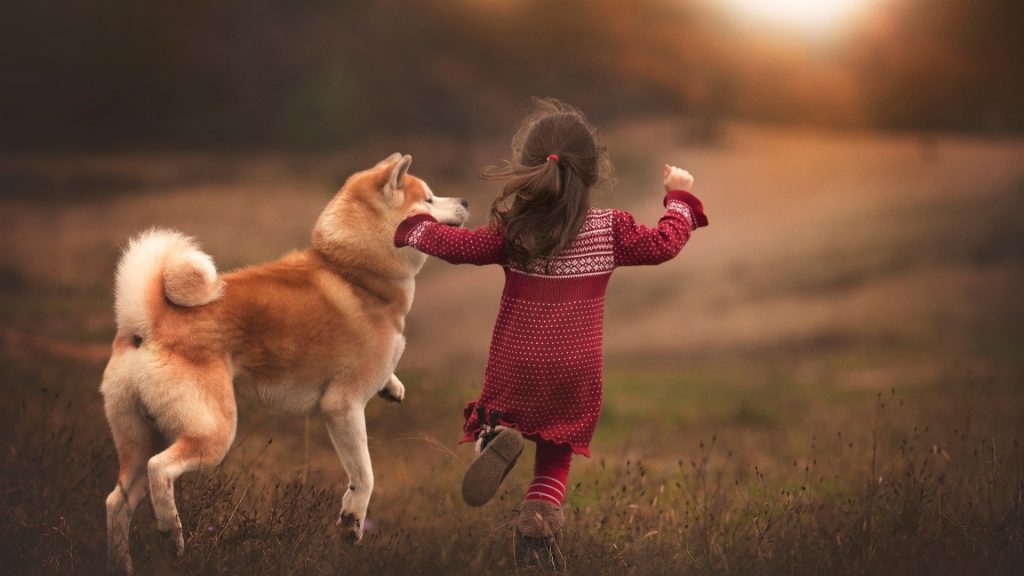
A newborn in the house not only changes your life but your pet dog as well. The routine will change, attention will be shared, and the walkies your Shiba loves so much will be shorter.
As parents of a baby, adjustment is expected but you, as responsible dog owners, also need to understand that your Shiba Inu needs to be guided through this adjustment period too!
While you’re still pregnant, it is best to introduce these changes to your Shiba so that when you welcome the new life, your dog welcomes it with you.
Introduce a Shiba Inu to children gradually and always under supervision, teaching the child to respect the dog's space before any close contact is allowed.
Shibas are independent and low-tolerance for rough handling, so the introduction is really two projects running at once: preparing the dog and preparing the child. The goal is not instant affection but calm, predictable coexistence with clear boundaries on both sides. Start early, keep every interaction positive, and never assume that a gentle dog will stay gentle when a toddler crosses a line. Structure protects the relationship far better than good intentions do.
The short version, in four parts:
- Prepare your Shiba before the child arrives by building new routines and neutral exposure.
- Teach the child that the dog is not a toy: no pulling, climbing, or cornering.
- Supervise every interaction and end it the moment either one shows stress.
- Give the Shiba a retreat space the child is never allowed to enter.
Are Shiba Inu child-friendly dogs?
Temperament-wise, the Shiba Inu is not an ideal pet for children.
They are territorial, moody, and will not tolerate a child’s play. They are not extremely dangerous to the point they’ll attack a kid on sight, however, they hate being treated like a toy. This means tail-pulling, pinches, invading their personal space and all tactics that children usually do to pet dogs can lead your Shiba to snap or bite.
However, this doesn’t mean that Shiba and children in one house are completely off the picture. It is still possible.
With training and a proper introduction, the Shiba Inu could make great family pets.
But, two achieve this, there are two crucial steps:
- Expose your Shiba Inu to many positive experiences with small children
- Teach your children to be non-aggressive with your Shiba Inu
What’s important is to cultivate peace between them.
If a Shiba Inu and children have always been the plan from the start, you need to introduce children and their tactics to your dog as early as the puppy stage. One, you can bring your Shiba to places where there are children, and encourage the kids to pet and feed it treats.
Similarly, you also need to introduce your child to your Shiba. It’s hard to fight the curiosity of a toddler with no sense of danger in him and this is why your dog should be introduced to children’s environment. But a kid should also be trrained to be non-aggressive with pet dogs, this means no tail-pulling or any provocative actions.
Make sure to only expose both the Shiba and the kid to positive experiences only. Include your baby in routines and once they are old enough to properly give commands, involved them in Shiba’s training.
And importantly, no matter how well-trained and behaved your Shiba might be, don’t ever leave them and your young children alone and unsupervised.
How to introduce a Shiba Inu to Children
Expose your Shiba to children
If your Shiba hasn’t been around children before, it is best to start exposing them to these little humans the moment you found out you are expecting.
You can bring your pooch to the park and let it watch kids from a distance and see how they react to children’s unpredictable movements.
Furthermore, if your dog is not properly trained, it might be best to enroll it in obedience classes. You wouldn’t want your Shiba jumping on you when you are heavily pregnant at seven months, would you?
Establish new routines
Dogs thrived with routines. They are creatures of habit and unpredictable days might cause them anxiety. They are aware of their walks, feeding schedules, potty breaks, playtime, and even bedtime.
But a baby is unpredictable and the new life in the household can suddenly break all these routines you’ve built with your Shiba.
So to avoid confusion on your Shiba’s end, start building new habits and new routines during your pregnancy. If you think you’ll be taking your baby out in a stroller at a different time than the usual walkies with your dog, get your dog used to this new schedule.
The next thing to establish is that attention has to be shared. If your Shiba has been an ‘only child’ for quite a time, they might be used to getting the whole of your attention. So during your pregnancy, start weaning off attention.
We don’t want your Shiba Inu to associate the new baby as its rival to mommy and daddy’s love.
Let your Shiba explore its surroundings
A new baby at home means new things and new smells for your Shiba. And as you slowly start to build your baby nest, allow your Shiba to get used to the new items like strollers and baby toys.
This is because the stroller, the high chair, diapers, car seats, and all the new things in sight can cause your Shiba anxiety. Allow him to sniff things from a safe distance and introduce them to those noisy baby toys and to the scent of baby lotions and powders.
Let them explore at their own pace with lots of positive reinforcement.
Give your Shiba Inu attention
Having a baby means being busy 24/7. But don’t forget to give your pet dog some love and attention too.
Your Shiba still needs exercise, playtime, and attention, and even with a new baby at home, it’s important that you don’t forget about your dog’s routine. It might be overwhelming, especially when your hands are full of new life, but keeping up with your dog’s routine helps them stay stable.
Teach your children to respect your Shiba
Teach your dog to respect your baby and also teach your baby to respect your dog.
Socialization in children is a fundamental foundation they need to learn early on. Not only with other kids and family members, but also with pets.
Teach your toddler to never pull on your Shiba’s tail and ears, don’t allow them to climb, cling, and invade your Shiba’s personal space or allow them to follow your dog to its crate.
Don’t leave your kid and your dog alone and unsupervised. And if you notice signs of stress when your kid is playing with your Shiba, like panting or lip-licking, it’s time for playtime to stop.
Start teaching your kids to respect family pets as early as you can. This is one of the most important things you can do to establish lifelong respect between them.
A Calm, Staged Introduction Between Dog and Child
The introduction works best when you treat it as a slow build rather than a single event. Here is the sequence we coach families through.
- Set up a retreat space first. Before any introduction, give your Shiba a crate or room the child is never permitted to enter. A dog that knows it can always leave is far less likely to feel cornered, and cornering is what triggers most snaps. This one rule prevents more problems than any other.
- Manage the first meetings from a distance. Let the dog observe the child from across the room, rewarding calm behavior. Do not force proximity or put the dog's face near the child. Curiosity should be allowed to build on the dog's terms.
- Teach the child the rules out loud. No tail-pulling, no climbing, no chasing, no bothering the dog while it eats or sleeps. Young children need these stated simply and repeated often, because they do not have a built-in sense of a dog's boundaries.
- Read both sets of body language. Lip-licking, yawning, panting, or a stiff posture in the dog means give it space. Overexcitement in the child means slow down. End sessions before either one tips into stress.
- Fold the child into the dog's routine. Once the child is old enough, let them help with feeding or simple commands under supervision. Positive association built this way lasts, and it teaches the dog that good things arrive with the child.
- Never leave them alone together. This holds no matter how well behaved the dog is. Supervision is the non-negotiable backbone of the whole arrangement.
One family we worked with after 2019 had a two-year-old Shiba and a newborn on the way. We started six weeks before the due date, building a new walk schedule and desensitizing the dog to a stroller and a baby-sound recording. By the time the baby came home, the dog treated the new routines as normal. Rushing that timeline is where most trouble starts. For the honest read on whether this breed suits your household, see is a Shiba Inu right for me, and for the groundwork that makes all of this easier, read how to socialize a Shiba Inu.
What We See in Homes With Shibas and Kids
Since 2019 we have placed more than 250 Shibas, and plenty went to families with children. The homes that succeed share a pattern. They respect the breed's low tolerance for rough handling instead of hoping it away, they supervise without exception, and they give the dog a reliable escape route. The homes that struggle usually skipped one of those three.
What works: early exposure, firm rules for the child, and a predictable routine the dog can count on. A Shiba that knows what to expect is a calmer Shiba. What does not work: assuming a friendly dog will absorb unlimited pestering, leaving a toddler and dog alone for even a minute, or treating the first growl as a betrayal rather than a warning. A growl is the dog asking for help, and punishing it teaches the dog to skip the warning next time.
We are also honest with prospective adopters when the fit looks hard. A household with very young children and no time for training is a tough environment for an independent breed like this. That candor is part of why our take-back rate sits near 4 percent. When a family wants to build the skills properly, our 1-on-1 training sessions cover child-and-dog management directly, and a professional can spot the stress signals that are easy to miss in a busy home.
Related Questions
Are Shiba Inus safe around babies and toddlers?
A well-socialized Shiba can live peacefully with children, but this breed will not tolerate rough handling and may snap when its space is invaded. Safety comes from supervision and structure, not from trust alone. Never leave a young child and a Shiba together unsupervised, regardless of how gentle the dog usually is, and teach the child early that the dog is not a toy.
At what age can a child interact with a Shiba unsupervised?
There is no fixed age, and unsupervised contact is not something we recommend rushing. A child needs to reliably read and respect a dog's signals and follow the household rules without reminders before any unsupervised time is reasonable, and that maturity varies widely by child. Until then, an adult should be present and attentive every time they share a space.
How do I know if my Shiba is stressed around my child?
Watch for lip-licking, yawning out of context, panting, a tucked tail, a stiff body, whale eye where the whites show, or the dog repeatedly trying to leave. These are signs to watch for that the dog wants space. Separate them calmly before it escalates, and if you see growling or repeated avoidance, consult a qualified trainer near you.
What to Read Next
If you are still deciding whether a Shiba fits a home with kids, read is the Shiba Inu breed good for kids and the broader is a Shiba Inu right for me. To build the social foundation this all depends on, see how to socialize a Shiba Inu. And if you want structured help preparing the dog, our 1-on-1 training program covers exactly this transition.
Looking to adopt or rehome a Shiba?
Rescue-first rehoming with vetted families, 1-year health guarantee, lifetime support.