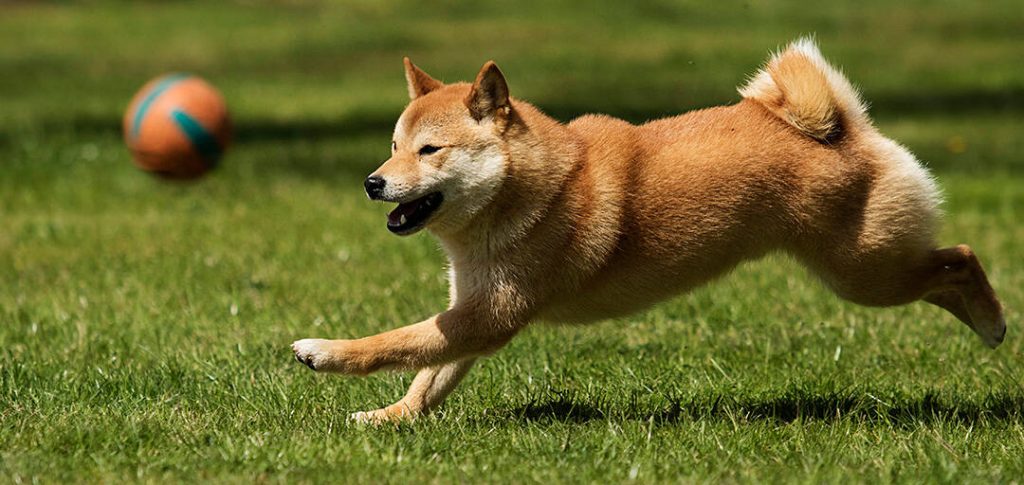
The Shiba Inu was originally bred to hunt small birds. They are playful, energetic, and have a high prey drive. They are also fast learners and intelligent. But one thing that an owner must know is that Shiba Inus need regular exercise.
Statistics show that 1 out of 5 Shiba Inu owners don’t regularly walk their dogs. This might lead to health problems in the future. This is why exercising your Shiba Inu is important. If you want them to live a long and healthy life, always take some time and engage them in fun activities.
A healthy adult Shiba Inu needs real daily exercise, generally on the order of an hour or more split across the day, because this is a working breed with energy and a busy mind that both need an outlet. Skimp on it and you tend to get the classic bored-Shiba problems: destructiveness, escape attempts, barking, and reactivity. The best routine mixes physical exercise (brisk walks, safe running in enclosed spaces, hikes) with mental work (sniffing, training games, puzzles), because a tired body plus a tired brain equals a settled dog. Adjust for heat, cold, age, and any health issues, and check with your vet before ramping up a dog that has been sedentary.
The short version, in four parts:
- Aim for daily activity, because a Shiba is a working breed, not a couch ornament.
- Combine physical and mental exercise, since the brain tires as importantly as the body.
- A bored Shiba is a destructive, escape-prone, noisy Shiba.
- Scale for heat, cold, age, and health, and ask your vet before big increases.
How much exercise does a Shiba Inu need?
Shiba Inu needs at least an hour of exercise every day. Since they are intelligent dogs, they need a way to stimulate themselves mentally. If not, they can become frustrated, and this will lead to destructive or aggressive behavior.
For a healthy adult Shiba Inu, there are three types of exercise you must do every day: daily walk, purposeful activity, and mental stimulation.
The exercises of a Shiba Inu puppy are different. Since they are still growing, the wrong type of exercise and inappropriate frequency can cause injury to their still-growing bones and joints.
The same goes for an older Shiba Inu. Since they are less active and have lower energy levels, it is best to adjust the exercise you give them.
Walking
The daily walk that you give your Shiba Inu is not only for its physical health but also for its mental health. When you walk your Shiba Inu, you are giving it the chance to release its energy and aside from that, you are also stimulating its mind with the surroundings, sounds, and smells.
Walking them provides socialization, which is important for Shiba Inus, and is also a good training opportunity.
Ideally, a Shiba Inu’s daily walk should be 45 minutes to 1 hour. Depending on your schedule, this could be a one-time walk or split into two walks a day. Since Shiba Inus likes routine, try to walk around the same time every day.
Note! Daily walks are recommended, instead of no walking all week then a longer walk at the weekend.
As mentioned, Shiba Inus are originally bred for hunting smaller animals. They have a high prey drive and they find birds, hamsters, and cats very attractive for a good round of tag. This being said, you can’t trust a Shiba Inu off-leash.
Shiba Inu Purposeful Activities
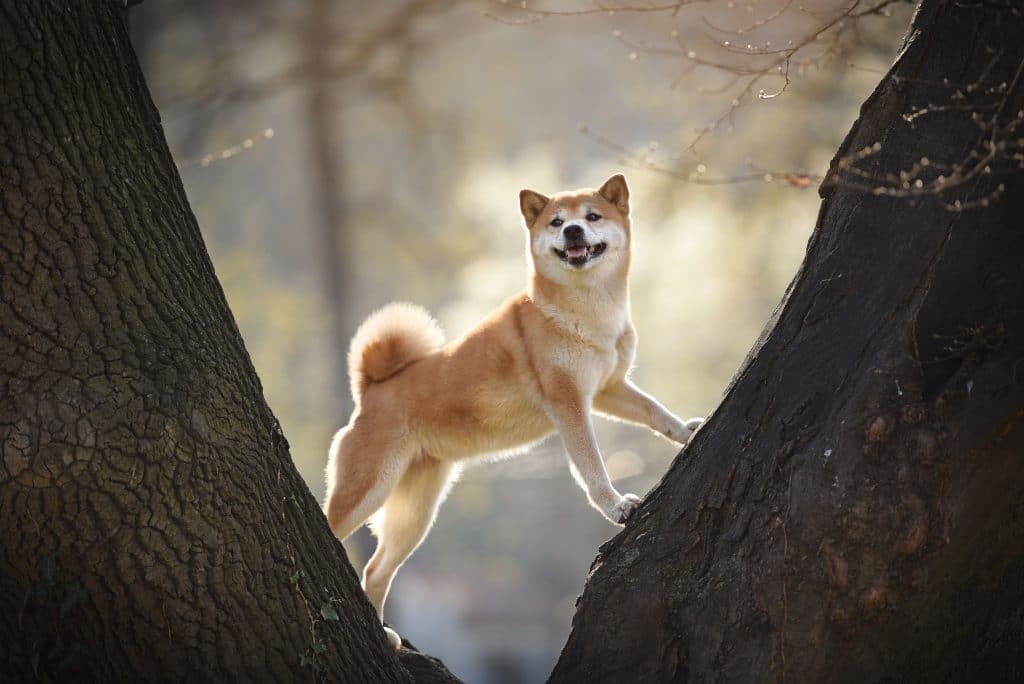
Aside from the typical walk, playing games with your dog is also another great way to release its pent-up energy and stimulate their minds.
Below are some exercising ideas that your Shiba Inu would love!
Fetch
Most Shiba Inus, or dogs in general, love playing with balls. Even if they are not, you can always play fetch with their favorite toy. Dogs can play fetch hundreds of times so you are assured that you are burning your Shiba Inu’s energy just fine.
Tug of War
Shiba Inus loves tug of war and will literally fight you for anything! It could be their favorite toy, a rag, or an old sock.
But now, there are a lot of special rope toys designed just for a good game of tug war. These are recommended because they are made to be grip between the teeth without hurting your dog.
However, a nice game of tug of war can quickly turn on an aggressive Shiba Inu. When your dog is showing signs of aggressiveness, switch to a more calm game.
Backyard Agility
You don’t usually see Shiba Inus in obstacle races. They can be quite stubborn and disobedient, you see so there is a likely chance they’ll do their own thing during the competition. However, that doesn’t mean they are not for agility exercises.
Once you’ve introduced your Shiba Inu to agility activities, you have woken up its hunting genes and you’ll learn that “wow, my Shiba Inu sure can run.”
If you have a large backyard, you can set up an agility or obstacle course. You can use the items you have at home and improvise or scour for reasonably priced agility sets online or at local pet stores.
Your obstacle course can include weaves, hurdle jumps, tunnel, and jumping sets.
Stair Exercise
You can also make use of the stairs you have at home. Walking up on hills or stairs can strengthen the legs of your Shiba Inu.
Starting at the bottom of the stairs, have your dog “stay” and then throw the ball up to the top of the stairs and have your dog chase it. Let them run up the stairs and tell them to slow down while running down to avoid injuries and accidents.
Digging
Shiba Inus love digging and it can be a good form of mental stimulation and exercise too. You can provide your Shiba Inu their own digging area or fill a sand box with soil or sand. To encourage them to dig in that area only, hide some chews or toys.
If you choose to use sand, remember that it can get hot during the warmer seasons so before allowing your dog to use it, make sure to wet it down so that it cools.
Building an exercise routine your Shiba will actually thrive on
A good Shiba routine is not just more walking. It is the right mix of body and brain, matched to your dog and your weather. Here is how the pieces fit together.
- Daily structured walks. Walks are the backbone. Aim for a real pace that moves the body, and build in stretches where your Shiba gets to stop and sniff. Structure helps too: a Shiba that walks politely on leash is easier to exercise consistently, so the walk doubles as low-key training.
- Safe running, minus the risk. Shibas love to run, but their prey drive and unreliable recall make open off-leash running a gamble. Use a securely fenced yard or park, or a long line in open areas. A Shiba sprinting after a squirrel toward a road is the scenario every owner should design around from day one.
- Mental stimulation. This is the piece owners skip and then wonder why their dog is wild. Nosework, food puzzles, scatter feeding, and short training sessions burn mental energy that a walk alone does not touch. Fifteen minutes of thinking work can settle a Shiba as much as a second walk.
- Play and games. Structured games (fetch in a safe space, tug with rules, find-it) add exercise and strengthen your bond. Shibas can be aloof, and cooperative play is one of the better ways to build the kind of relationship that makes everything else easier.
- Weather and footing. That thick double coat means Shibas overheat faster than owners expect. In summer, walk in the cool hours, check the pavement with your hand, and carry water. In winter they handle cold well, but ice and salt still call for care. Adjust the plan to the day.
- Reading too little versus too much. Too little shows up as destruction, escape attempts, and barking. Too much, especially in a puppy or a senior, shows up as soreness, limping, or exhaustion. The right dose is the one that leaves your dog pleasantly tired and sound the next morning. Tune it to the dog in front of you.
A composite from the kind of case we hear about weekly: an owner is at their wit's end with a young Shiba who chews the baseboards and scales the fence. The fix is rarely more discipline, it is a real routine, a morning walk plus a sniff walk plus ten minutes of puzzle feeding, and within two weeks the baseboards survive. Under-exercise and boredom drive a huge share of Shiba problem behavior, which is why our guide to Shiba Inu separation anxiety and our post on mental stimulation for Shiba Inu pair so naturally with an exercise plan.
What running an active pack of Shibas has taught us
Across 250+ Shibas placed since 2019, and every dog that comes through our daycare and boarding, the single most common root of behavior complaints we hear is not temperament, it is unspent energy. A Shiba with a full physical and mental routine is a different dog from the same Shiba stuck inside all day.
What has worked: consistency over intensity, and brain work alongside the walks. We run multiple real walks a day for our boarding dogs, mix in sniff time and short training games, and keep the group play small and calm. Dogs on that rhythm nap hard and settle easily, which is the whole goal.
What has not worked, and what we coach owners away from: trying to exhaust a Shiba with endless hard exercise while ignoring the mind, or the opposite, expecting a walk around the block to be enough. Balance is the answer. If a behavior problem persists even with a solid routine, that is a signal to loop in your vet or a trainer, not to just add more miles. If you want your Shiba's energy managed by people who get the breed while you work or travel, our boarding and daycare is built around real walks, not a play yard.
Related questions
How much exercise does a Shiba Inu need per day?
A healthy adult Shiba generally needs on the order of an hour or more of activity a day, split across the day rather than crammed into one push, plus mental work on top. The exact amount varies with age, health, and the individual dog, so use your dog's behavior as feedback: a settled, content Shiba is getting enough, while a destructive or restless one usually is not. Ask your vet before big increases for a sedentary dog.
Can I let my Shiba Inu off leash to exercise?
For most Shibas, only in a securely fenced space. The breed has a strong prey drive and a famously unreliable recall, so an off-leash Shiba in an open area may bolt after a squirrel and not come back. Use a long line in open spaces, reserve true off-leash freedom for enclosed areas, and never assume even a well-trained Shiba will choose you over a chase in the moment.
What happens if a Shiba Inu does not get enough exercise?
Under-exercised Shibas tend to invent their own jobs: chewing, digging, escaping, barking, and general restlessness. A lot of what owners read as stubbornness or bad behavior is really unspent energy and boredom. Physical and mental exercise are the cheapest behavior tools you have. If problems persist even with a full routine, it is worth talking to a trainer or your vet to rule other things out.
What to read next
Because boredom and anxiety are so tied to exercise, read our guide to Shiba Inu separation anxiety alongside this. For the mental side, see mental stimulation for Shiba Inu and how to handle a high-energy Shiba Inu. And to keep your dog's energy managed while you are away, our boarding and daycare runs on real daily walks.
Looking to adopt or rehome a Shiba?
Rescue-first rehoming with vetted families, 1-year health guarantee, lifetime support.