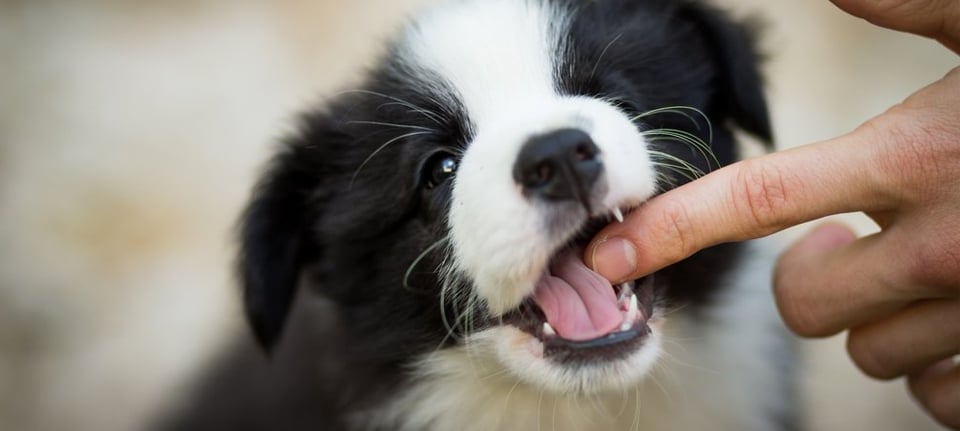
It is highly evident for puppies to be rowdy and energetic, especially when they encounter new toys or objects to chew with. Puppies are known to latch on things and bite on whatever they enjoy chewing. It can be quite alarming for dog owners to see their lovely pets continually chewing on his or her favorite new toy. But this is quite normal and customary as they gnaw on every chewy and delightful stuff they can find.
However, puppy biting might get out of hand if owners lose control of their pets gnawing everything they see fit. From delicate furniture to your newly bought shoes, dogs can be quite aggressive. Perhaps it’s time to teach your pet some sensible matters as well.
There are certain developments and practices that owners can teach or utilize for their cute little pets to control their biting temper. Here are some of a few simple steps to watch out for that might help your dogs stop chewing on those shoes.
The fastest way to stop puppy biting is to make it boring and predictable: redirect every nip onto a chew toy, end play the instant teeth touch skin, and never wrestle or yell. Puppy biting is normal exploration and teething, not a character flaw, and Shibas grow out of it once bite inhibition is taught consistently. The households that succeed are not the strictest, they are the most consistent. Everyone in the home answers a bite the same boring way, every single time. Give it structure and a few weeks, and the mouthing fades roughly on schedule.
The short version, in four parts:
- Redirect the mouth onto a legal chew before it finds your hand.
- End play instantly when a bite lands too hard.
- Never punish physically. It makes a Shiba worse, not better.
- Drain energy and meet chewing needs so biting has less fuel.
Simple Tips to Help with Puppy Biting
Guide the Puppy Towards Bite Inhibition
Enforcing a bite inhibition when the puppy tries to bite you can be a helpful tip, mostly when they bite uncontrollably. Bite inhibition also works well when your puppies can’t get enough of biting your hands or your thighs.
What owners can do when performing bite inhibition is to control the nature of their bite by trying to act as if you’re hurt. When they try to bite you, even in the softest but uncontrollable sense, try making a painful sound, and act disappointed towards them (as if the puppy truly did hurt you!).
You may also want to put the puppy in a calm and secluded room when doing bite inhibition and offer them treats if they’ve accomplished the act of being in control.
Never Enforce Violence When Disciplining your Puppy
Owners should never enforce violence when disciplining the puppy. It is one of the cardinal rules when owning any kind of pet. Puppies might develop an intriguing trauma or mistrust towards any human being if inflicted with pain due to misbehaviour, especially when it comes to them biting uncontrollably.
Instead, control the environment in terms of physical and emotional barriers between you and the misbehaving pet. You can discipline the dog in a multitude of ways, like not giving them a treat or carefully berating their actions that might upset you.
Manage Those Little Temper Tantrums
Puppies have a rampant form of energy. And they can reinforce this energy by biting or nibbling on things. As owners, one should focus on controlling the puppy’s temper tantrum by de-escalating the situation. Try to show a stern attitude and calmness when holding the puppy.
On the other hand, puppy temper tantrums are very common, and their biting agendas continue to develop more and more as they grow up. Naturally, owners can help the dog keep calm by subjecting them to cautious disciplinary measures and imposing a serene attitude so that the puppy does not work too much from biting or gnawing.
Try to Engage with the Puppy Even More
Puppies who frequently bite from one occasion into another are probably due to lack of companionship. Owners should know when is the right time to engage with the puppy or where exactly they can implore these activities.
For instance, taking a walk might help the puppy enjoy the leisurely work and keep them busy from biting the clothes in your laundry. Additionally, owners can teach their puppy new tricks to keep them occupied and not focus on biting the bed sheet or your hand.
Try Positive Reinforcement
Positive reinforcement is one of the standard techniques that can be performed to help puppies with their uncontrollable biting behaviour. If owners can teach their puppies well enough to stop biting their furniture inside the household, they can provide positive reinforcement that the dog might enjoy. This can be from a form of a treat, food, or doing stuff that the puppy likes apart from biting.
Teach them to be Gentle While Being Gentle to them as Well
As stated, subjecting the puppies in a calm and gentle state needs the help of their owners who are calm and gentle as well. If owners match the radical actions of the puppy, it might just give them a significant reinforcement to keep biting and biting.
Petting the puppies softly, speaking to them to a nice and clear voice, and caressing their furry body may help them to keep calm and stop biting for once.
Provide Alternative and Safe objects to Chew
For puppies who just love to bite and munch towards their everyday life, you may also provide safe and creative tools to bite the puppies instead of your clothes. These objects may include a sturdy teether, a bone, a tug, a blanket, or a fluffy ball.
Applying these safe and fun objects to the puppies might help them develop a sense of control and bond towards their favourite new toy. Owners should be meticulous when buying or giving them these tools. Some of which can be somewhat detrimental to the dog’s life and lifestyle. For instance, puppies might develop irregularities due to allergies, choking hazards, or sharp marks on the object.
Enforce Time-Out
For relentless puppies who just can’t get enough of scavenging your old dirty socks, it is best to safely put them in a crate or a cage until they behave or have given themselves some peaceful mind.
Owners who implore a time-out towards their puppies manage the actions and the irritable habits of puppies. This can be done by designating a time-out zone for your little puppies to contemplate what they have done.
Try to Teach them about Biting on Human Skin
Teaching them the values of biting and not biting can be quite troublesome, especially when your skin is involved. Puppies not only chew furniture, toys, and clothes, but they bite their owners as well. However, these bites can be classified as friendly bites that do not eventually harm the owner. But, they can be pretty annoying and unhygienic.
Owners must remember not to encourage their actions when they try to safely bite you on their skin, enrich a disciplinary measure with positive reinforcement to help them realize that biting on human skin might not be a good idea.
Substituting your skin to various chew toys may help alleviate their biting management. Other than that, owners can also initiate games that do not involve physical contact, such as fetching a toy or a tug-of-war. And for puppies who are bite-prone pets, tug-of-war is your best bet.
When in Doubt, Enroll in A Puppy Class
If you are running out of luck teaching your puppy not to bite frequently, you may try to enroll your puppy in a particular puppy class. Trained professionals may discuss and examine the general behaviour of the puppy and their biting habits.
What’s great about subjecting your pets in a puppy class is that they can verify and train your pets to act liberally while imploring good values, preparing for treats, and learning when and where to bite or chew things.
Reasons why Puppies constantly bite
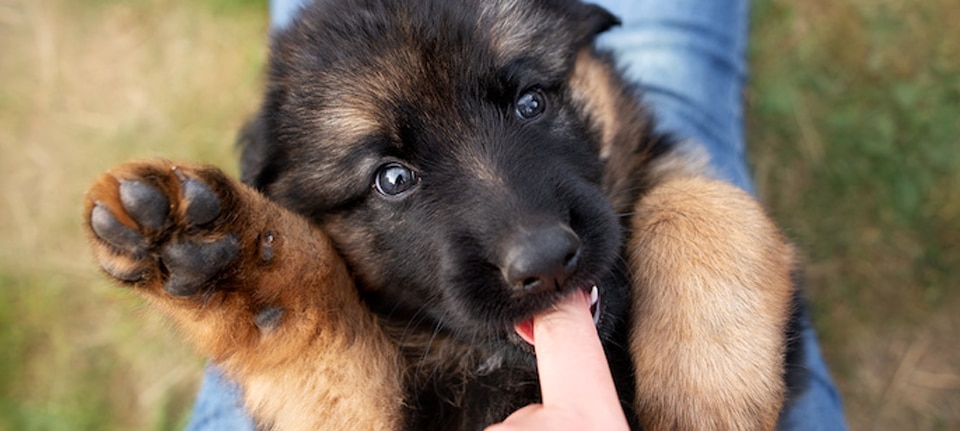
We cannot stress enough how these actions are relatively standard for their age. Sometimes, it can be quite concerning for owners to understand why puppies frequently bite all the time.
Here are some of the possible reasons why those adorable pets always bite from a very young age.
- Exploring the nature and use of their mouths.
- Puppies are subjected to a gruelling teething process that may last up to three months.
- As a sign or instigation to play and catch your attention.
- Retrievers regularly pick up things and bite stuff with their mouths, including their owner’s hands or arms (hence the name).
Understanding the possible ways to alleviate puppy biting can be a helpful and healthy mediation for puppies as they grow up. Owners should also be fully aware of this natural action and, hopefully, attend to their needs if the biting and the gnawing can be quite uncontrollable.
The redirect-and-reset method, stage by stage
The ten tips above are all real, but they land better when you see how they stack into one repeatable method. Think of it as six moves you run in order, over and over, until the biting fades.
- Prevent. Manage the environment before the mouth engages. Keep a puppy behind a gate when the household is loud, and have chew toys staged in every room so a legal option is always closer than your hand.
- Redirect. The second teeth aim for skin, offer a chew, a tug rope, or a stuffed toy. You are not rewarding the bite, you are giving the drive somewhere to land. Do this before the nip connects whenever you can read it coming.
- Mark and reward calm. The moment your puppy chooses the toy or settles, mark it with a quiet word and a treat. Puppies repeat what pays. Most owners are quick to react to bad behavior and slow to reward the good, and reversing that is half the battle.
- Reset. If a bite lands too hard, play stops cold. Stand up, tuck your hands, and go quiet for a few seconds. For a wound-up puppy, a brief timeout in a calm space is a reset, never a punishment.
- Refuel. A biting puppy is often a tired, hungry, or under-stimulated puppy. Build a rhythm of real exercise, sniffing walks, meals, and enforced naps, and the biting has far less fuel to draw on.
- Reinforce. Consistency across every person in the home is what makes the whole thing stick. A puppy class or structured guidance closes the gap when one household member keeps roughhousing.
Consider a household we helped with a puppy who bit hardest every evening. They were doing all the right corrections, but only after dinner, when the puppy was overtired and the kids were riling him up. Once they added a hard reset at 7pm, a chew instead of a wrestle, and one consistent rule for everyone, the evening biting dropped inside two weeks. If the mouthing ever tips from play into something stiffer and more intent-driven, do not white-knuckle it. For the deeper read, see our Shiba Inu aggression guide, and for the underlying why-do-they-do-this angle, see does your Shiba puppy like to bite.
What we have seen across 250+ placements
Since 2019 we have placed more than 250 Shibas, and the biting question comes up with nearly every puppy adopter. The single biggest predictor of how fast it resolves is not how firm the owner is, it is how consistent the whole household is. One person redirecting while another wrestles keeps a puppy confused for weeks longer than it needs to be.
The second pattern is timing. Owners tend to correct in the moment of the bite, which is the least useful window because the puppy is already aroused. The families who move fastest shift their energy earlier, into prevention and refueling, so the puppy rarely reaches the biting-hard state at all. Reading the pre-bite signals, the stiffening, the fixed stare, the ramp in speed, matters more than any response to the bite itself.
We have also watched a lot of owners reach for punishment out of frustration, and it consistently backfires with this breed. Shibas are sensitive to heavy-handed correction, and a puppy that learns to distrust your hands becomes harder to groom, leash, and vet down the line. If the biting is not improving with consistent management, is escalating past six months, or comes with guarding and stiff body language, that is the signal to bring in a certified trainer or a veterinary behaviorist. Our breed-specific 1-on-1 training exists for exactly the households that have tried the tips and want a second set of trained eyes.
Common followup questions
Do puppy classes actually help with biting?
They help, mostly by giving your puppy structured play with other puppies, which is where dogs naturally learn bite inhibition. A good class also coaches the humans, which is often the real bottleneck. Classes are not a magic fix, but combined with consistent home management they speed things up noticeably.
Why does my Shiba puppy bite more in the evening?
Almost always because he is overtired. Puppies, like small children, get wild and mouthy right before they crash, and the evening is when the whole house is home and stimulating them. An enforced late-day nap and a calm wind-down routine usually cut evening biting more than any correction.
Is tug-of-war safe for a Shiba puppy that already bites?
Yes, with rules. Tug gives a bite-prone puppy a legal outlet and teaches an on and off switch when you cue "take it" and "drop." Keep the game low and calm, stop if teeth find your hand, and end on a settle. Avoid it only if it clearly tips your puppy into frantic arousal.
What to read next
For the underlying reasons a Shiba puppy mouths everything, read does your Shiba puppy like to bite, and if the nipping comes with launching at people, stopping your Shiba from jumping uses the same calm framework. If you are still weighing the breed, our honest take on whether a Shiba Inu is right for you is worth a read, and when you want hands-on coaching, our 1-on-1 training programs are built around the breed.
Need help training your Shiba?
Long-term behavior modification and skill training, built for the breed.