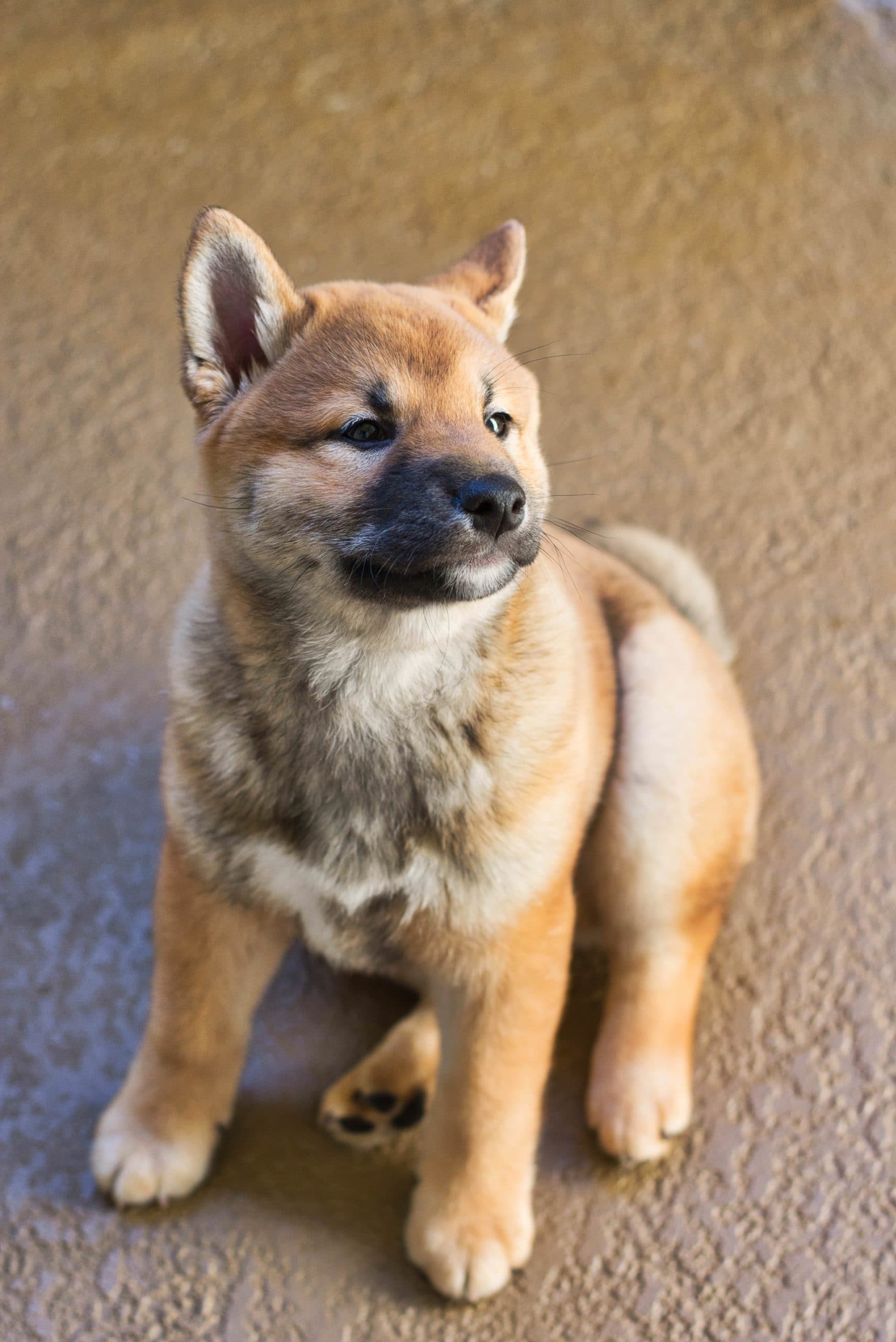
If your Shiba puppy is teething, it will tend to chew and bite almost everything in sight. Even by enforcing dog obedience training, your pup will like to bite. The key to stopping the behavior is to inhibit biting during Shiba puppy training. This is especially important for Shibas, who should be socialized early in life with humans and other dogs.
Yes, almost every Shiba puppy bites, nips, and mouths, and it is normal rather than a warning sign. Puppy biting is driven by teething, play, and the way Shibas explore the world with their mouths. The behavior is loudest between roughly eight weeks and five months, then fades as the adult teeth settle in and bite inhibition training takes hold. What matters is not stopping every nip overnight but teaching your puppy that human skin is soft and that hard bites end the fun. Shibas are smart and independent, so they learn this quickly once you stay consistent and boring about your response.
The short version, in four parts:
- Expect it. Puppy biting is developmental, not aggression.
- Redirect every nip onto a chew toy you keep within arm's reach.
- Make hard bites end play instantly, with no yelling and no drama.
- Meet the underlying need (sleep, energy, chewing) so biting has less fuel.
Teaching Bite Inhibition and Making It Stick
A Shiba Inu puppy who learns bite inhibition is less likely to become an adult dog who bites. By offering your new pup chew toys, he will learn what is acceptable to chew on or bite and what is off-limits. In some cases, you may have to place your Shiba gently in a crate so he will settle down.
Showing Your Dog Not to Use Force
Consider this – a puppy’s mouth contains 28 very tiny teeth that are razor-sharp – teeth that often are attracted to your sensitive fingers or toes. While most dog trainers typically describe a pup’s biting as “play” biting, it is not so fun for the recipient. However, this is normal for your pup to do when it is going through the teething stage.
You just need to train your Shiba not to bite down hard. By moderating the force of the bite, you can make communications with your dog easier when it is grown. If a dog learns bite inhibition, it can lightly bite your hand, for instance, if it is afraid or in pain.
Gently Place Your Pup in Its Crate
Usually, if a Shiba pup bites its Mama or sibling too forcefully, they will let the puppy know that it hurt by yelping. You might do the same thing if your pup bites you. However, in this case, it may get your sensitive Inu more worked up and cause it to bite even more. When puppy training your Shiba not to bite, it is better to lightly place your pup into a crate until they calm down. If they stop their painful nipping, be sure to give your puppy a reward in the form of verbal phrase or a kibble treat.
Use Passive Resistance
The secret to stopping your puppy from biting is to let him know that nipping too hard means that the game is over. Yelling at your puppy is not the answer, as doing so will prevent any bond being forged between you and your pet. This type of negative reinforcement will only make your Shiba fearful of your handling him. Instead, when you pup bites, teach him that he will not receive any type of reward. Simply turn away from your Shiba and tuck your hands inside your armpits, concealing them from view.
Be Careful when Engaging in a Roughhouse Type of Play
This type of response is a calming type of signal that lets your puppy know that you will not give him attention when he bites. Remember, you will lose the point of this exercise if you roughhouse with your dog. In these instances, your pup may naturally bite you, again thinking it is okay.
Arm Yourself with a Chew Toy
How you interact with your pup is as important as what you give your pup to chew on and bite. This way, you can anticipate your pup’s nips in advance. By having a chew toy near you at all times, you can give your puppy a biting alternative to your fingers or toes. If he starts to nibble on your fingers or toes during play, give him the toy instead.
Don’t allow your pup to continue to bite at your fingers or toes. Stop play immediately. If puppy training has included teaching your Inu to sit, you might ask your biting and nipping dog to sit. Reward him with a chew toy when he does what he is told.
Keep Your Puppy from Pouncing
If your Shiba tends to pounce at your feet, as puppies do, when you walk him, make sure you keep treats with you to incentivize your puppy not to pounce but to walk nicely next to you. Use this same method when you are issuing dog commands and performing leash training with your puppy.
Time-outs are Helpful Too
Again, if you gently place your Shiba puppy in a crate when it is nipping at your toes and hands, you will give it the message to stop biting. Just make sure that your puppy knows you are not punishing him. The crate should never be perceived as a form of punishment. Once your Shiba calms down, it is important to let him out and let him know that putting him in the crane is not a form of retribution.
Also, remember, a biting puppy can be a tired puppy. Therefore, putting him in his crate for nap time can alleviate the problem. You can also use puppy potty training to give your dog a restroom break or allow him to get some water. Biting becomes less of a behavioral problem when a pup’s basic needs feeding and drinking water are met.
Let Him Sprint around the Backyard
Sometimes, a puppy will continue to bite if he needs to burn up some excess energy, whether physical or mental. If he continues to bite after offering him a toy, take him outside and let him run around and get rid of the built-up energy.
Enroll in a Puppy Training Class
Make sure you provide positive reinforcement when your Shiba puppy not biting at all, or sitting quietly. Give him a kibble treat or a good puppy pat to let him know you appreciate his behavior. If you believe the bites are being made out of aggression, you may need to contact a dog trainer to see how to address the problem. It also helps to go through puppy training by enrolling in a class. Not only will learning dog commands instill better behavior in your pup, it will give your dog a chance to socialize with other canine friends. That is something that is especially good for a Shiba’s development.
Give It Six Months
According to dog training professionals, your Shiba pup, if properly trained, should give up biting by the time it reaches 6 months of age. If it is still being too aggressive, you will need to consult with a dog trainer to assist you in modifying your Shiba’s behavior.
The five drivers behind Shiba puppy biting
When you know why a puppy is biting, you stop reacting to every mouth and start solving the cause. Almost all Shiba puppy biting traces back to one of five drivers, and most puppies cycle through several in a single afternoon.
- Teething. Between roughly three and six months, adult teeth push through sore gums, and chewing is how a puppy relieves that pressure. A frozen wet washcloth or a rubber teething toy gives the mouth something legal to work on. This driver fades on its own once the adult set is in.
- Play and overstimulation. Shibas play with their mouths the way they did with littermates, and an excited puppy has almost no brakes. The bites get harder as arousal climbs, which is why calm handling matters more than any correction. When play tips into frantic, it is time for a break, not a firmer game.
- Prey drive practice. Shibas carry real prey drive, and fast-moving hands, ankles, and pant legs trigger the chase-and-grab instinct. Movement is the fuel here, so freezing your feet and hands drains the reaction faster than pulling away does. This is also why puppies pounce on you mid-walk.
- Attention seeking. If nipping reliably makes you squeal, chase, or push back, a smart puppy files that away as a game that works. Shibas are quick to learn what earns a reaction. Making biting the most boring thing in the room is the counter.
- Unmet needs. A tired, hungry, or under-exercised puppy bites more, full stop. Overtired puppies in particular get mouthy and wild right before they crash. Reading the difference between "needs an outlet" and "needs a nap" saves you a lot of correction that would not have worked anyway.
Consider a young male Shiba we worked with whose owners were convinced he was aggressive. In practice, every bad episode landed in the hour before his usual naptime, and his "attacks" were overtired mouthing with zero real intent. A firmer nap schedule and a chew rotation cut the biting more than any correction had. Biting overlaps with real aggression far less often than new owners fear. For the deeper read on genuine aggression versus normal puppy behavior, see our Shiba Inu aggression guide, and for a tip-by-tip playbook on the biting itself, see everything you need to know about puppy biting in 10 simple tips.
What we have seen across 250+ placements
Since 2019 we have placed more than 250 Shibas, and puppy biting is one of the first things new owners panic about. The pattern is consistent: the households that get through it fastest are the boring ones. They do not yelp, chase, or wrestle. They stand up, tuck their hands, and wait the puppy out, then reward the calm that follows.
What does not work is punishment. Every time an owner has tried to grab the muzzle, pin the puppy, or shout, the biting got worse, not better, because it added arousal and fear to a dog that was already overstimulated. Shibas in particular sour on rough handling, and a puppy that learns to flinch from your hands is harder to train on everything else later. The other reliable failure is inconsistency. When one person in the house redirects and another roughhouses, the puppy never gets a clear rule.
The households that struggle longest usually have the same blind spot: they treat biting as a discipline problem instead of a management problem. The fix is almost always environmental. Keep chew toys in every room, gate off the chaos when a puppy is overtired, and build in real physical and mental outlets before the mouthing starts. If the biting is escalating past six months, breaking skin with intent, or paired with stiff body language and guarding, that is the point to bring in a certified trainer or a veterinary behaviorist rather than pushing through alone. Structured, breed-aware 1-on-1 training also gives you a second set of eyes on whether you are looking at puppy stuff or something that needs a real behavior plan.
Common followup questions
At what age do Shiba puppies stop biting?
Most Shiba puppies ease off hard biting by around six months, once the adult teeth are in and bite inhibition has been taught consistently. Some mouth playfully a little longer. If a puppy is still biting hard past six months with intent, that is worth a professional look rather than waiting it out.
Is my Shiba puppy biting out of aggression?
Almost never at this age. Puppy biting is developmental and play-driven, not a sign of a mean dog. True aggression comes with stiff posture, growling over resources, and clear intent to do harm, not the loose, wiggly mouthing of a playing puppy. When in doubt, have a trainer evaluate the body language.
Should I yelp when my Shiba puppy bites?
For many Shibas, yelping backfires. A high-pitched squeal can wind a sensitive, prey-driven puppy up instead of settling him, which makes the biting worse. Calmly ending play, standing up, and removing your attention tends to land better with the breed than any noise you make.
What to read next
If you are still deciding whether the breed fits your household, our honest breakdown of whether a Shiba Inu is right for you covers temperament without the sales pitch. For the biting specifically, work through the 10-tip puppy biting playbook, and if your puppy also lunges and pounces, stopping your Shiba from jumping uses the same calm, consistent approach. When you want hands-on help, our 1-on-1 training programs are built around Shiba temperament.
Need help training your Shiba?
Long-term behavior modification and skill training, built for the breed.