
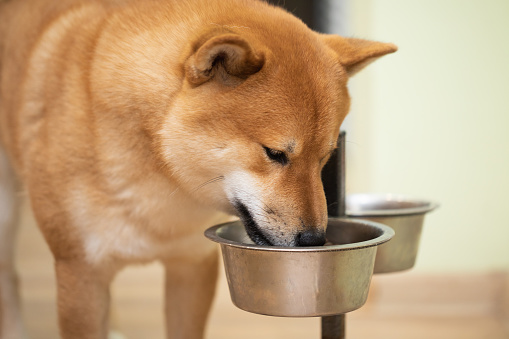
If you are a consumer (well, your dog) of dog food, you are definitely familiar with the term ‘animal by-products.’ These are in the ingredient section that’ll get you wondering what it is, what does it do to the food that your Shiba Inu is eating, what are the health benefits it offers, if it is even safe, or if it is some ‘filler’ dog food manufacturers put into making the meal more delicious.
Some pet owners find animal by-products controversial, while some accept them and believe they are not any different from other types of nutritious meat.
Still, they tend to have a negative impression on pet owners, and this article will clarify what animal by-products are.
Yes, quality animal by-products are safe and nutritious for a Shiba Inu. The word sounds off-putting, but by-products are mostly organ meats and other nutrient-dense parts that wild canines eat first, not the diseased or rotten scraps the term implies. What actually matters is the sourcing and the label wording: a named, species-specific by-product from a reputable manufacturer is a legitimate protein source, while a vague, unnamed one is a reasonable thing to be cautious about. For most Shibas, a well-formulated food that includes named by-products is a perfectly good choice.
The short version, in four parts:
- By-products are organ meats and other non-muscle parts, not garbage or filler.
- AAFCO rules bar diseased and decayed meat from pet food, so quality matters more than the word itself.
- Named by-products (chicken by-product meal) beat vague ones (meat by-product) on the label.
- The real question is not "by-product or not" but "is this whole formula good for my dog."
What are animal by-products?
Byproducts are parts of slaughtered animals that are not meant for human consumption. These include:
- Blood
- Spleen
- Lungs
- Kidneys
- Intestines
- Stomachs
- Heads
With this, we get to see why some dog owners are against animal by-products. They think that feeding your dog these leftover organs are just plain gross.
But in reality, this is very common practice in the pet food industry, and experts believe that byproducts are just as healthy and nutritious as traditional cuts of meats.
A few exceptions to this are giblets, such as liver, gizzards, and necks, as these are still considered edible meats since they are used in making hot dogs, bologna, and sausages.
Are animal by-products diseased and decaying meat?
This is a common concern for owners, and it’s whether animal by-products are actually meats from dead, decaying, or diseased animals.
It’s not!
According to The Association of American Feed Control Officials or AAFCO, meat and meat by-products from animals that have died in ways other than slaughter are unsuitable for animal food.
Manufacturers cannot use decayed or diseased meat without it going through processing to be considered safe. The final product should also be free from bacteria, so the final formulation will also be tested.
But even though decayed meat is allowed if they are ruled safe after the process, manufacturers typically don’t use this. Using quality meat like internal organs is safer and cheaper than meat that needs further processing.
Are animal by-products low in protein?
No, by-products are some of the richest sources of protein for pets.
Wild animals will go for the internal organs or “by-products” first before eating the rest of the carcass. This is because the internal organs have the most protein and energy they need.
By-product meals are cooked, dried, and grounded so water is removed, leaving a very concentrated source of protein. It’s basically a protein powder.
Are animal by-products fillers?
No, they are not fillers.
The Association of American Feed Control Officials (AAFCO) does not have an official definition of the term fillers. However, it is generally known that fillers are ingredients that do not have nutritional value, like corn and soy.
Animal by-products and by-product meals are nutritious and have essential nutrients that’ll benefit your pets.
Purpose of Animal By-Products in Dog Food
As mentioned, animal by-products have essential nutrients that benefit your dog.
Organ meats like the liver, spleen, and heart are great sources of vitamins, minerals, and protein, even greater than regular muscle meat.
Regular muscle meat sometimes lacks nutrients like calcium and vitamin A. These essentials are found in abundance in by-products like bones and livers.
Poultry by-products are rich in protein sources, good fats, vitamins, and minerals. Additionally, poultry by-product meal contains 60-70% protein.
In the wild, animals eat the organs first because of their taste and how they have the nutrients and energy these wild animals need, and they’ve survived thousands of years doing so.
Are animal by-products safe for my Shiba Inu?
Yes, animal by-products are safe and healthy for your Shiba Inu.
Many experts state that by-products are used in pet food because they are good sources of nutrients that your pets need.
Also, some agencies and facilities work with meat and poultry to ensure that only high-quality ingredients and animal by-products are used to manufacture pet food.
How to Read a By-Product on the Ingredient Label
The fear around by-products is mostly a marketing story, sold by brands that want their food to look premium by comparison. Once you can read the label, the panic fades. Here is the framework we walk adopters through.
- Named versus unnamed. "Chicken by-product meal" tells you the species and lets you trace quality. "Meat by-product" or "animal by-product" does not, and that vagueness is the legitimate red flag. Prefer the named version every time.
- By-product versus by-product meal. A by-product is the fresh organ or part. A by-product meal has been cooked and dried into a concentrated protein powder, often 60 to 70 percent protein. Both are fine when named; the meal simply packs more protein per gram.
- What counts as a by-product. Liver, spleen, heart, kidney, lung, and similar organs. These are often richer in vitamins and minerals than plain muscle meat, which can be short on calcium and vitamin A. This is nutrient density, not filler.
- What by-products are not. They are not hooves, hair, horn, or teeth, which AAFCO excludes. They are not diseased or decayed meat, which is barred unless processed and tested safe, and which manufacturers avoid anyway because quality organ meat is cheaper and easier.
- Where it sits in the whole formula. One named by-product in an otherwise strong, complete-and-balanced food is a plus. A food built on vague by-products plus corn and soy fillers is weak, but the fillers are the problem, not the by-product concept.
We once boarded a Shiba whose owner had sworn off any food listing by-products, convinced they were making the dog itchy. When we looked at the two foods he was rotating, the actual difference was a wheat-heavy filler in one and a fish base in the other. The by-product line was a red herring. Once he matched the protein to the dog and dropped the filler-heavy option, the itching settled. The label word had scared him away from the wrong variable.
If you are still weighing which formula to buy, our breakdown of choosing dog food for a Shiba Inu covers what a strong ingredient panel looks like, and our guide to Shiba Inu costs in California puts food spending in the context of the whole first year.
How This Plays Out With Real Shibas
Across more than 250 Shibas placed since 2019, plus a steady rotation of boarders, we have watched the by-product debate cause far more anxiety than it deserves. The dogs that thrive are not sorted by whether their food contains by-products. They are sorted by whether the overall food agrees with them and whether the portions are right. Plenty of our healthiest boarders eat foods with named by-products near the top of the panel.
The pattern we see is that owners latch onto one scary-sounding word and stop looking at the rest of the bag. A food can be by-product-free and still be a bad food, loaded with cheap carbohydrate and short on real protein. Another food can list a named by-product meal and be an excellent, protein-dense option. Reading only the buzzword misses both.
Where caution is genuinely warranted: a dog with a diagnosed sensitivity to a specific protein, or a food that uses only vague, unnamed by-products with no species listed. In those cases, tighten up the sourcing and, for a real sensitivity, get a veterinarian involved rather than guessing. A vet or a board-certified veterinary nutritionist can help you run an actual elimination trial instead of swapping foods on vibes.
What has worked for us is simple: pick a complete-and-balanced food with named ingredients, judge it by how the dog looks and feels over a few weeks, and ignore the label anxiety. If you ever need to keep a Shiba on a specific therapeutic or sensitivity diet while you travel, our boarding program feeds every dog its own food on its own schedule, no substitutions.
Common Followup Questions
Are by-products the same as fillers?
No. Fillers are ingredients with little nutritional value used to bulk up a food, typically things like corn gluten or soy. Named animal by-products are the opposite: nutrient-dense organ meats that can carry more vitamins and minerals than plain muscle meat. AAFCO has no official definition of "filler," which is part of why marketing blurs the two, but nutritionally they are not the same thing.
Should I avoid all by-products for my Shiba?
There is no need to avoid named by-products for a healthy Shiba. Focus on the whole formula instead: a complete-and-balanced food with named ingredients and real protein is a good choice whether or not it lists by-products. The one wording worth avoiding is vague, unnamed "meat by-product," simply because you cannot verify the source. If your dog has a diagnosed sensitivity, work with your vet on specifics.
Are by-products lower quality than muscle meat?
Not necessarily. Organ meats like liver, heart, and kidney are often richer in nutrients than muscle meat, which can lack calcium and vitamin A. In the wild, canines eat the organs first for exactly this reason. Quality depends on sourcing and processing, not on whether the part is muscle or organ. A named by-product from a reputable maker is a legitimate, protein-dense ingredient.
What to Read Next
To choose a food with confidence, read our detailed look at dog food for a Shiba Inu and, if you prefer cleaner labels, our take on the best organic dog food. For the full list of what a Shiba can and cannot safely eat, see our guide to human foods dogs can and cannot eat. And if you are weighing whether this breed suits your household, start with is a Shiba Inu right for me, or learn how our adoption program works.
Looking to adopt or rehome a Shiba?
Rescue-first rehoming with vetted families, 1-year health guarantee, lifetime support.