
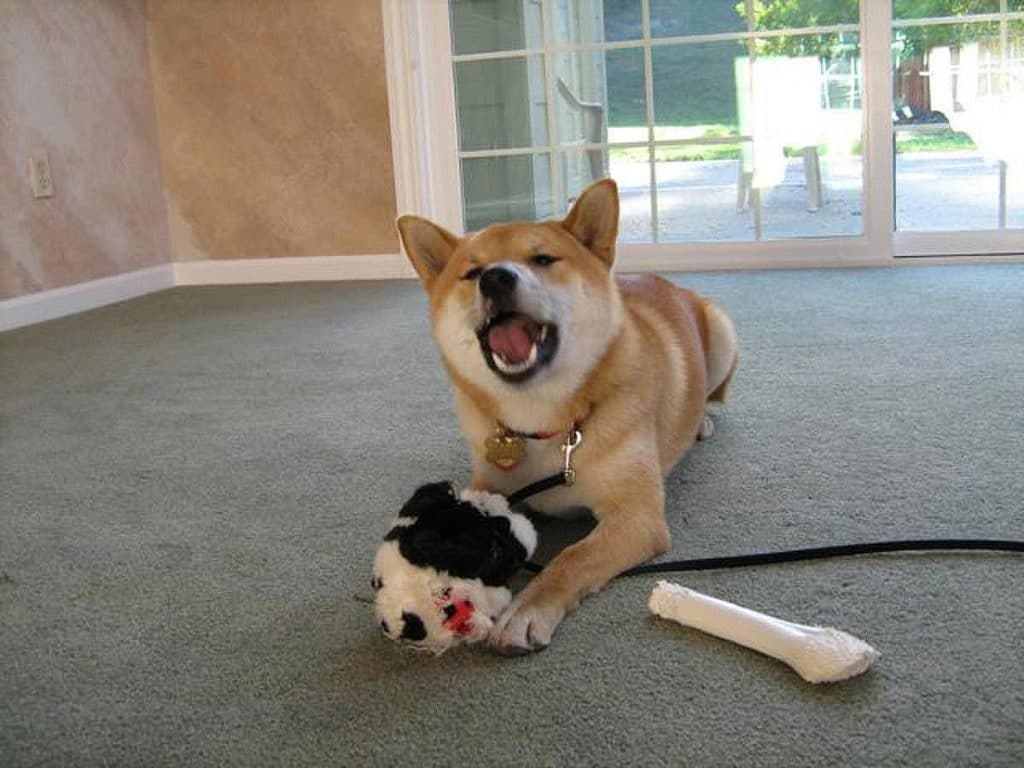
The safest way to surrender a Shiba Inu is to contact a breed-specific rescue in your state before considering a public shelter, Craigslist, or Facebook. If you are in California, NorCal Shiba runs a Surrender Concierge program ($295 flat). If you are elsewhere, the National Shiba Club of America's rescue network routes owners to regional Shiba rescues in every U.S. region.
Why breed-specific rescues matter for Shibas
Shibas are not Golden Retrievers. The American Kennel Club describes the breed as "alert, active, and faithful, but possessing an independent nature that can sometimes border on aloof." That independence and the breed's high prey drive mean a Shiba in a noisy concrete kennel becomes stressed within days. Stress reads as reactivity to shelter staff. Reactivity reads as behavior problems on a standard temperament assessment. The dog is then less likely to be placed and more likely to be classified as unadoptable.
Breed-specific rescues solve this. They understand that a Shiba who growls at strangers in week one is often a normal Shiba adjusting to a new environment. They place into homes prepared for the breed. They run foster networks instead of kennels, so the dog lives in a real home while it waits. The ASPCA specifically recommends breed-specific or breed-friendly rescues over generic shelter surrender when possible.
The outcomes are measurably different. A Shiba surrendered to a generic shelter has a materially lower placement rate than one handed to a breed rescue with a foster network. If you care about where your dog lands, the extra effort to find a Shiba-specific rescue is worth the calls.
What is the fastest, safest surrender path in each region?
This directory is not exhaustive. Rescues open, close, merge, and rebrand. Verify any organization independently before transferring your dog. Check that the website is current, the phone is answered, references can be obtained, and, when applicable, 501(c)(3) status is on file with the IRS.
West Coast
- California (Northern): NorCal Shiba,
norcalshiba.com. Bay Area, Sacramento, Central Valley, and greater Northern California. Surrender Concierge $295 flat. - California (Southern): Saving Shibas Inc.,
savingshibas.com. Los Angeles, Orange County, San Diego, and the Inland Empire. - Oregon and Washington: Shiba Inu Rescue Northwest (verify current status through the National Shiba Club of America). Covers the Pacific Northwest.
- Nevada: No dedicated breed-specific Shiba rescue. Closest options are NorCal Shiba for Northern Nevada residents, Saving Shibas Inc. for Las Vegas.
- Hawaii: No dedicated Shiba rescue. Hawaiian Humane Society and Oahu SPCA accept breed surrenders and coordinate with mainland rescues when possible.
- Alaska: Sparse breed coverage. Anchorage-area humane societies as fallback; contact the National Shiba Club of America for any current regional referrals.
Mountain West and Southwest
- Arizona: No dedicated Arizona Shiba rescue. Saving Shibas Inc. sometimes takes referrals from the state.
- Colorado: No dedicated Shiba rescue. Contact the National Shiba Club of America for regional referrals through their Rescue and Welfare program.
- Utah: No dedicated breed rescue. Utah Humane Society and Best Friends Animal Society Utah as fallback.
- New Mexico: Refer to the Texas-based Shiba Inu Rescue Association.
- Montana, Wyoming, Idaho: Sparse coverage. National Shiba Club of America regional referral is the correct first call.
Texas and the South
- Texas: Shiba Inu Rescue Association,
shibarescue.org. Serves Houston, Dallas, Fort Worth, Austin, San Antonio, and surrounding regions. - Oklahoma, Arkansas, Louisiana: Closest breed-specific option is Shiba Inu Rescue Association in Texas. National Shiba Club of America referral is a good secondary path.
- Florida: Verify current status of Florida Shiba Inu Rescue. Southeast Shiba Inu Rescue is a reliable fallback.
Southeast
- Georgia, Alabama, Tennessee, North Carolina, South Carolina: Southeast Shiba Inu Rescue,
southeastshibainurescue.org. - Mississippi: Refer to Southeast Shiba Inu Rescue.
- Virginia, West Virginia, Kentucky: Mid-Atlantic Shiba Inu Rescue.
Midwest
- Illinois, Wisconsin, Iowa, Minnesota: Midwest Shiba Inu Rescue.
- Michigan, Indiana, Ohio: Midwest Shiba Inu Rescue's shared network, or Tri-State Shiba Inu Rescue if the dog is closer to the Northeast corridor.
- Missouri, Kansas, Nebraska: Midwest Shiba Inu Rescue.
- North Dakota, South Dakota: Sparse coverage. National Shiba Club of America referral.
Northeast and Mid-Atlantic
- New York, New Jersey: New York Shiba Inu Rescue, and Shiba Inu Rescue Resources NY/NJ.
- Pennsylvania, Delaware, Maryland, D.C.: Mid-Atlantic Shiba Inu Rescue.
- Connecticut, Rhode Island, Massachusetts: New England Shiba Inu Rescue (verify current status) or Mid-Atlantic Shiba Inu Rescue.
- Vermont, New Hampshire, Maine: Sparse. National Shiba Club of America referral.
National fallback
If your state is not well covered above, the National Shiba Club of America's Rescue and Welfare program at shibas.org maintains an updated list of affiliated regional rescues. Their volunteers route case requests to the closest active organization. Call them before you list your dog anywhere else.
Petfinder (petfinder.com) also lets you filter for Shiba Inu-specific rescues in your area, though the results include some generic shelters that happen to have a Shiba in intake. Verify each result independently.
How does the NorCal Shiba Surrender Concierge work in California?
For California residents, our Surrender Concierge is a single $295 flat fee with two tracks depending on the dog.
- Track A: full intake. For pure Shibas. We take the dog into our foster network and manage placement end to end. This is the standard case.
- Track B: matching service. For Shiba mixes and non-Shibas. Your dog stays with you until we find an appropriate match through our extended network. We coordinate the matching, screening, and paperwork.
The mechanics are the same either way.
- Email
norcalshiba@gmail.comwith "Surrender inquiry" in the subject, or text (707) 718-3579. We respond within 5 business days, often the same day for urgent situations. - Triage call to understand the dog, the timeline, and any medical or behavioral history.
- Written Surrender Intake Agreement signed before any physical transfer or matching work begins.
- Physical transfer at a NorCal Shiba coordinated location for Track A, or a coordinated meet-and-greet plan for Track B.
- Written notification when the dog is placed, without identifying details of the adopting family.
The $295 is fully refundable within 7 days if we have not started intake or matching work. It is non-refundable once the work is underway. If you originally adopted your Shiba from us and purchased the Lifetime Placement Promise at that time, the surrender is covered at no additional charge. Full terms live on our surrender page.
We only handle California in person. If you are outside California, please use the state directory above rather than contacting us.
What if there is no Shiba rescue in your state?
Three fallback paths, in order of preference.
First, contact the National Shiba Club of America. Their Rescue and Welfare program at shibas.org maintains referral contacts in regions where no dedicated Shiba rescue exists. They often connect owners to informal foster networks or breed-friendly all-breed rescues that will pull for a Shiba.
Second, look for a no-kill, breed-friendly all-breed rescue. These organizations have foster networks and take temperament seriously. They are not Shiba specialists, but they are a substantially better outcome than a municipal shelter. Ask three specific questions before you hand off:
- Do they use foster homes or kennels?
- Do they have any current or past experience with Shibas or Akitas?
- Do they screen adopters, or is it a first-come, first-served placement?
Third, and only as a last resort, a public shelter. More on this below.
Whatever you do, avoid Craigslist, Facebook Marketplace, and Nextdoor. Free or low-cost listings attract dog flippers, backyard breeders, and people who resell dogs to fighting operations. The American Veterinary Medical Association is explicit on the risks of informal rehoming, and Shibas in particular are a target because the breed retails for $2,500 to $5,000 as puppies.
What to look for in a rescue before you hand over the dog
Before transferring your dog to any organization, verify:
- They exist as a real organization. Website is current, phone is answered by a human within a few business days, references can be provided.
- They use written intake agreements. Reputable rescues never accept anonymous drop-offs. If a "rescue" will take your dog without paperwork, do not use them.
- They ask for full medical and behavioral disclosure. This protects the dog and the next adopter. A rescue that does not ask is not screening adopters either.
- They use a foster network, not a kennel. Shibas do not do well in kennel environments long-term.
- They are clear about fees. Most legitimate breed rescues charge a surrender fee ranging from $150 to $1,500 depending on the case. This is normal. It funds the work.
- They follow up. Reputable rescues track outcomes and adopter satisfaction, and they will notify you when your dog is placed.
Ask for the name of the executive director or lead volunteer. Ask when the organization was founded. Ask how many placements they did last year. Reputable rescues answer these questions immediately. Unreliable ones deflect.
What are the red flags that mean it is not a real rescue?
Avoid any rescue or individual who:
- Asks you to drop the dog off anonymously.
- Refuses to provide intake paperwork.
- Pressures you to surrender immediately without explaining the process.
- Asks for payment by DM, text, or to a personal account. Legitimate rescues use business accounts and in-person or verified electronic transfer, and never solicit through social media.
- Has no online presence or only a Facebook page created within the past 12 months.
- Will not tell you what happens to the dog after intake.
- Offers to pay you for the dog. Legitimate rescues do not buy dogs.
A "rescue" without paperwork is not a rescue. It is an animal collector or, worse, a flipper who will resell your dog on Craigslist within the week. The AVMA has written specifically on this pattern. Shibas are targeted because the breed's retail value makes them attractive to bad actors.
Should you use a public shelter as a fallback?
Public shelters and humane societies should be your last option, not your first. Three reasons.
- Shibas do not show well in shelter environments. Stress, reactivity, and shutdown behavior often lead to incorrect "unadoptable" classifications.
- Owner-surrender protection varies by jurisdiction. California's Hayden Act protects strays for a mandated holding period, but owner-surrenders can be euthanized within days if space is limited. Other states have weaker protections.
- Adoption matching is rarely breed-aware. A first-time dog owner can adopt a high-prey-drive Shiba within an hour and return it within a month. The dog suffers in both moves.
If a public shelter is genuinely your only option, ask the following before you sign the surrender paperwork.
- What is the average length of stay for a dog like this?
- What is the outcome rate for owner-surrenders in the last 12 months?
- Do you contact breed rescues when a breed-specific dog comes in?
- Can I sign a "hold for rescue" waiver instead of a standard surrender?
Some shelters will hold a dog for 72 hours while you actively work a breed rescue placement. That single call can be the difference between two very different outcomes for your dog.
Are there alternatives to surrender if the crisis is temporary?
If you are surrendering because of a short-term crisis (eviction, hospitalization, military deployment, escape from domestic violence), explore temporary care before permanent surrender.
- Dogs on Deployment (
dogsondeployment.org) provides free boarding networks for active-duty military. - RedRover Relief (
redrover.org) offers grants for emergency vet costs and safe boarding for pets in domestic violence situations. - PetSmart Charities Sheltering Pets funds transitional pet housing in some markets.
- Local breed rescues with foster networks sometimes offer short-term boarding-as-foster for owners in acute crisis. Ask.
A short-term solution may keep you out of the surrender process entirely and preserve your relationship with the dog. If the crisis resolves in six weeks, a foster network can often bridge the gap.
How long does a proper Shiba surrender take?
For NorCal Shiba's Surrender Concierge in California, expect the following timeline.
- First contact to signed intake agreement: 1 to 2 weeks for standard cases.
- Physical transfer: scheduled after paperwork, typically within a few days.
- Foster placement: immediate, within our network.
- Placement to a new family: varies with the dog. Typical range is 4 to 12 weeks, driven by the dog's age, medical history, temperament, and current Priority Waitlist compatibility.
Other reputable breed rescues run similar timelines. If a rescue can take your dog same-day with no paperwork, that is a red flag, not a convenience.
Urgent situations (imminent eviction, medical emergency, safety concern) are handled case-by-case. Contact us early and we do our best inside the Surrender Concierge model. We do not have paid tiered upgrades.
Frequently asked questions
What if I am not in California?
We do not place dogs outside California. Use the state directory above. If you cannot find an option, contact the National Shiba Club of America at shibas.org for a regional referral.
Why does surrender cost $295 through your Concierge?
Careful surrender takes work. Intake call, vet clearance review, temperament assessment, matching to families right for your specific dog, coordination, and paperwork. $295 covers that work. A free Craigslist surrender costs nothing and offers no assurance about where your dog ends up.
What if I cannot afford the surrender fee?
Tell us in the triage call. Fee reduction is possible in genuine hardship cases. We would rather work something out than lose the dog to a bad outcome.
Can I take my dog back if I change my mind?
Once the dog is placed with a new family, no. Before placement, we discuss options. Do not enter Surrender Concierge if you are still on the fence.
What if my dog has a bite history?
Disclose it. A bite history does not automatically disqualify a dog from rehoming, but it changes the placement process. Hiding it puts the next adopter at risk and exposes you to liability if the incident is later discovered.
Looking to adopt or rehome a Shiba?
Rescue-first rehoming with vetted families, 1-year health guarantee, lifetime support.