If your Shiba growled at you, snapped at a guest, or bit another dog at the park, you are not the first owner with this experience and you are not alone. But you do need to figure out fast which category the behavior falls into, because the responses are very different. Some of what gets labeled "aggression" in Shibas is normal breed-specific communication that needs better understanding, not training. Some of it is a real warning that requires a vet behaviorist immediately. And some of it sits in the middle where structured behavior modification can resolve the issue.
This article walks through how to tell the difference, what works, and what doesn't.
TL;DR — How to read the situation in 60 seconds
Most "aggression" in Shibas is not aggression. It is fear, resource guarding, frustration, or pain expressed through the warning signals dogs use before they bite. True predatory or social aggression is rare. The first step is to identify what you are actually seeing. The second is to get a vet exam to rule out pain. The third is to engage a credentialed behavior professional, not a TV trainer.
Why Shibas get mislabeled as aggressive
Shibas are independent, alert, and reserved with strangers (https://www.akc.org/dog-breeds/shiba-inu/). The same temperament that makes them historically successful as small-game hunters in mountainous Japan means they are quicker than many breeds to signal discomfort. A Golden Retriever might tolerate a stranger leaning over their food bowl. A Shiba is more likely to stiffen, give a hard stare, lift a lip, and growl. The Golden didn't have nothing to say; the Golden was suppressing it. The Shiba is just being direct.
Direct is not the same as aggressive. The American Veterinary Society of Animal Behavior is explicit that warning signals are normal communication and should be respected, not punished out of existence (https://avsab.org/wp-content/uploads/2021/08/AVSAB-Humane-Dog-Training-Position-Statement-2021.pdf). Punishing a Shiba for growling teaches the Shiba to skip the growl and go straight to a bite. That is worse for everyone.
Categories of "aggression" and what each means
1. Fear-based reactivity
The most common category by far. The dog perceives a threat (a stranger, another dog, a loud noise) and reacts with growling, barking, lunging, or snapping. The intent is to make the scary thing go away.
How to recognize: The dog's body language shifts before the reaction. Whale eye (showing the whites of the eyes), stiff body, tucked tail, ears back, attempts to retreat. The reactivity escalates with proximity to the trigger and reduces with distance.
What works: Distance management while you build new positive associations through counter-conditioning and desensitization. This is structured behavior modification, not "showing the dog who's boss." Reward-based protocols delivered consistently over weeks to months produce reliable improvement.
What doesn't: Forcing the dog to "face" the fear. Leash corrections. Yelling. These either suppress signals (dangerous) or worsen the underlying fear.
2. Resource guarding
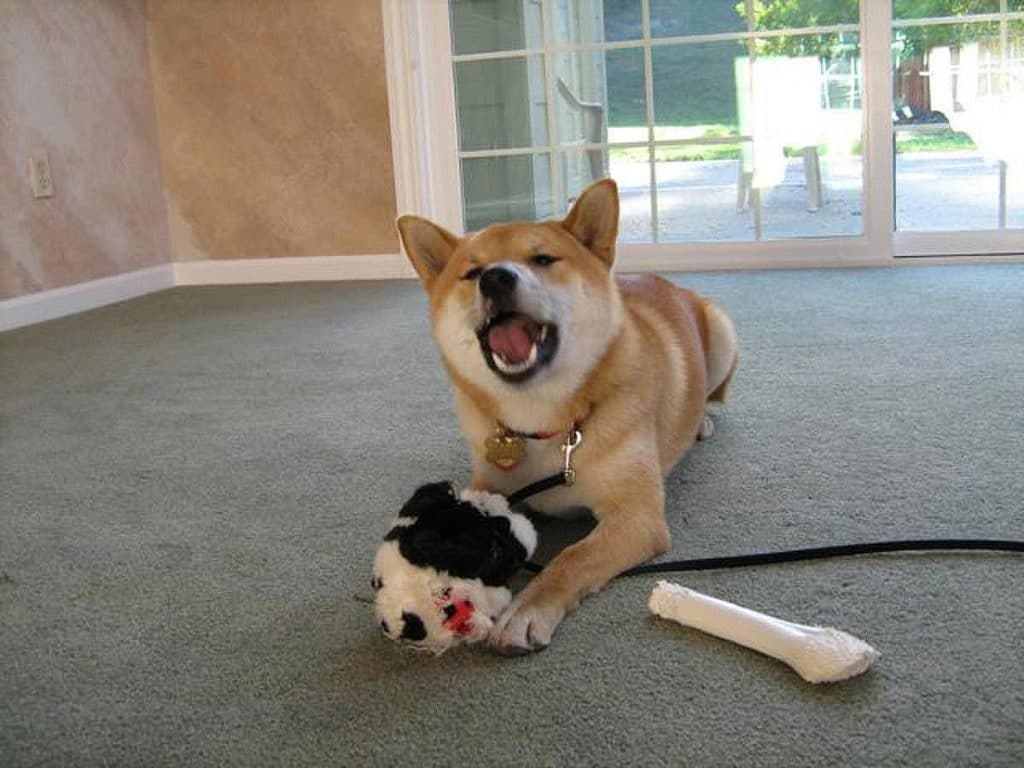
The dog growls, snaps, or bites when someone approaches food, toys, sleeping areas, or sometimes a specific person. This is normal dog behavior taken to a level that has become a household management problem.
How to recognize: The behavior is predictably tied to a resource. The dog freezes over the bowl. The growl happens when you reach for a chew. The dog defends a couch cushion only when one specific person sits down.
What works: Trade-up protocols. Teach the dog that human approach predicts a better thing arriving, not the current thing being taken away. Combined with environmental management (feeding in a separate room, picking up high-value items when guests visit). For severe cases, a certified behavior consultant or veterinary behaviorist.
What doesn't: Hand-feeding "to assert dominance." Taking the bowl away "to show the dog who eats first." The 2018 AVSAB position statement on dominance theory is explicit that these methods produce worse outcomes (https://avsab.org/wp-content/uploads/2018/03/Position_Statement_Dominance.pdf).
3. Territorial behavior
Growling, barking, or lunging at people or animals entering the dog's perceived territory (the home, yard, or sometimes the car).
How to recognize: The behavior is location-specific. The dog who lunges at the mail carrier from the window is calm meeting that same person on a neutral walk.
What works: Threshold work, place-cue training (teach the dog a default spot to go when the doorbell rings), and management (don't reward the lunging by closing the window or removing the trigger; teach an alternative behavior).
What doesn't: Letting the territorial pattern intensify over years until the dog bites a delivery driver. This is preventable.
4. Predatory behavior
Shibas have high prey drive. The same instinct that makes them historically excellent hunters can express as chasing small dogs, cats, rabbits, or even bicycles. This is NOT aggression in the same emotional sense. It is hunting.
How to recognize: Silent or low vocalization. Stalking posture. Sudden chase. The dog often releases when the prey stops moving.
What works: Strict management (long-line outdoors, secure fencing, never trust off-leash with small animals nearby), redirection training, and impulse control work. Some Shibas reach a level of off-leash recall reliability; many never do. The honest answer is that managing prey drive is a lifetime habit, not a behavior you eliminate.
What doesn't: Trusting the dog around small animals because they "seem fine today." Shock collars marketed as prey-drive solutions; the AVMA's position on aversive practices is explicit that there is no clinical justification (https://www.avma.org/javma-news/2021-11-01/veterinary-behaviorists-no-role-aversive-dog-training-practices).
5. Redirected aggression
The dog is aroused by one trigger (often through a window or fence) and bites whoever is nearest. The bitten party may be a household member who tried to intervene or a dog standing alongside.
How to recognize: The bite happens during a moment of high arousal. The dog often immediately appears confused or distressed afterward.
What works: Management (avoid arousal triggers, use barriers), arousal reduction protocols, and professional behavior consultation. These cases warrant a veterinary behaviorist.
6. Pain-related aggression
A dog in pain may bite when touched, especially in an area that hurts. Dental disease, arthritis, ear infections, anal gland issues, and orthopedic problems are common underlying causes.
How to recognize: New behavior that started in an older or middle-aged dog. The behavior is correlated with touch in specific areas. Eating, jumping, or walking patterns have changed.
What works: A full veterinary exam, including dental, before any behavior work begins. Pain resolution often resolves the "aggression" entirely.
7. True aggression
Genuine offensive aggression without warning, without trigger pattern, and with intent to do harm is rare in Shibas. When it does occur, it requires immediate veterinary behaviorist involvement. The American College of Veterinary Behaviorists maintains a referral directory (https://www.dacvb.org).
What to do, in order
- Rule out pain. Get a full vet exam, including dental and orthopedic. Many bite cases resolve entirely after a dental cleaning or arthritis diagnosis.
- Document the behavior. Write down what happened, when, where, who was present, what the dog did before and after, and what the trigger appeared to be. Take video if safe. Patterns emerge fast.
- Manage the environment. Reduce the dog's exposure to triggers while you build a plan. This is not "giving in." This is keeping everyone safe while training catches up.
- Engage a credentialed professional. Not a TV trainer. Not a balanced trainer who uses prong collars. The credentials that matter:
- CAAB or ACAAB (Certified Applied Animal Behaviorist).
- Diplomate ACVB (board-certified veterinary behaviorist).
- CBCC-KA or CDBC (certified behavior consultant).
- CPDT-KA with documented behavior experience.
The DACVB directory is the gold standard (https://www.dacvb.org).
- Commit to time. Behavior modification works on a timescale of weeks to months. Quick fixes are usually suppression, which produces worse outcomes long-term.
When NorCal Shiba can help
We offer Behavioral Evaluation ($199 virtual, $349 in-person) for owners who want a professional read before deciding on training, behavior modification, or surrender. The evaluation produces a written report including the apparent category of the behavior, recommended next steps, and our honest read on whether the case is workable in the current home.
For severe cases including documented bite history, we coordinate with veterinary behaviorists rather than handling the case ourselves. We are honest about what we are and are not equipped for.
If the situation is one where rehoming is the right answer, our Surrender Concierge handles the process with full behavioral disclosure to the next adopter. Hiding a bite history is worse for everyone, including the dog.
When rehoming is the right answer
Sometimes it is. If the dog has bitten a child in the household, if there are other vulnerable people who cannot be safely managed around the dog, if the household cannot commit to the training time required, rehoming may be the responsible decision. The American Veterinary Medical Association recognizes this explicitly (https://www.avma.org/resources-tools/animal-health-and-welfare/rehoming-cherished-companion-animal).
Rehoming a dog with a known bite history is harder but not impossible. NorCal Shiba accepts these cases under separate review. We place such dogs in households without children, without other pets, and with experienced owners. Full disclosure on intake is required.
Common questions
My Shiba growled at my child. Should I rehome immediately?
Don't panic, but take it seriously. A growl is a warning, not a bite. Address the trigger (often resource guarding around the child or unwanted handling) through management and professional behavior work. Rehoming is reasonable if the household cannot meet the dog's needs safely, but it should be informed by a professional assessment first.
My Shiba snapped at the vet. Is this aggression?
Almost always fear-based reactivity, sometimes pain-related. Vet visits are high-stress for many Shibas. Discuss cooperative care training with a positive-reinforcement trainer and a Fear Free certified vet (https://fearfreepets.com) if available in your area.
Should I muzzle my dog?
A well-fitted basket muzzle is a normal tool for management during behavior work, vet visits, and high-risk introductions. It is not a punishment. Muzzle training is included in most professional behavior protocols.
Is dominance training effective for Shiba aggression?
No. The 2018 AVSAB position statement explicitly recommends against dominance-based training for any dog (https://avsab.org/wp-content/uploads/2018/03/Position_Statement_Dominance.pdf). Reward-based protocols outperform aversive methods both in efficacy and in side effect profile.
When to call
If you are in California and want a professional assessment, email norcalshiba@gmail.com for a Behavioral Evaluation. Outside California, the DACVB directory (https://www.dacvb.org) and CCPDT directory (https://www.ccpdt.org) are the best places to find qualified professionals.
Need help with your Shiba?
Long-term behavior modification and skill training, built for the breed.