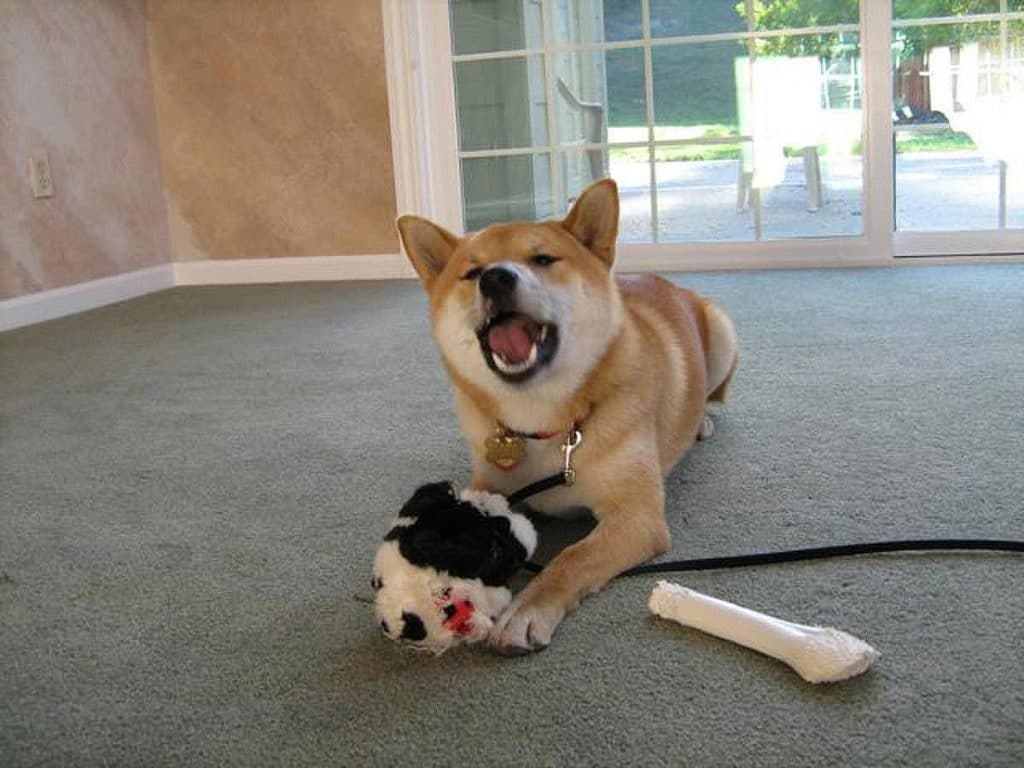
You have just adopted a Shiba Inu puppy. But you have not come up with a name. Because a Shiba Inu is a Japanese dog, you might think of giving your new pup a Japanese name. You can use the following information to inspire you.
Name your Shiba something short and distinct, then commit to one language and consistent hand signals so the dog can actually understand you. A Shiba is smart but independent, so communication only works when it is clear, consistent, and worth the dog's attention. Japanese names fit the breed's heritage and pair naturally with Japanese cues, but English works just as well if you never mix the two. The real skill is not the vocabulary, it is the consistency: same word, same signal, same meaning, every time.
The short version, in four parts:
- Pick a short, vowel-friendly name the dog can pick out of background noise.
- Choose one command language, Japanese or English, and never switch mid-training.
- Pair every verbal cue with a hand signal so the dog has a visual backup for life.
- Make the name and cues predict good things, because a Shiba ignores anything that does not pay.
Japanese Names for Boy Dogs
Any Japanese name with “Aki” in it translates to bright. Therefore, Japanese names for boy dogs that “give off light” include Aki (bright), Akihiro (extreme brightness), and Aki (bright man). If you want to give your dog a seasonal name, you might choose Haru (spring), or may opt for a winning name, such as Katsu (which means victory). Masaru also means “victory.”
Does Your Dog Rule the Roost?
Is your dog seemingly the ruler over its turf at home? If so, you might choose to name it Nori, which means “to rule.” Another good name is Takahiro, which translates to “nobility.”
If you want your dog to be lucky or happy, you might give it the name Yoshi (which means “lucky”) or Yoshio (which means “happy life”).
For a female Shiba Inu, names such as Akemi (“bright and beautiful”), Hana (“flower”), Katsumi (“victorious beauty”), Kimi (“noble”), Manami (loving and beautiful), and Miki (beautiful princess) are the ultimate in Shiba girl names.
More Shiba Girl Names
You will also find a lot of girl Shiba names begin with “S.” Here is a sampling:
- Saki (bloom of hope)
- Sakura (cherry blossom)
- Satomi (beautiful and wise)
- Shiori (poem)
- Shizuka (peaceful summer)
- Sora (sky)
- Suzu (bell)
- Suzume (sparrow)
One name to treasure is Takara (which, of course, means “treasure). Tomomi means “beautiful friend.”
Shiba Names that Relate to Animals
If you want to choose a more generic name, you might name your Shiba Inu after an animal. Because the dog resembles a fox, you might give it the Japanese name for fox, which is Kitsune. Other appropriate animal names include Neko (the name for cat, given to the Inu because he cleans himself life a cat), Kuma (bear), Sika (deer), or Ookami (wolf).
Japanese Place Names for Inus
Another fun idea for naming is giving your dog a Japanese place name. Below are some examples:
- Tokyo (the Japanese capital)
- Osaka (a large city in Japan)
- Kyoto (a city in the center of Japan)
- Fuji (the mountain and a city in Japan)
Shiba Names that Are Japanese Foods
Some people name their Shiba Inus after a favorite Japanese dish. Popular choices include the following:
- Sushi (raw seafood and rice in a seaweed wrap)
- Soba (Japanese noodles made of buckwheat)
- Ramen (A soup and noodle dish)
- Tempura (Deep-fried vegetables and seafood)
- Udon (Thick noodles made of wheat flour)
- Sashimi (A Japanes dish made of raw fish or meat thinly sliced)
- Manju (A sweet treat made of beans and boiled sugar)
Other Names to Consider
Here are other Japan-themed Shiba names:
- Manga – Japanese comics
- Haiku – A Japanese poem with three lines with a format of 5, 7, and 5 syllables
- Bonsai – Miniature trees that have been artistically pruned and shaped
- Samurai – An ancient feudal warrior of Japan
Japanese Family Names
You might also think about giving your dog a name that is one of the traditional family names of Japan. Top 10 names include Sato, Suzuki, Takahashi, Tanaka, Watanabe, Ito, Yamamoto, Nakamura, Kobayahsi, and Kato. Make sure you are pronouncing the names correctly by visiting a name pronunciation site, such as NameShouts.
Japanese Dog Commands
Want to make things even more interesting? If you give your Shiba a Japanese name, why not teach it dog commands in Japanese during its obedience training? Who knows? It might understand Japanese better than if you try to teach it dog tricks or commands in English.
Can You Say Osuwari?
Below are some of the English dog commands and their Japanese language equivalents:
- Sit – Osuwari (oh-soo-WAH-ree)
- Stay – Mate (MAH-tay)
- Lie down – Fuse (foo-say)
- Come – Koi or Oide (oh-EE-day)
- No – Dame (DAH-may)
- Good dog – Iiko (eee-ko)
Stick to Japanese or English When Obedience Training
You just need to remember not to switch commands back and forth from English to Japanese or from Japanese to English. Shibas may be smart, but mixing up the languages will confuse them. If you want them to follow you, you either have to stick to issuing dog commands in Japanese or English. If you start saying “Sit!” after they learn “Osuwari!” they will probably just give you a blank look. Therefore, choose English or Japanese and stick with one language when issue dog commands.
Hand Signals
You can also use hand signals to enforce your commands, regardless of the language. This is a great way to communicate with your pet into his older years when its hearing may not be so good. In fact, you can use hand signals before you start issuing verbal commands.
To get your Shiba’s attention, say its name and use a clicker or snap your fingers. When he looks up, start with hand signals for the dog’s training.
How to Get Your Dog’s Attention
If you have already completed training your dog with voice commands, use a hand signal followed by the voice command. Over time, your Inu will relate the voice command with the hand signal you use. When you use a hand signal several times successfully, your dog will not need the language cue to do what it is told.
The Standard Signal for Sit
If your dog masters being told what to do with visual clues, it does not matter whether you speak Japanese or English. There are standard signals that trainers use but you can also make up your own. The standard hand signal for “sit” or “osuwari” involves keeping the palm upward and bringing the hand down as if you are ready to give your dog a treat.
AKC Visual Clues
According to the American Kennel Club (AKC), you can use luring or capturing as a hand signal to get your Shiba Inu to sit. When using capturing, stand in front of your Inu, holding a treat. Wait until he sits, then say “yes” and reward him with the treat.
Luring Your Pup to Sit
Luring involves getting down in front of our pup, holding his treat to lure him to sit. As you slowly lift the reward, he usually will sit. When he sits, give him the treat. Once he understands this signal, you don’t have to say anything.
Having a Shiba Inu as a pet can be fun for you culturally. Whether you use Japanese dog commands or stick to basic English, welcoming this Japanese dog breed into your home is one action you won’t regret.
How to actually communicate with a Shiba
Naming is the easy half. Getting an independent breed to listen is the real project, and it comes down to a handful of principles that Shibas reward and sloppy handlers pay for. Here is the framework.
- One cue, one meaning. Pick a single word for each behavior and never drift. "Off," "down," and "no" cannot all mean the same thing on different days. Shibas are precise thinkers, and inconsistent cues read as noise they are free to ignore.
- One language, start to finish. Japanese cues like osuwari (sit) and mate (stay) suit the breed and are fun, but the rule is absolute: do not mix. A dog that learned "osuwari" will give you a blank stare at "sit," because to the dog those are unrelated sounds.
- A hand signal for every cue. Pair a visual signal with each verbal command from the beginning. Dogs read body language faster than words, and the signals become priceless as the dog ages and its hearing fades. Many trained Shibas end up responding to the hand alone.
- Mark and pay fast. Use a consistent marker, a clicker or a crisp "yes," the instant the dog does the thing, then reward. Timing is everything. A reward that lands two seconds late teaches the wrong lesson, and a Shiba will notice the gap.
- Manage your tone and pressure. Shibas are sensitive to harshness and shut down under it. A calm, firm voice and relaxed body get more than a loud one. Looming, grabbing, and repeating a cue louder all backfire with this breed.
- Read the dog back. Communication runs both ways. Learn your Shiba's signals, the scream, the huff, the hard stare, the tail set, so you can respond before frustration escalates. A dog that feels understood argues less.
A composite of the payoff: an owner frustrated that their Shiba "won't listen" fixes it not with more repetitions but by cleaning up their cues, picking one language, and rewarding faster. The dog was never disobedient, the instructions were just muddy. For help choosing the name that starts all of this, our guide to the best Shiba Inu names pairs with this piece, and our honest take on whether a Shiba Inu is right for you covers the temperament behind the stubbornness.
How this plays out
Across 250+ Shibas placed since 2019, "my Shiba ignores me" is one of the most common complaints, and it is almost never defiance. It is communication breakdown. The owner is inconsistent, the cues do not predict anything good, or the dog has simply learned that ignoring the request has no cost. Clean up those three things and most "stubborn" Shibas turn out to be listening after all.
The Japanese-command idea sounds gimmicky, but it has a real benefit we have seen: because the cues are unfamiliar to the owner, they tend to use them deliberately and consistently, which is exactly what training needs. The language does not matter to the dog. The consistency does. A sloppy "sit" said five different ways teaches less than a careful "osuwari" said one way.
What has worked: short names, one language, hand signals from day one, and rewards that actually motivate the individual dog. What has not worked: nagging, repeating cues, and switching approaches every week. If communication with your Shiba has genuinely stalled, our one-on-one training can rebuild the basics, and a certified trainer is the right call when frustration is creeping in on either end of the leash.
Common followup questions
Should I teach my Shiba commands in Japanese?
You can, and it is a fun nod to the breed's heritage, but the language is entirely for you. The dog does not care whether "sit" is English or "osuwari" is Japanese. What matters is that you pick one and never switch. Some owners find the unfamiliar Japanese words make them more deliberate and consistent, which helps, but plain English works exactly as well.
Why does my Shiba ignore commands?
Usually one of three reasons: the cue is inconsistent, it does not reliably predict something the dog wants, or ignoring it has never cost the dog anything. Shibas are independent thinkers who evaluate whether listening is worth it. Make cues clear, pay them well, and follow through, and a "deaf" Shiba tends to start hearing you.
Do hand signals work better than voice for Shibas?
They work alongside voice, and they are worth teaching from the start. Dogs read body language faster than spoken words, so many Shibas respond to a hand signal even more reliably than a verbal cue. Signals also keep working when a senior dog's hearing declines, which is why pairing every command with a gesture pays off for the dog's whole life.
What to read next
Pair this with our guide to the best Shiba Inu names to lock in the name first. For the temperament behind the training, read our honest take on whether a Shiba Inu is right for you and the deeper history of the Shiba Inu. And when you want hands-on help, our one-on-one training starts from the basics.
Looking to adopt or rehome a Shiba?
Rescue-first rehoming with vetted families, 1-year health guarantee, lifetime support.